This Article Contains
Prioritize "Light" Over Iris Size
When wearing colored contacts, the first thing to check is: "Is there light in the pupil?" Rather than making your irises look larger, prioritize preserving the small white point of light inside the pupil—the catchlight—and the whites of your eyes.
Oversized lenses increase the area of the iris, but as a result the catchlight can become hard to read, or the whites of the eyes can narrow and the eye can start looking flat. In a photo, eyes create a "lively impression" more through light and depth than through size.
For professional profile photos, it's also important that the image is consistent with how you look in person. A lens that's noticeably larger than your natural iris makes it easy to leave the impression of "you look different from your photo" when someone meets you in real life.
Catchlights and the Whites of Your Eyes Bring Your Expression to Life
The small white dot reflected in the pupil is called a catchlight. It's the reflection of a light source—a window, a strobe, a reflector—appearing in the eye. Whether or not it's present completely changes the impression the eye gives.
Eyes with a catchlight convey a sense of "I'm present, right here, right now." Eyes without one feel like they're looking somewhere far away—flat and distant. When you use lenses that make the iris too large, this light becomes hard to read and the eyes can look doll-like.
The whites of your eyes also matter. Visible whites give the eye dimensionality and make the movement of your gaze easier to read. When overly large lenses eliminate the whites, the whole eye turns dark and the expression becomes hard to interpret.
The balance between eyes and mouth is relevant here too. When the eyes are heavily emphasized, they can feel disconnected from the softer, professional smile of the mouth—making the upper and lower halves of the face look like they were composed separately.
FIG. 005A diagram organizing what to look for when choosing colored contacts: the catchlight in the pupil, the white space of the sclera, and the balance between eyes and mouth.
Keep a Bare-Eye Candidate Shot Too
During the shoot, it's a good idea to keep both a set of shots with colored contacts and a set with bare eyes or subtle lenses. When you look at them side by side afterward, you can choose based on "continuity of expression" rather than "eye size."
A specific request to give your photographer: "Please check whether there's a catchlight in my pupils." Rather than focusing on the lenses themselves, confirming together whether a catchlight is present is the more practical approach.
When in doubt, check the photo on a small smartphone screen. At icon size or printed small on a business card, the brightness and sparkle of the eye tends to carry more than iris size. A useful benchmark: when the image is reduced, are the eyes going dark and getting lost?
Eyes That Are Too Strong Throw Off Your Facial Balance
Choosing larger lenses for a shoot is a common impulse, but when a strong lens creates the dominant impression of the eyes, you need to check the balance of the whole face.
Eyes that are fully "finished" paired with the restrained professional smile of the mouth—this combination can look like the upper and lower halves of the face were constructed independently. In a professional profile photo in particular, this kind of imbalance tends to be the source of an "something's off" feeling.
Try shifting your criterion for choosing contacts from "does this make me look better?" to "does this preserve the light in my pupil and still look like me?" That shift alone will narrow your candidate options and reduce uncertainty on shoot day.
For eyes in a shoot, judge by light and connection to the whole face—not by size.
Three Things to Check After the Shoot
When your photos come back, check these three things about your eyes.
- Is there a small white point of light in the pupil?—When both pupils have a catchlight, the eyes look alive. If both eyes look dark and flat, it's worth reconsidering the angle toward the light source or the direction you're facing.
- Can you see the whites of the eyes?—Check that oversized irises haven't eliminated the sclera. When at least some white is visible, the eye has dimensionality and the movement of the gaze reads clearly.
- Do the eyes and mouth look connected?—Don't zoom in on just the eyes; look at the whole face. The key final judgment: are the expression of the eyes and the expression of the mouth at the same tone?
The eye shot that is most consistent with how you look in person is the one that works best in a professional profile.
- When choosing colored contacts, prioritize the catchlight in the pupil and the whites of the eyes over iris size.
- Keep a candidate shot with bare eyes or subtle lenses so you can compare afterward.
- In the end, evaluate not the eyes alone but the whole face and the actual display context—check that it's consistent with how you look in person.
Related Diagrams
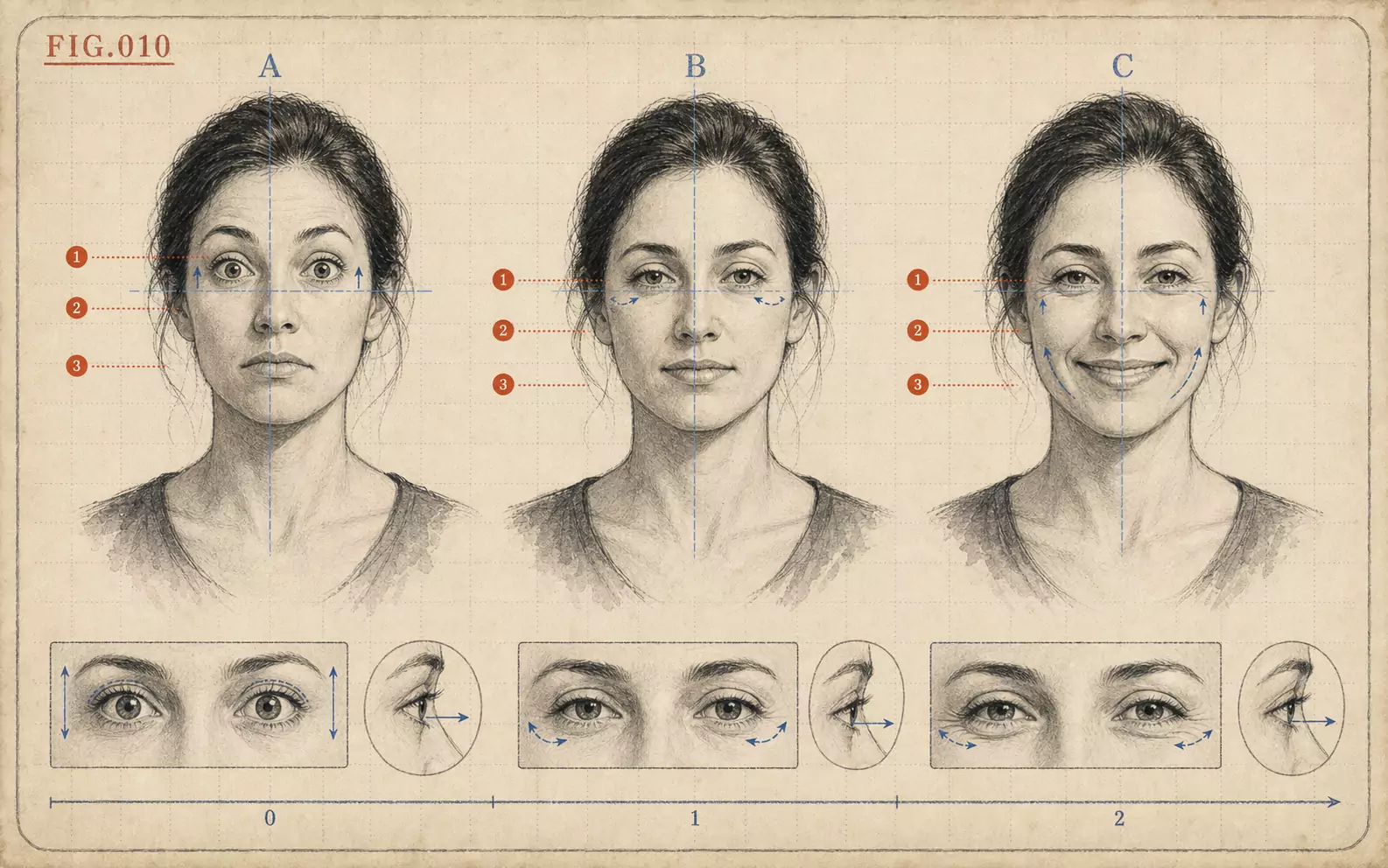 FIG.010The "Make Your Eyes Bigger" Trap: Mismatched Upper and Lower ExpressionThe wider you open your eyes, the more the wide-eyed look and the smile of the mouth can fall out of sync.
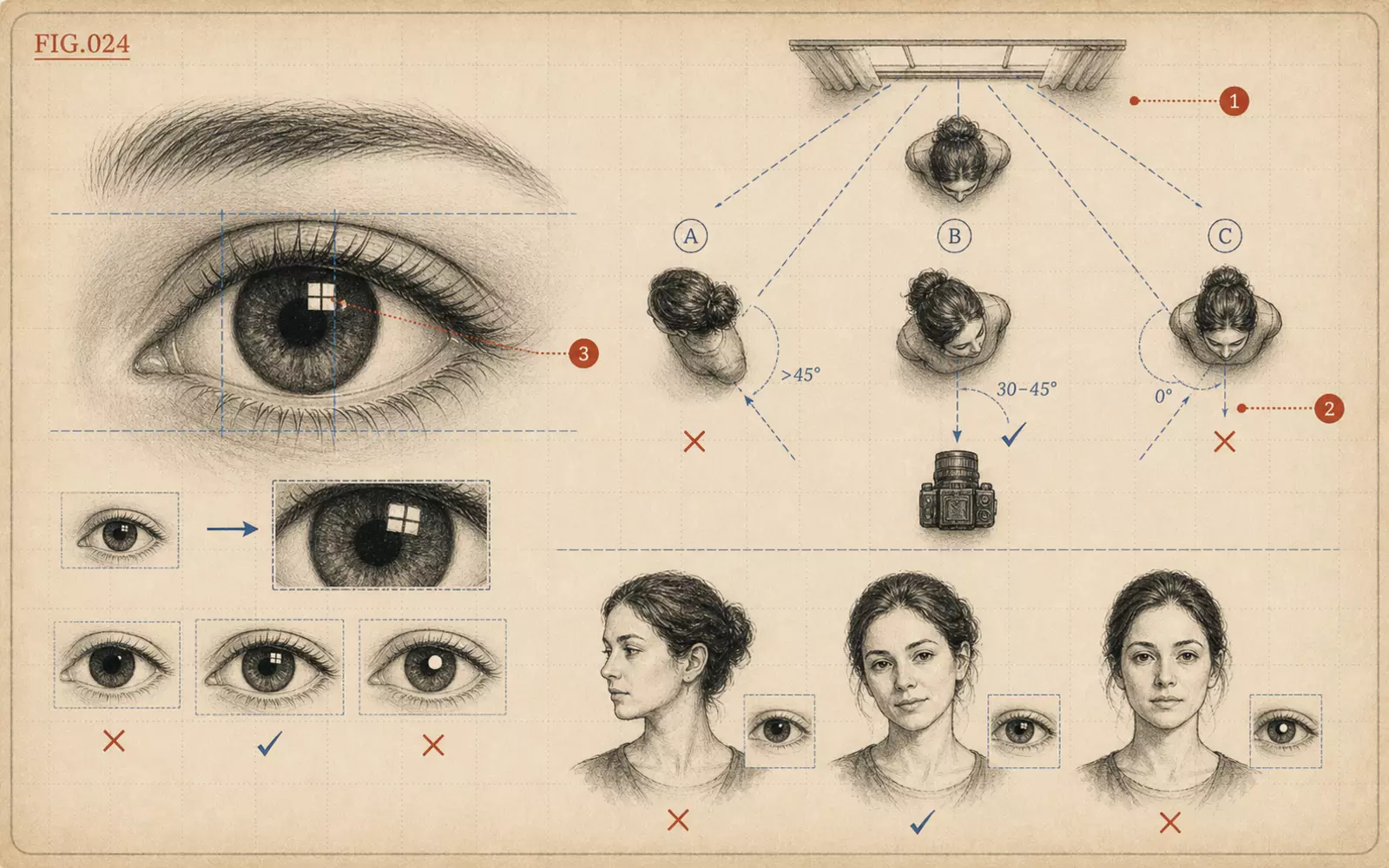 FIG.024How to Angle Your Body to Get a Catchlight in Your EyesA catchlight is the small light reflected in the pupil. Turning not just your face but your chest toward the light makes it easier to capture.
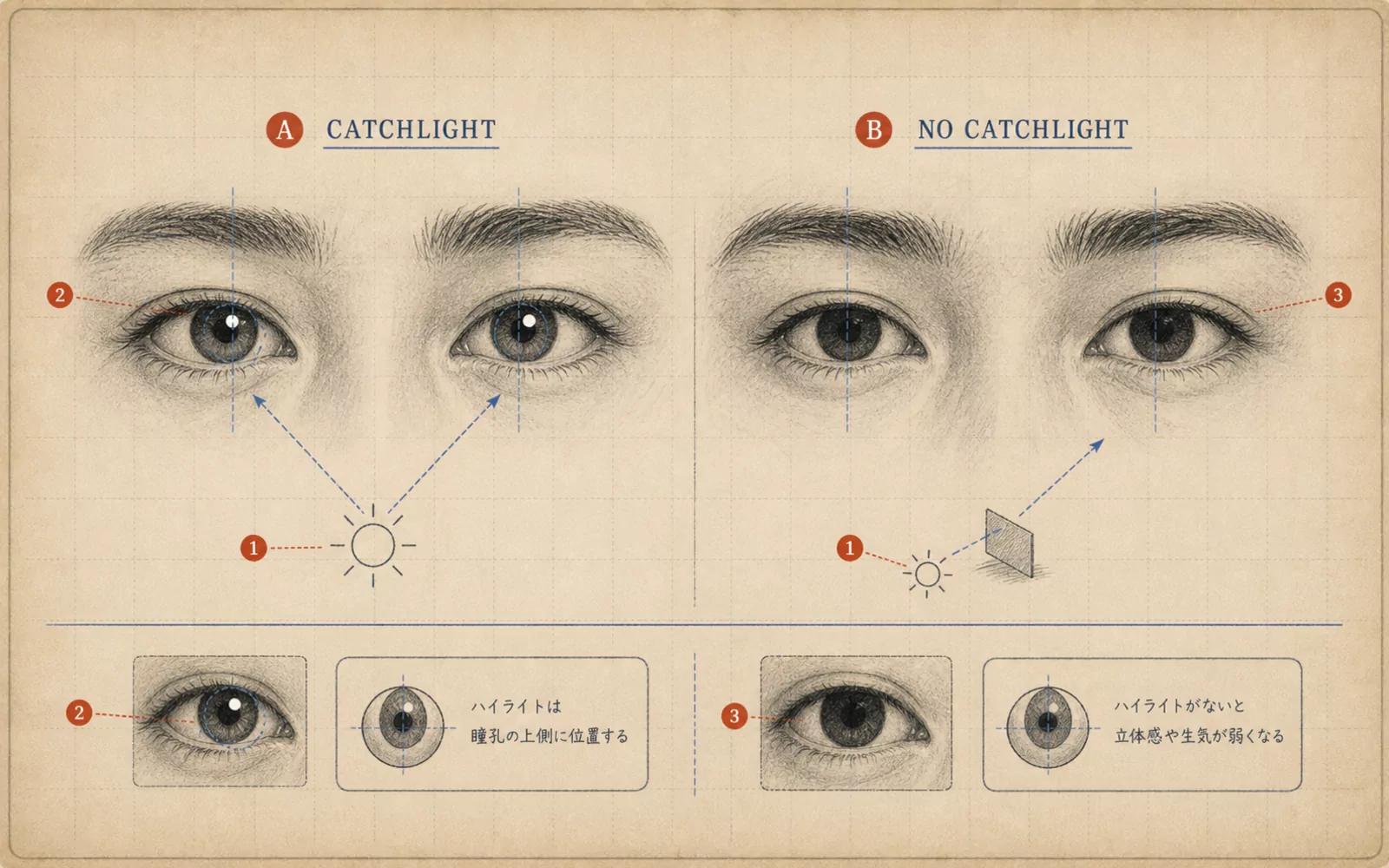 FIG.061Is There Light in the Eyes?The final step in photo selection is checking the pupils. A photo with a small white point of light in both pupils looks alive.