TORAREKATA ZUKANA Field Guide to
Being Photographed
Practical knowledge about expression, posture, and photo selection — for people on the other side of the camera.
Compiled from portrait sessions and workshops. Written for the subject, not the photographer.
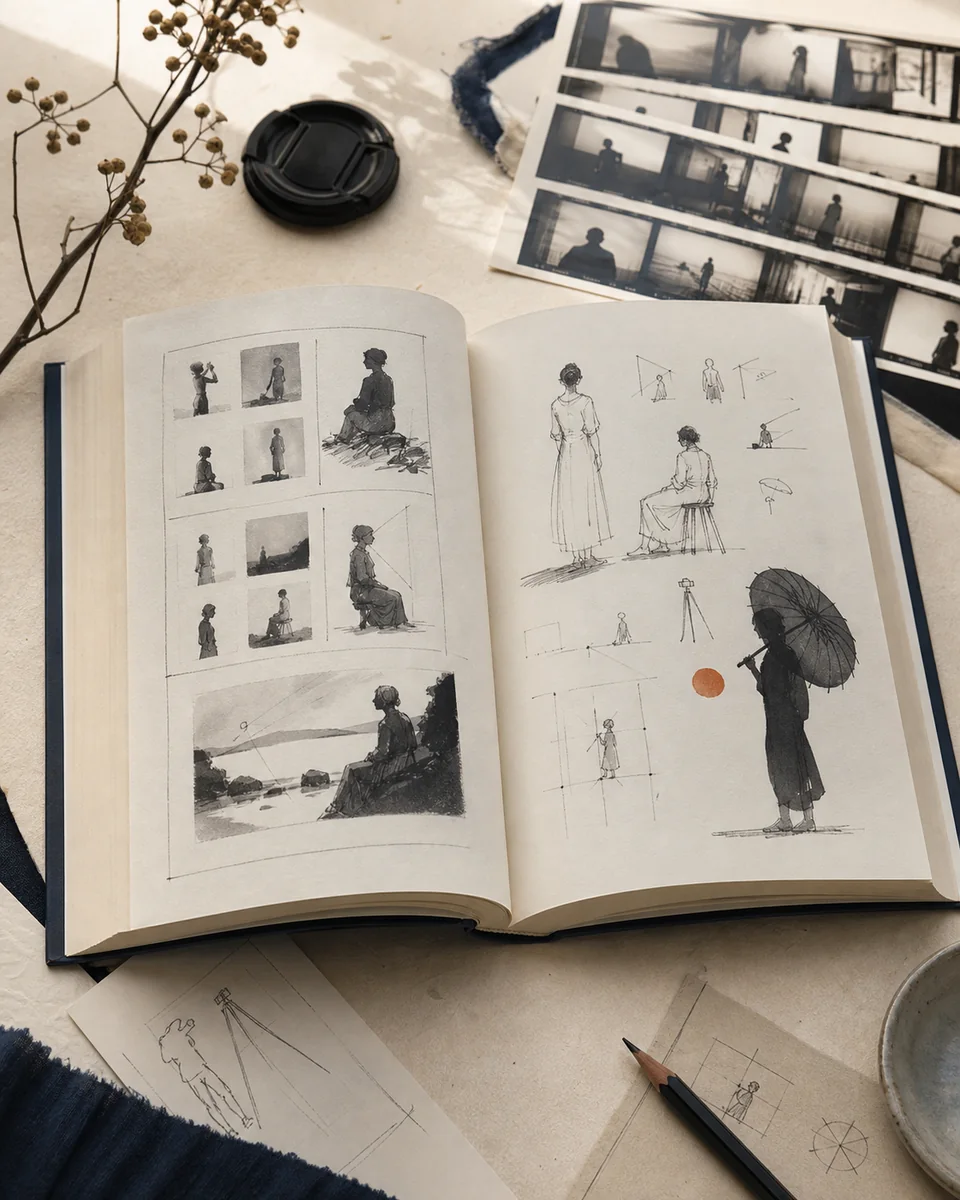
Reducing camera aversion,
one person at a time.
A failed profile photo is rarely about facial features. What appears in the image is the anxiety that has no outlet — being photographed without knowing what to do, standing without being able to articulate what you feel.
This guide translates what photographers take for granted into language written for the person being photographed.
To anyone who dislikes being photographed or feels they photograph poorly:
This is not your fault.
Knowing how to stand and how to build an expression can change how you photograph — significantly. Photographers will sometimes tell you these things, but most photographers cannot convey everything.
A photo session is an opportunity. Understanding the principles behind how photographs are made is what changes the result.
For Photographers
"I photograph badly" is 100% the photographer's responsibility.
This guide is written from the subject's perspective, but photographers who understand it and share it clearly with their clients — building a shared picture of what a good photo looks like — will find this directly useful.
Some articles include technical knowledge about lenses, distance, and light. We hope they are useful in your future sessions.
If you can remember just one thing on set, both expression and posture will change.・TORAREKATA ZUKAN, Editor
The Seven ChaptersFull Curriculum
I
Preparing Before the Shoot→
What to decide and arrange before the session day. Preparation determines half the result.
II
On-Day Conditioning→
From the moment you arrive to the first shutter — adjusting light, distance, and standing position.
III
Building Your Expression→
Breaking down the smile, gaze, jaw, and cheeks into steps you can reproduce on set.
IV
Pose and Posture→
Building your body position in sequence: feet, hips, shoulders, jaw, gaze, expression.
V
The Right Photo for the Right Use→
Working backward from where the photo will be used — business cards, LinkedIn, executives, medical professionals, and more.
VI
Selecting After the Session→
How to evaluate delivered photos and where to draw the line on retouching.
VII
Choosing a Photographer→
A supplementary chapter: what to check before booking, what to ask, and how to evaluate a studio.
Three Articles to Begin WithStart Here
Pulling Your Chin in 1 cm Defines Your Jawline
Keep the back of your head up while drawing the chin tip back. This single adjustment clarifies the jawline and neckline.
Read article →Why "Say Cheese" Freezes Your Face
A camera-ready smile is built deliberately — cheeks up, a hint of teeth, captured as tension releases. How to avoid the forced look.
Read article →When in Doubt About How to Stand: Build from the Feet
Good posture for photos has a sequence. Understanding frontal, angled, and side-on positions eliminates second-guessing on set.
Read article →From the PagesSample Diagrams
Click any diagram to read the full article and explanation.
Pulling Your Chin in 1 cm Defines Your Jawline
Keep the back of your head up while drawing the chin tip back. This single adjustment clarifies the jawline and neckline.
Read article →Why "Say Cheese" Freezes Your Face
A camera-ready smile is built deliberately — cheeks up, a hint of teeth, captured as tension releases.
Read article →When in Doubt About How to Stand: Build from the Feet
Good posture for photos has a sequence. Knowing the pattern means you don't have to guess on set.
Read article →Three Questions to Answer Before Your Shoot
Where will it be used, who will see it, and what impression should it leave? Settling these first sets the direction for everything.
Read article →