This Article Contains
Look for Matching Expressions, Not Eye Size
Photos that feel "well taken" consistently share one quality: the expression around the eyes and the expression around the mouth are in sync. Conversely, photos that feel "somehow off" almost always show the upper and lower halves of the face in separate expressions.
When you try to open your eyes wide, the upper eyelid rises, more white shows, and the eye area looks tense — while at the same time you are trying to form a smile with your mouth. The result is the contradiction of wide, tense eyes paired with a smiling mouth.
Making your eyes appear larger is not inherently wrong. The problem is moving only the eyes deliberately, disconnected from the movement of the cheeks and mouth. In a natural smile, the cheeks rise and the eyes naturally narrow a little along with them. That connected quality is what makes an expression look alive in a photo.
Why the Upper and Lower Face End Up in Different Expressions
Facing a camera, most people feel the pressure to "present themselves properly." Open your eyes, lift your mouth corners, tuck your chin — the more items on the list, the more each becomes an isolated movement, and the face loses its overall coherence.
The instruction "open your eyes wider" in particular narrows focus to the eyes alone. At that moment, the cheeks often stop moving. If the cheeks do not move, a smile never reaches the eyes.
In contrast, when you stop trying to open your eyes and instead focus on lifting your cheeks slightly, natural fine lines appear at the eye corners, the lower eyelid is pushed upward, and you get "smiling eyes." This state reads as more natural than eyes opened deliberately.
FIG. 010A diagram comparing mismatched upper and lower facial expressions. Left: eyes and mouth in a unified expression. Right: eyes wide open while the expression is mismatched.
The Cover-Half-Your-Face Check Method
When selecting photos, a useful technique is to "cover half your face." Follow these steps.
- Cover the lower half of your face with your hand — Look only at your eyes. If you feel they look "wide-open," "over-strained," or "intimidating," pay attention to that reaction.
- Cover the upper half of your face with your hand — Look only at your mouth and gauge how much of a smile is there.
- Compare the two — Ask whether the emotion around the eyes and the emotion around the mouth share the same tone. If both read as "gently smiling" or "calm," they are unified.
A strong candidate photo will show cheeks slightly lifted, a soft fine line below each eye, and relaxed outer corners. Use that upper-lower emotional alignment — not eye size — as your selection criterion.
On the Fear of Eyes Going Narrow
When a genuine smile lifts the cheeks, the eyes naturally narrow a little. Many people try to avoid this because they interpret it as their eyes looking smaller — but it is actually a sign that the expression is unified.
If you fight the narrowing and force your eyes open, the cheeks stop moving while the eyes widen on their own. The result is the upper-lower mismatch described above.
People who are less experienced in front of the camera are especially prone to this misunderstanding. Shifting to the mindset of "it is fine for my eyes to narrow a little — what matters is lifting my cheeks so my eye area softens" transforms the expression almost immediately.
An expression is judged not by eye size, but by whether the eyes and mouth look like they share the same feeling.
Tips for Shooting and Photo Selection
During a shoot, think of the order: "lift your cheeks before you open your eyes." When the cheeks rise, the eyes follow naturally. Do not try to open your eyes while your cheeks are still stationary.
If you want to check with your photographer, asking "Am I putting too much tension in my eyes only?" is specific and actionable. The instruction "please open your eyes wider" is harder to act on than "lift your cheeks a little" or "relax the tension around your eyes."
When reviewing delivered photos, use the "cover each half" check rather than looking at the mouth alone. Keep the photos in which the upper and lower halves convey the same emotion — they will look natural wherever you use them.
- Opening only the eyes tends to split your expression between a tense upper face and a smiling lower face.
- When selecting photos, use the "cover each half of the face" check to confirm that the upper and lower expressions match.
- During a shoot, lift your cheeks before thinking about your eyes, and allow your eyes to narrow a little.
Related Diagrams
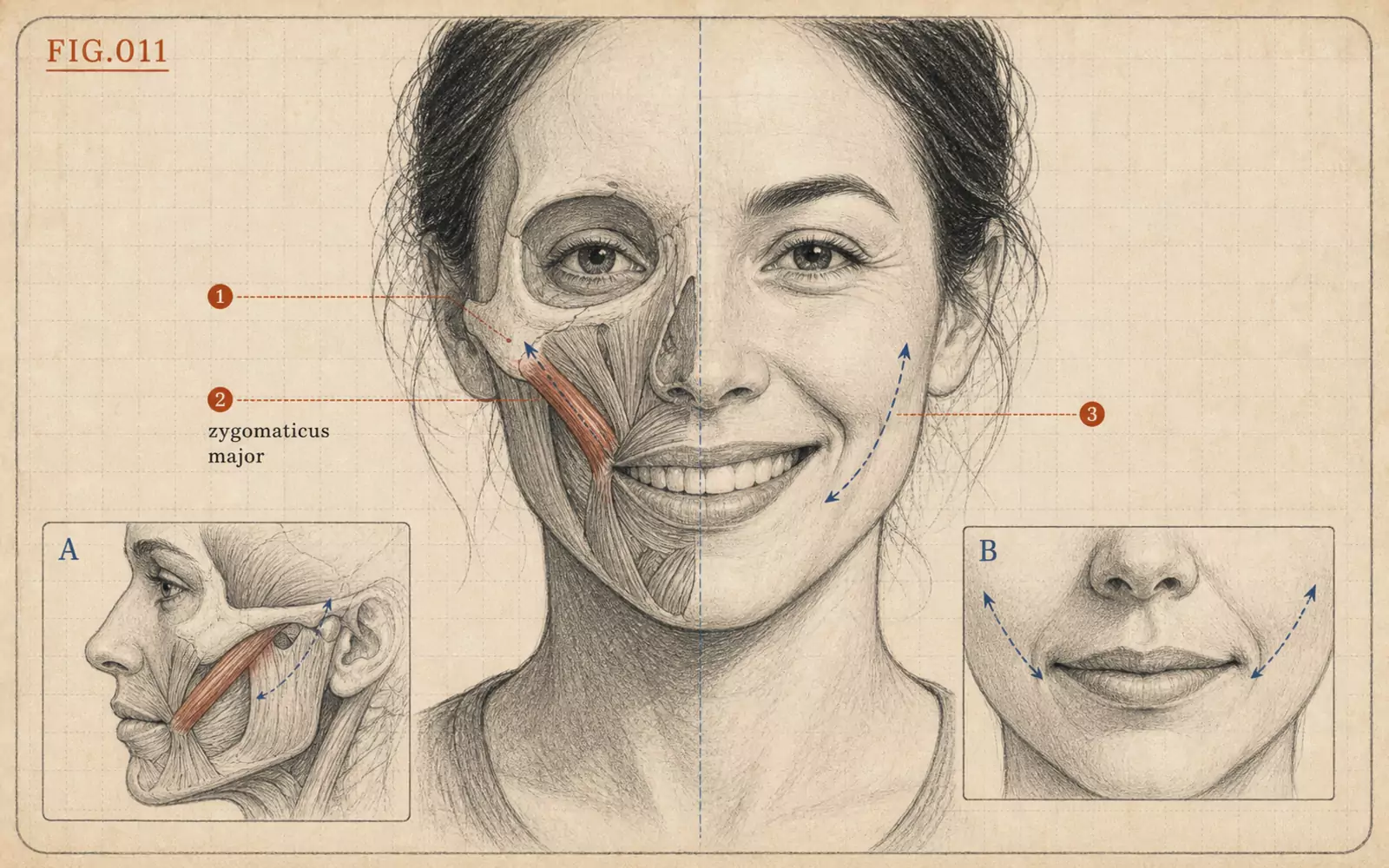 FIG.011Build Your Smile from the Cheekbones, Not the MouthA photo smile starts by lifting the cheeks below the eyes, not by pulling the mouth corners sideways. Showing 3 mm of upper teeth is the benchmark for professional photos.
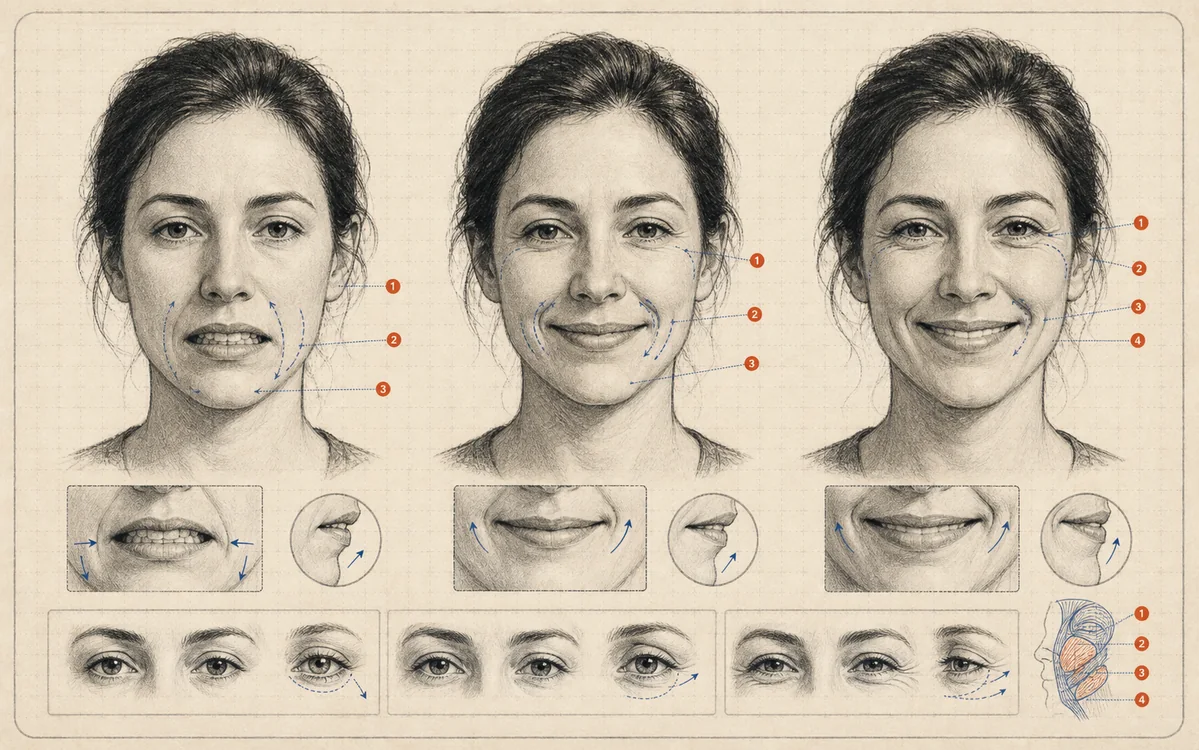 FIG.012Why "Please Smile" Freezes Your ExpressionA photo smile is not just about mood — it is shaped by lifting the cheeks, showing 3 mm of teeth, and catching the moment tension releases.
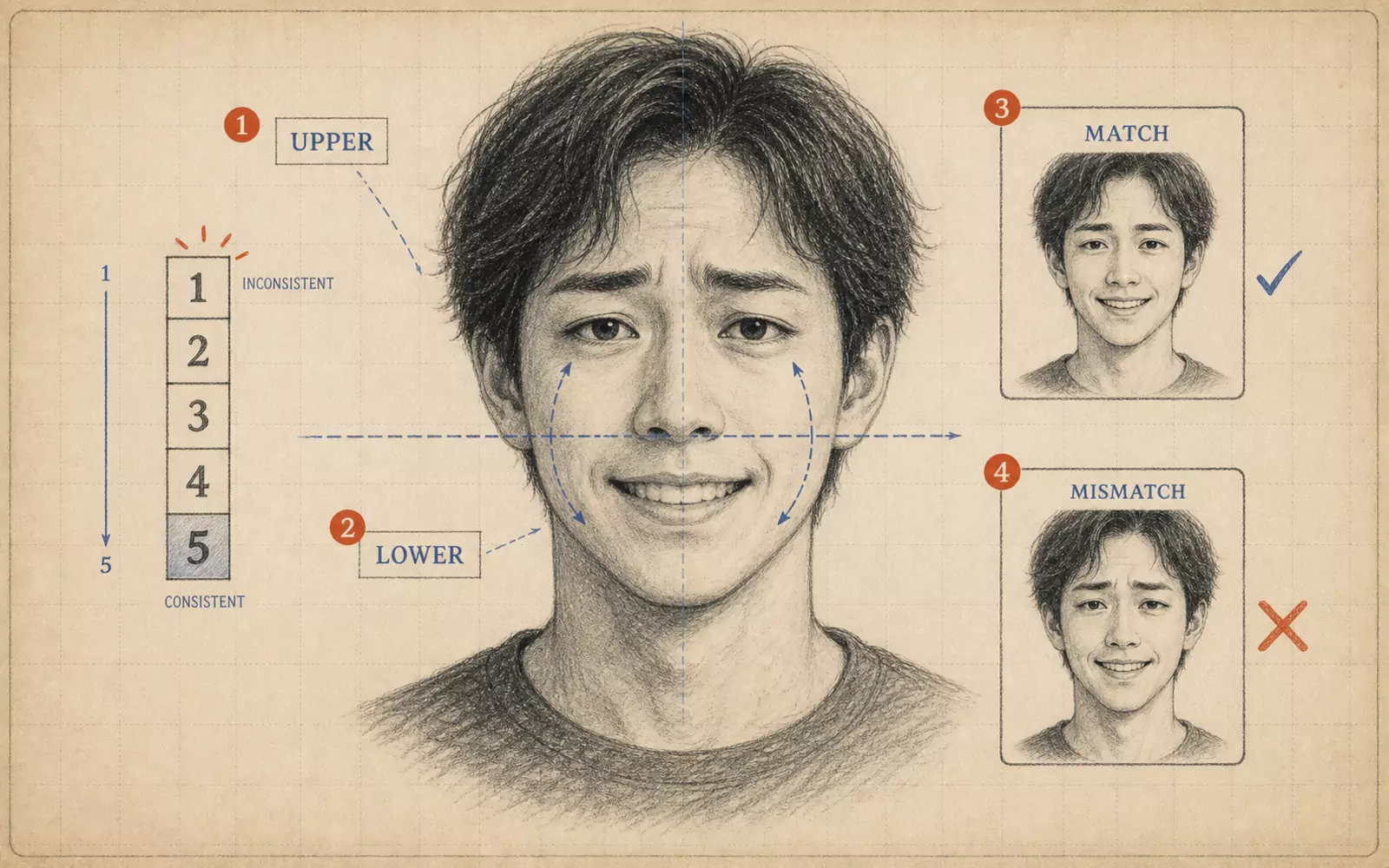 FIG.060Are the Upper and Lower Halves of Your Expression in Sync?When selecting photos, cover each half of the face separately. If only the eyes are wide-open while the mouth is smiling, remove that photo from consideration.