This Article Contains
Why a Smile Can Look "Forced"
When someone looks at a photo and thinks "the smile feels a bit strained," the upper and lower halves of the face are usually out of sync.
People read facial expressions as a whole, but when the eyes and mouth send different signals, they detect the mismatch. Even if they can only say "something feels off," that intuition is accurate.
Conversely, a photo where the upper and lower halves point toward the same emotion does not give viewers any sense of discomfort. Viewing expression not as a "facial feature problem" but as an "upper-lower alignment problem" changes how you approach photo selection.
When Eyes and Mouth Convey Different Emotions
When someone focuses hard on making their eyes look bigger, the eyes end up wide open on their own. Even if the mouth is smiling, the upper half looks closer to a surprised or tense face. This combination is the classic pattern of a forced smile.
The opposite pattern also occurs. When the eyes look soft but the corners of the mouth are pulled strongly to the sides, only the mouth is smiling. The cheeks do not lift, and there is a temperature difference between the eyes and mouth.
In a natural smile, the corners of the mouth rise, the cheeks lift at the same time, and the area beneath the eyes rises slightly along with them. This movement aligns the eyes and mouth in the same direction. For more on how to create a genuine smile, see FIG.011 (Building a Smile from the Zygomaticus).
FIG. 060A diagram showing how to check whether the upper and lower halves of the face are expressing the same emotion.
The Cover-Half Method for Checking Photos
There is a simple method for reviewing candidate photos.
First, cover the mouth in the photo with your hand or a piece of paper. Look only at the eyes. If the eyes look "intimidating," "surprised," or "tired," handle that photo with care. If the eyes alone look "warm," "calm," or "approachable," the upper half is in good order.
Next, cover the eyes and look only at the mouth. If the corners are pulled sideways without the cheeks lifting, the smile may be built with the mouth alone. If the mouth alone looks "warm" or "natural," the lower half is also in good shape.
Finally, look at the whole face. Check whether the eyes and mouth feel like they are at the same emotional temperature. For professional photos, a calm expression with upper and lower alignment will last longer than a big smile.
The Misconception That "Bigger Eyes = Better Photo"
Using eye size as the standard for a good photo leads to blind spots. What matters more than eye size is whether there is minimal tension around the eyes.
When someone tries to open their eyes wider, the eyebrows rise and tension builds around the eyes. In this state, the smiling mouth and the tense eyes appear simultaneously, creating an upper-lower mismatch. Even with the same expression, relaxing the eyes almost always looks more natural.
When selecting photos, trying to evaluate facial features or specific parts tends to turn into fault-finding. Focusing solely on whether the upper and lower halves are aligned speeds up decision-making.
Select a smile photo based on whether the eyes and mouth are pointing toward the same emotion.
Steps for Narrowing Down Candidate Photos
Looking at all delivered photos at once is tiring due to the subtle differences. It is more efficient to narrow down to 3–5 photos first, then review them.
With the shortlisted photos, check in order: upper half, lower half, then the full face. Keep as candidates those photos where covering either half still conveys a warm impression, and the full face maintains the same impression.
Finally, reduce to the actual display size and look again. Even at SNS icon size or on a small business card, photos where the eyes and mouth expression are aligned look stable. A photo that maintains its upper-lower balance even when reduced is ultimately the one you will use longest.
- When selecting photos, check the upper half (eyes) and lower half (mouth) of the face separately by covering each one. See whether both halves give the same impression.
- Photos where only the eyes are wide open while only the mouth is smiling have an upper-lower mismatch.
- A photo that does not feel awkward even when reduced to display size is the one you can use for a long time.
Related Diagrams
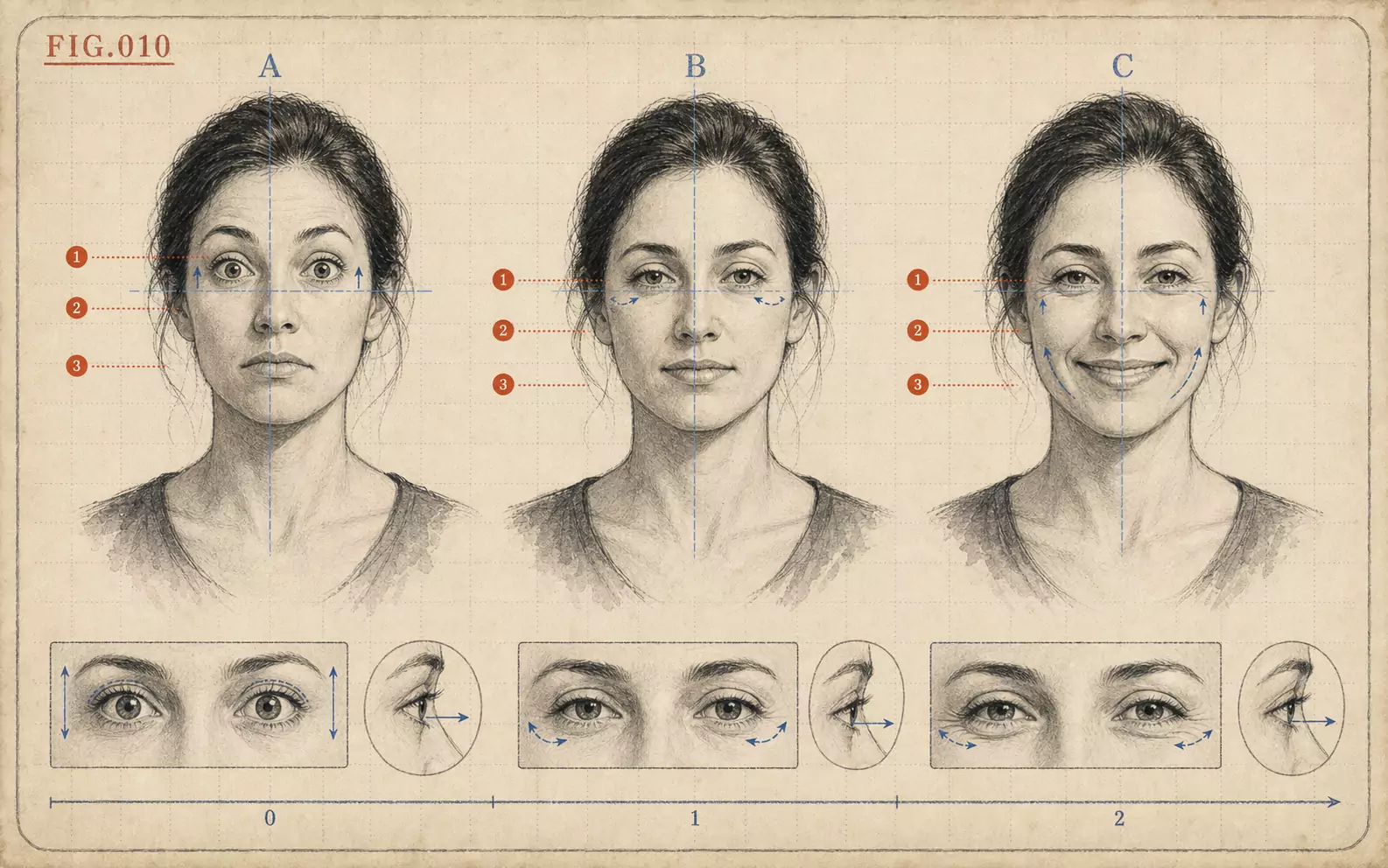 FIG.010The "Make Your Eyes Bigger" Trap: Mismatched Upper and Lower ExpressionsThe wider you open your eyes, the more the smiling mouth and wide-open eyes can fall out of sync.
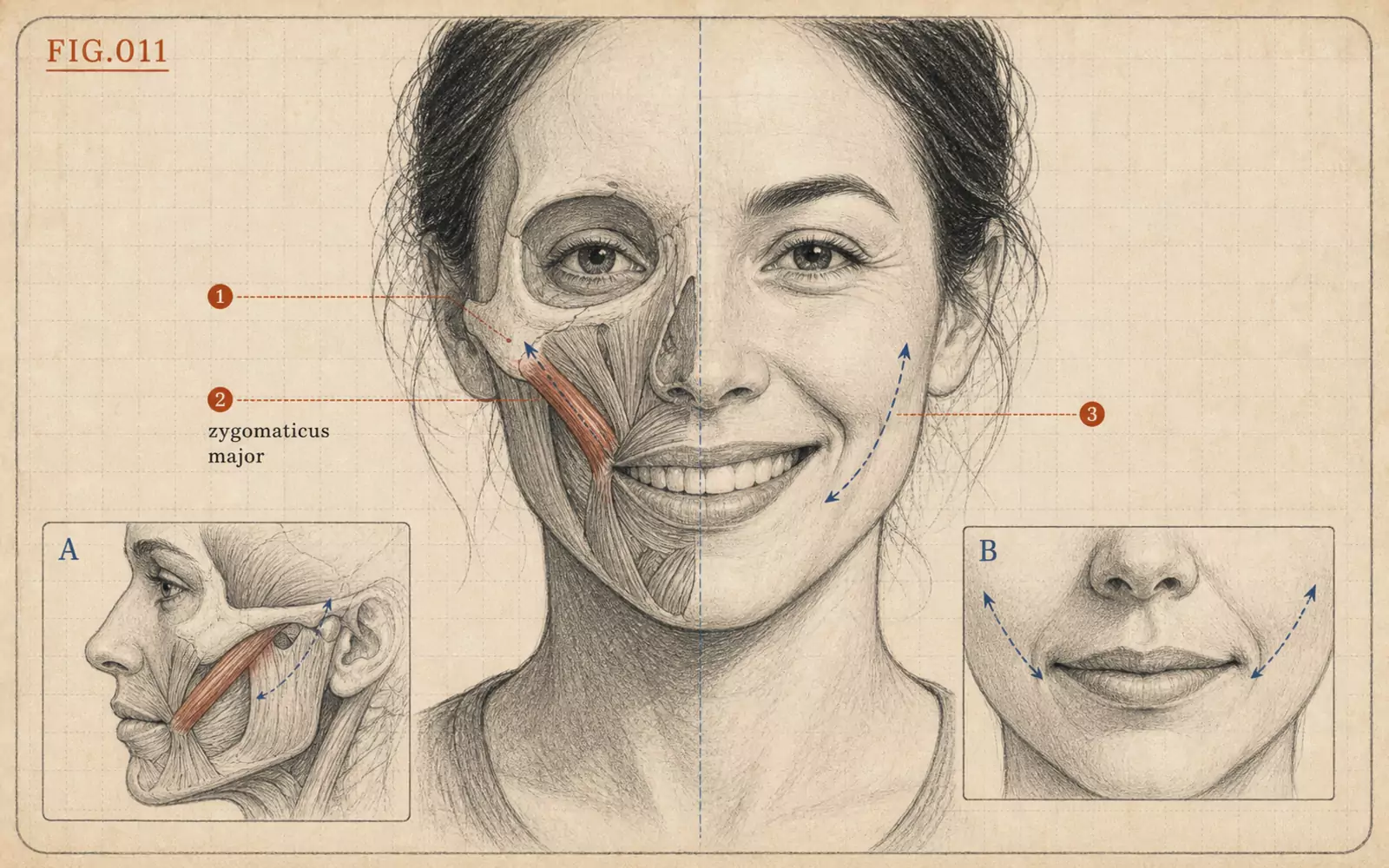 FIG.011Build Your Smile from the Zygomaticus, Not the MouthA smile is made by lifting the cheeks beneath the eyes, not by pulling the corners of the mouth sideways. 3mm of upper front teeth showing is the benchmark for professional photos.
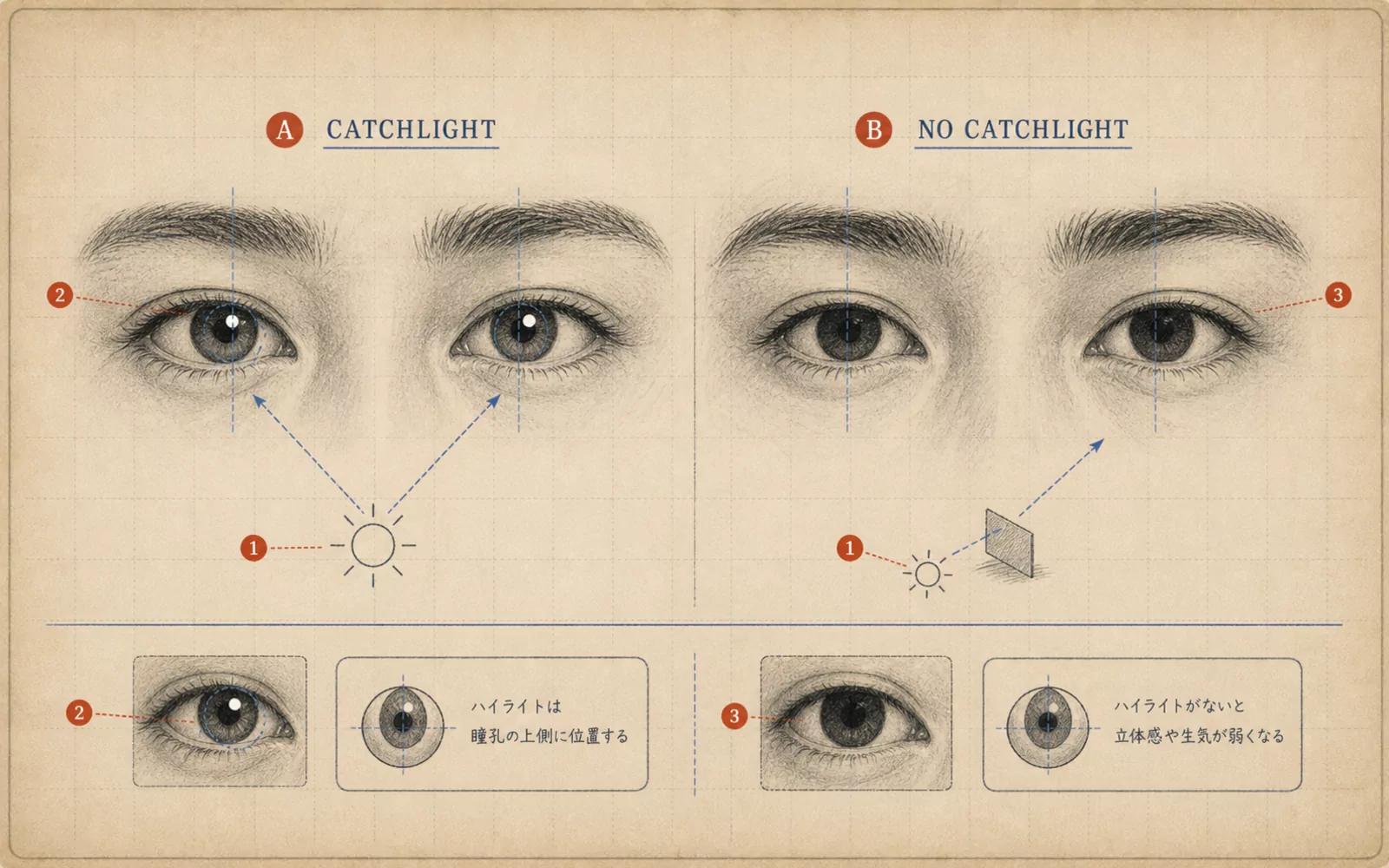 FIG.061Is There Light in Your Eyes?The final step in photo selection is checking the light in the pupils. Photos with small white highlights in both pupils convey a sense of life.