This Article Contains
Include the Moment Right After 3-2-1 as a Candidate
At the moment of "1" in the countdown, most people are holding their smile in place and waiting. The result is a photo that looks like "I'm working hard to smile, but something seems off."
A natural smile is more likely to appear just after the "1" — not during it. When you feel the shot is done and the effort releases — shoulders drop slightly, cheek tension eases, eyes soften — that split second captured in a photo reads as natural to the viewer.
In other words, rather than using the countdown as a cue to "lock in," use it as a cue to "start the expression," and make sure those frames right after the count are also captured.
The Longer the Wait, the More the Expression Freezes
While waiting for the countdown, people keep their face tensed in order to "hold" the smile. Even over just three seconds, trying to fix a smile in place gradually fatigues the cheek muscles.
Once the cheeks tire, the mouth may still look like it is smiling but the eyes start to harden. This is when the "upper and lower face mismatch" described in FIG.010 tends to occur.
The longer the wait after the countdown begins, the more pronounced this freezing becomes. Photographers sometimes need extra time to adjust camera settings or check the composition, creating unexpected pauses. Holding the smile through that gap means the expression can tire out before the shutter even fires.
FIG. 014A diagram explaining the countdown trap — the difference between the frozen expression at the "1" of 3-2-1 and the natural expression that appears just after the tension releases.
Taking Several Frames of the Same Shot Reveals the Difference
Even with the same smile, comparing a photo taken at the "1" of 3-2-1 with one taken just after reveals a clear difference in expression.
The former tends to have slightly wide eyes and a fixed mouth; the latter has cheeks that have relaxed a little and softer eyes. Even if the smile is less pronounced in the latter, it is often the one that reads as "approachable" or "natural."
In profile shoots, there is real value in not insisting on a single frame per setup — shooting 3 to 5 frames in a row of the same composition often captures one usable expression among them.
The Chain Reaction of Holding Your Breath
Many people unconsciously hold their breath while waiting for the countdown. Holding the breath raises the shoulders. Raised shoulders shorten the neck and change the angle of the jaw. A shifted jaw means the face is no longer aligned with the camera the way it was.
This is the cause of the "posture collapses just before the countdown" phenomenon — it is not just a smile problem; the chin, shoulders, and neck go out of balance all at once.
The fix is simple. Take a deep breath and exhale before the countdown begins. Consciously drop the shoulders. Then build the smile, and rather than locking in at "1," flow through the countdown instead of stopping at it.
Rather than locking everything in at 3-2-1, keep the moments right after as candidates too.
How to Talk to Your Photographer and Tips for Selfies
There are a few things worth mentioning to the photographer in advance.
- "Could you include some shots without counting down?" — Shooting while talking or laughing naturally tends to produce genuine moments.
- "Could you keep shooting a few frames right after the OK?" — This preserves the frames taken right after the tension releases.
- "Could you let me know when my smile has been going long enough that my cheeks are getting tired?" — It is better to reset and rebuild the expression than to push through fatigue.
When shooting with a smartphone yourself, burst mode is more useful than a 3-second timer. Rather than the 1st frame (the "1" moment), the 2nd or 3rd frame often captures the expression after the effort releases. Comparing them side by side often turns up a surprising one.
- The moment of "1" in the countdown is when expressions are most likely to freeze — a natural smile tends to appear just after, when the tension releases.
- Exhaling once before the countdown helps drop the shoulders and neck tension so posture does not collapse.
- Ask your photographer if they can include countdown-free shots and a few extra frames right after the OK.
Related Diagrams
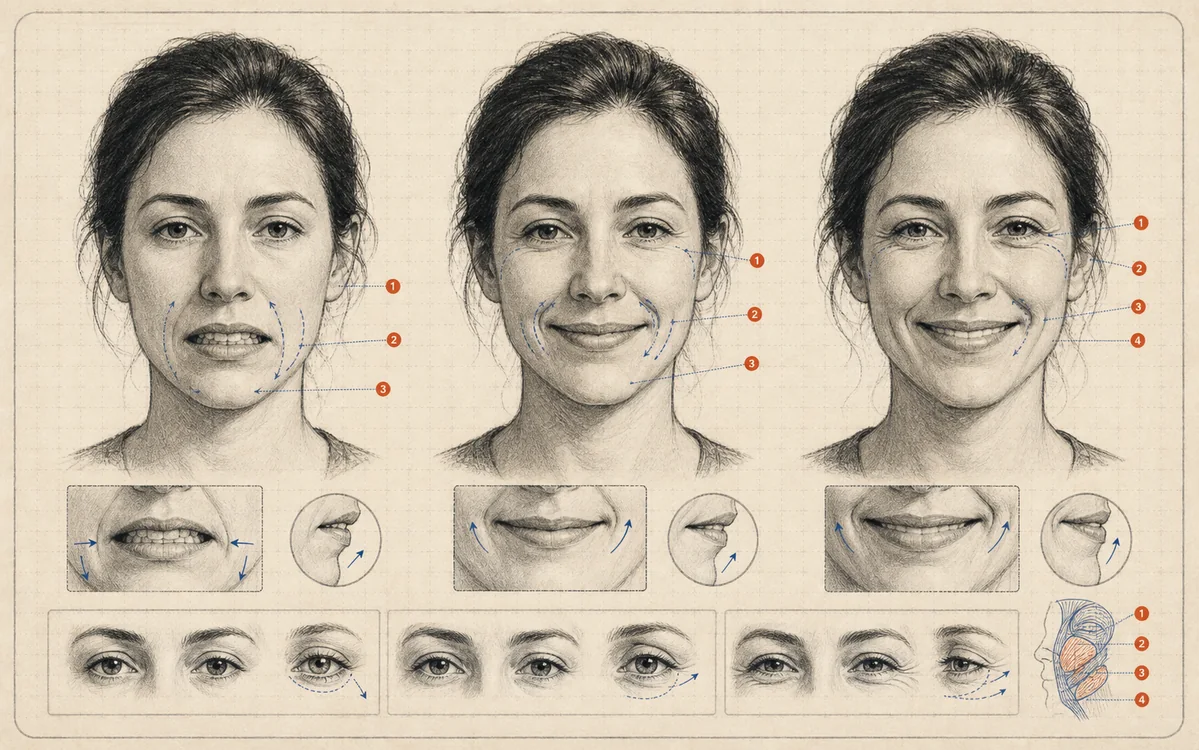 FIG.012Why "Say Cheese" Freezes Your ExpressionA smile is not just a matter of mood — it is shaped by the cheekbone muscle, 3mm of front teeth, and finding the right moment to release the tension.
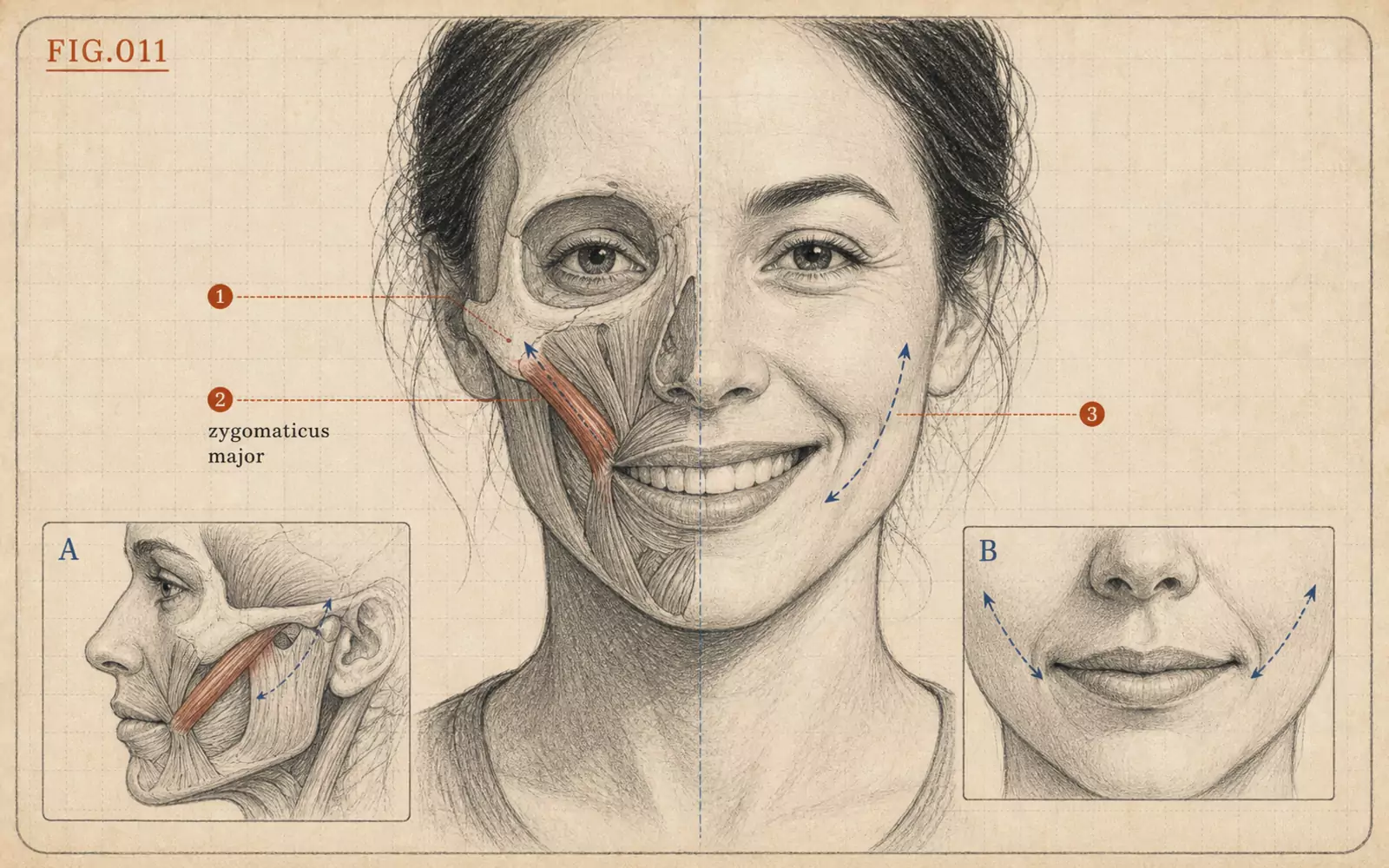 FIG.011Build Your Smile from the Cheekbone Muscle, Not the MouthA smile is made by lifting the cheeks below the eyes, not by pulling the corners of the mouth sideways. Showing about 3mm of the upper front teeth is the benchmark for professional photos.
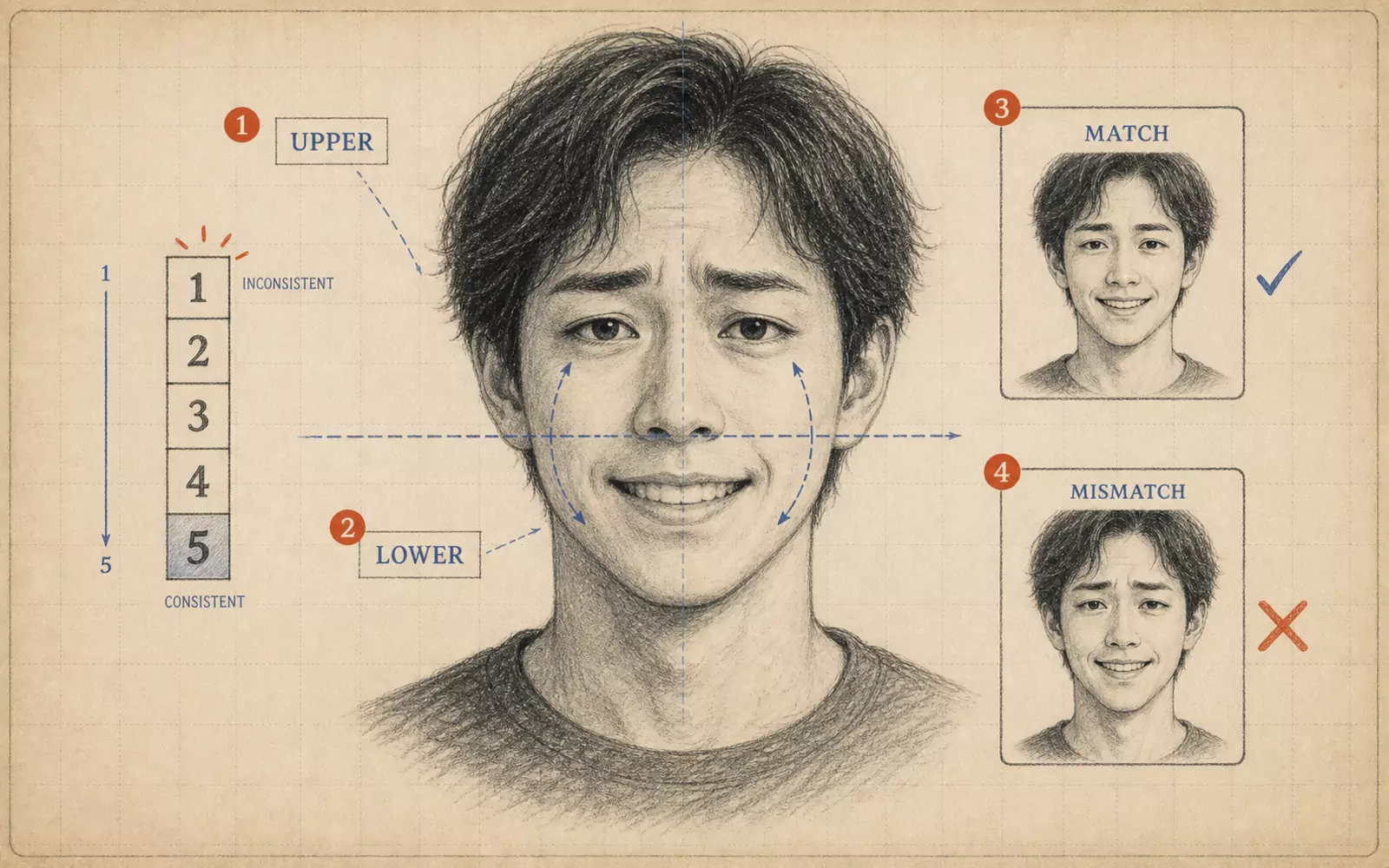 FIG.060Are the Upper and Lower Halves of Your Expression Aligned?When reviewing photos, look at the upper and lower halves of the face separately. If only the eyes are wide open while the mouth smiles, remove it from the candidates.