This Article Contains
What Changes with Close-Up Photography
When the camera is too close, a phenomenon called "perspective distortion" occurs. Parts that are closer to the camera — the tip of the nose, the cheeks — appear to push strongly forward, while parts that are further away — the ears, the back of the head — appear smaller and recessed.
The result is that your nose looks larger, your cheeks appear wider, and your face seems broader in outline. This is not a feature of your face — it is a product of shooting distance.
Close-range shooting with a wide-angle lens (equivalent to 24–28 mm, common in smartphone selfies) is especially prone to this effect, and people who notice something off in every selfie are usually seeing exactly this. The reason professional portrait photography typically uses 85–135 mm lenses is precisely to avoid this distortion.
Distortion Is a Distance Problem, Not a Lens Problem
It is tempting to think "just change the lens and it will be fixed," but distance is the primary cause. Even with the same wide-angle lens, your facial proportions settle down when you have enough distance from the camera.
You don't need to memorize lens specifications. Simply observe whether the camera is very close to your face or a bit further away. A rough rule of thumb: anything closer than an arm's length deserves attention.
One effective approach is for the photographer to step back and compensate by zooming in with the telephoto end. The background often tidies up as well, producing a shot that works well as a profile photo.
FIG. 021A diagram showing how facial proportions change with camera-to-subject distance. Left: close range (with distortion). Right: appropriate distance (proportions stable).
How to Judge Camera Distance on Location
There are a few things you can check during the shoot.
First, pay attention if the camera comes closer than an arm's length. This is especially worth noting when shooting a bust-up (chest and above) composition at close range, as facial proportions are most likely to shift.
When reviewing candidate photos, check whether the nose looks disproportionately large, or whether the outline of the face appears wider than expected. The impression of "I look heavier than I am" sometimes comes from distortion rather than anything else.
If the shooting space is tight and distance is unavoidable, you can ask for a slightly wider upper-body composition instead of a tight bust-up, or discuss whether anything can be done in post-processing.
The Downside of Staying Silent
Many people think, "It might be rude to say something to a professional photographer," and stay quiet. The reality, however, is that distance-related distortion is difficult to fix in post-processing.
If you notice that "my face looks distorted" only after seeing the finished photo, removing just the distortion from that image is technically very difficult — and attempts to correct it can actually make the result look more unnatural. Checking during the shoot is the most practical solution.
Photographers are used to hearing their subjects' preferences. A request like "could you adjust the distance a little?" comes across as a preference about the final result, not a criticism of their skill.
Asking for a step back is not being demanding — it is confirming that your facial proportions are protected.
Easy Ways to Ask
Having a few phrases ready means you won't hesitate when the moment comes.
- "Could you take one shot from a bit further back?" — Simple and easy to say.
- "Could you shoot both at close range and from a bit further back?" — Useful when you want to keep candidates to compare.
- "Do the facial proportions look okay with the current lens distance?" — Good if you want to raise it as a question rather than a request.
When reviewing photos afterward, look at the balance of the nose, cheeks, and face outline. If the proportions look off compared to a person in the center, distance is likely the cause. Even if you like the expression, a noticeable proportion issue is worth discussing a reshoot.
- Close-range shooting makes the nose and cheeks appear more prominent, changing facial proportions from how they actually look.
- As the subject, focus on distance rather than the lens. Anything closer than an arm's length deserves attention.
- "Could you take one shot from a bit further back?" is the most effective thing you can say during the shoot.
Related Diagrams
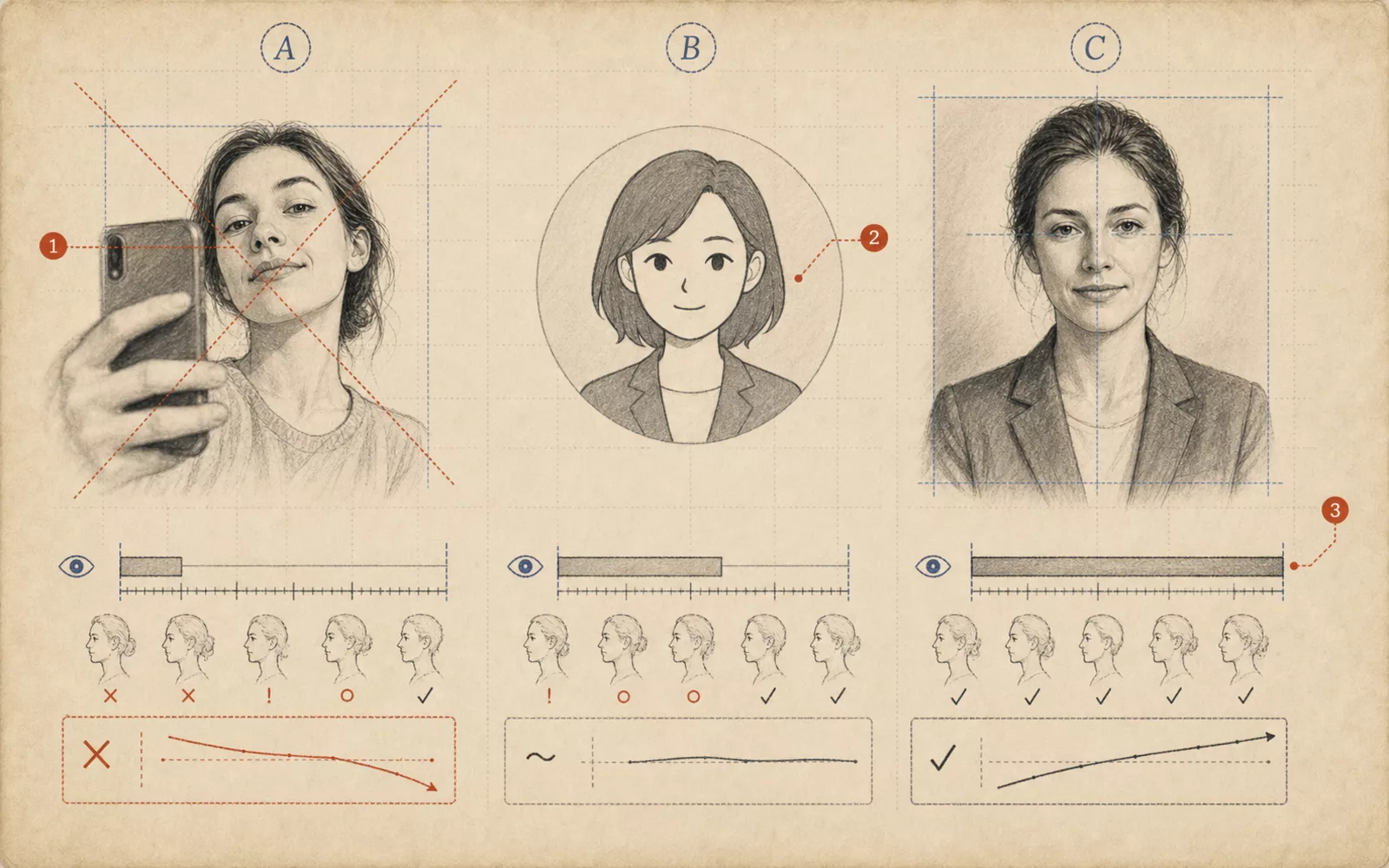 FIG.004Selfies, Illustrations, and Professional Photos: How Trust Levels DifferThe sense of presence and trust a viewer receives differs between selfies, illustrations, and professional shots. A guide to choosing based on your purpose.
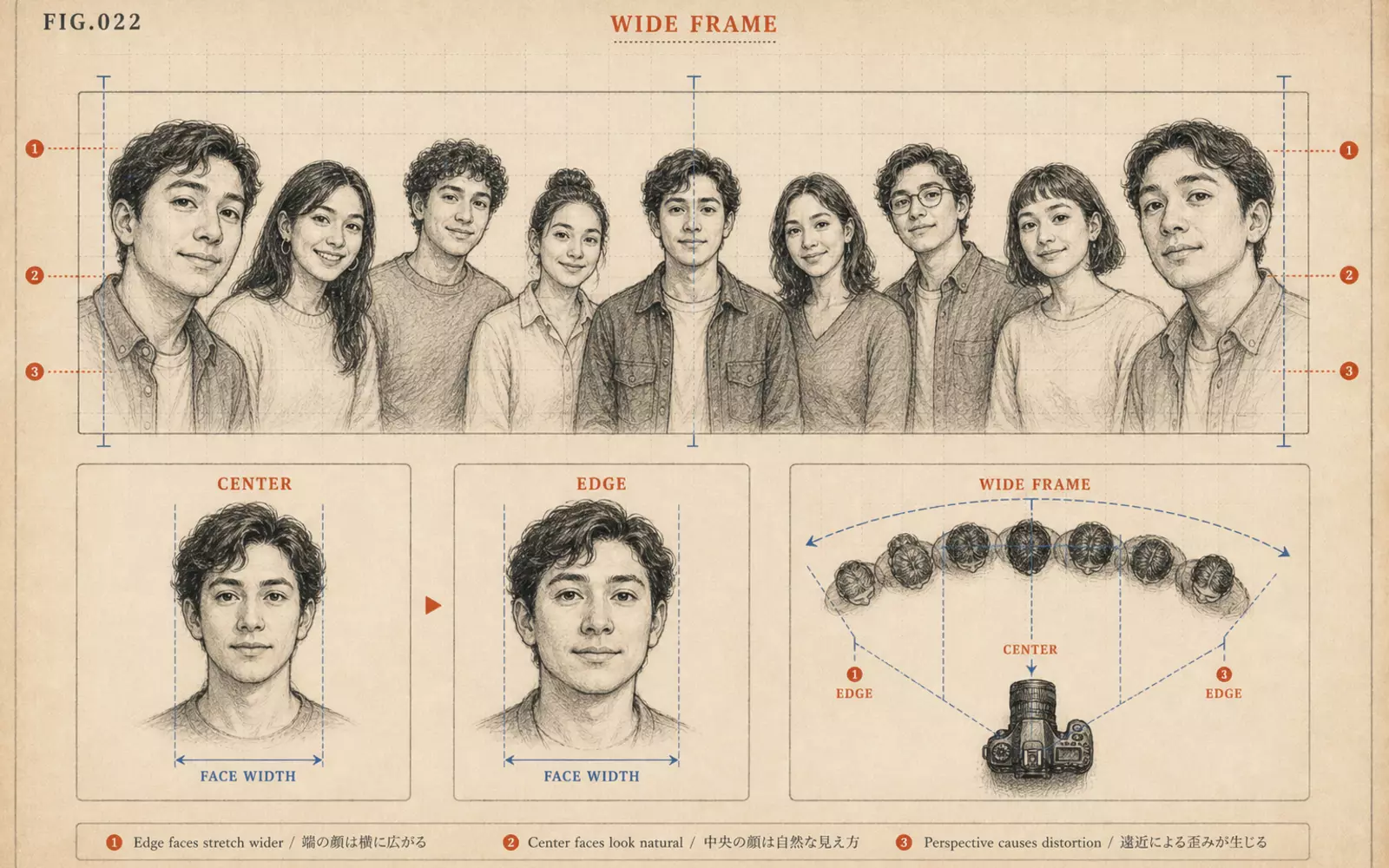 FIG.022When You're Placed at the Edge of a Group PhotoThe edge of a group photo is where wide-angle lenses tend to stretch faces sideways. Moving toward the center and ensuring distance are the remedies.
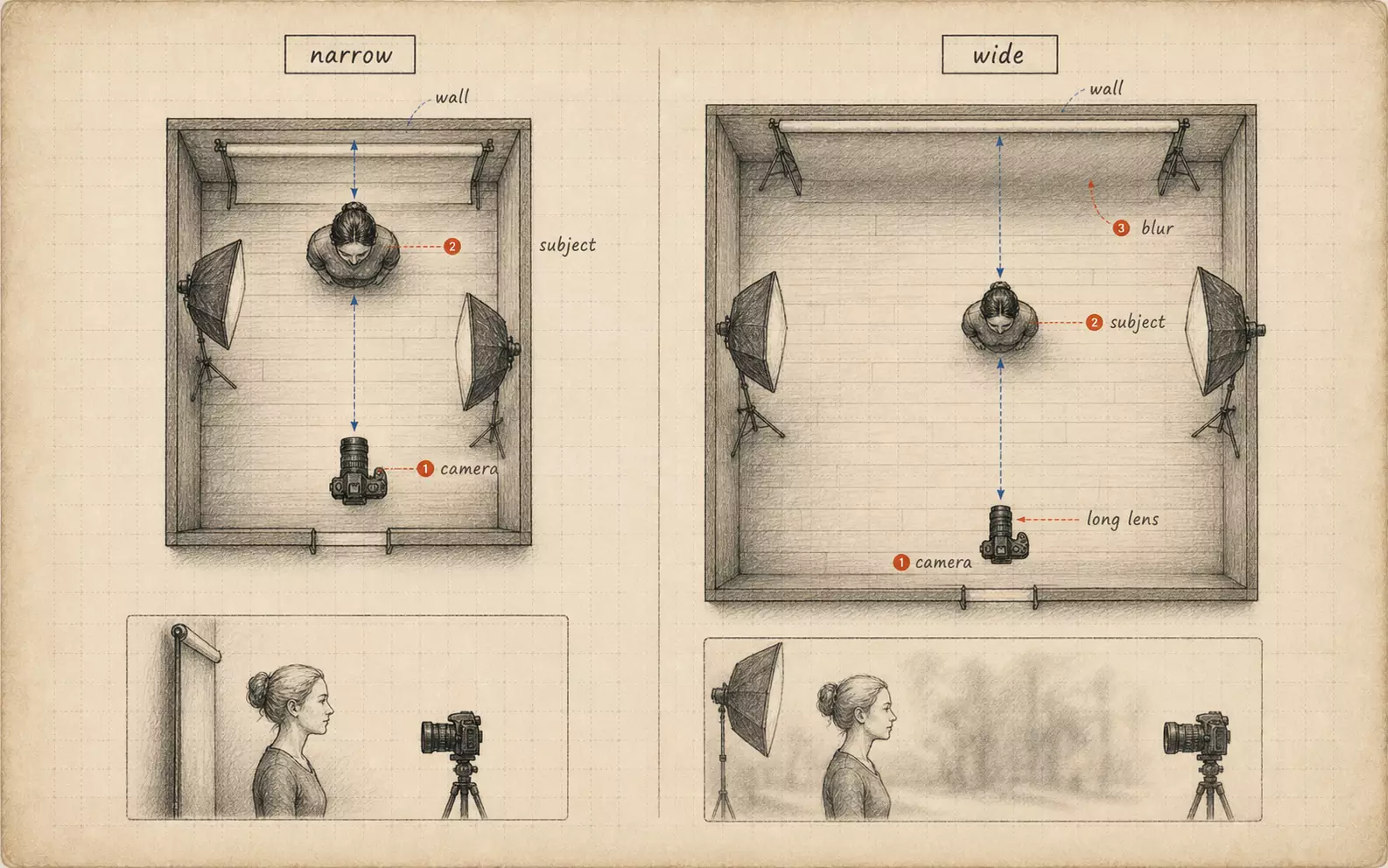 FIG.082What Changes with Studio SizeStudio depth is directly tied to lens choice. A 135 mm lens needs at least about 3.88 m of backing distance for a full-body shot.