This Article Contains
The Real Reason a Larger Studio Matters
The idea that "bigger studio equals better photos" is common, but the real value of size is the camera's room to step back. The more depth the space has, the farther back the photographer can go. The farther back they go, the more easily a medium telephoto lens can be used — and with it, facial proportions are naturally preserved.
In a compact studio, the camera must move closer to the subject. That forces wide-angle shooting at close range, which tends to exaggerate perspective in the nose and cheeks (see FIG.081).
Studio size, in other words, determines the available range of lenses and distances. When evaluating a studio, depth is as important to the final image as price or interior design.
How Much Distance You Need for Full-Length Shots with a 135mm Lens
As a practical guideline, fitting a 170cm person full-length in the frame with a 135mm lens requires approximately 3.88 meters of camera-to-subject distance. This is the distance from where the subject stands to the camera position. When you factor in the backdrop, lighting, and other equipment, the actual space needed is greater still.
With a 50mm lens, a full-length frame can be achieved at around 1.44 meters — but lens choice depends on the intended use. When natural facial proportions are the priority, shooting from farther back with an 85–135mm lens is the better fit. If 50mm is used up close, check sample shots to confirm there is no visible distortion in the face.
An 84mm lens requires less camera distance than a 135mm for the same full-length frame. However, shorter focal lengths increase perspective distortion. Where exactly to set that lens-distance balance is a judgment call that varies by studio and photographer.
FIG. 082A diagram showing how studio depth and shooting distance influence the choice of lens.
Bust Shots, Full-Length, and Extra Framing Space Each Need Different Depth
For bust shots only, the required camera distance is relatively short, so a compact studio may be sufficient. Even with a medium telephoto lens, a camera-to-subject distance of around 2 meters can work for a bust-up frame.
Full-length shots require more camera distance. This is especially true when generous blank space is needed — for a website header, for example, where the subject needs to appear smaller within the frame — because that calls for the camera to step back even further.
If you already know the kind of shot you want, either ask the studio before booking — "Can you accommodate this type of composition?" — or check the portfolio for examples close to what you have in mind. Full-length, generous framing, and horizontal compositions each have different depth requirements.
Don't Judge Studio Size by Backdrop Width Alone
A common mistake when choosing a studio is reasoning that "a wide backdrop means a large space." A wide backdrop only tells you how much wall space is behind the subject. If the camera end of the room is cramped, there is still no room to step back.
What matters is how much distance can be placed between the subject and the camera — not the width of the backdrop. Studio websites often list total floor area in square meters, but a long, narrow room and a nearly square room of the same area offer very different shooting conditions.
Also be cautious about the reasoning "it's a small space, but we can blur the background." Background blur is achievable, but the perspective distortion from close-range wide-angle shooting on the face remains. Background rendering and facial rendering need to be evaluated separately.
A studio's depth is the margin that gives you a choice of lens and distance.
What to Confirm Before Booking
Start by deciding what type of shot you actually need. For bust shots only, a smaller studio may be fine. If you need full-length shots or generous blank space, depth becomes essential to confirm.
In your inquiry, ask: "Do you have enough depth to shoot full-length with a medium telephoto lens?" or "How far back can the camera go for full-length shots?" A specific number in response makes it easy to evaluate.
After the shoot, check whether the face or feet look unnaturally large. If something seems off, look at it as a lens-and-distance question rather than an expression question. That assessment becomes useful context for choosing where to book next time — and what to confirm in advance.
- The greater a studio's depth, the more room the camera has to step back, making it easier to use a medium telephoto lens and preserve natural proportions in face and body.
- As a guideline, shooting a 170cm person full-length with a 135mm lens requires approximately 3.88 meters of camera distance. The required depth differs for bust shots, full-length shots, and shots with generous framing space.
- Before booking, confirm not the width of the backdrop, but how much camera-to-subject distance the studio can actually provide.
Related Diagrams
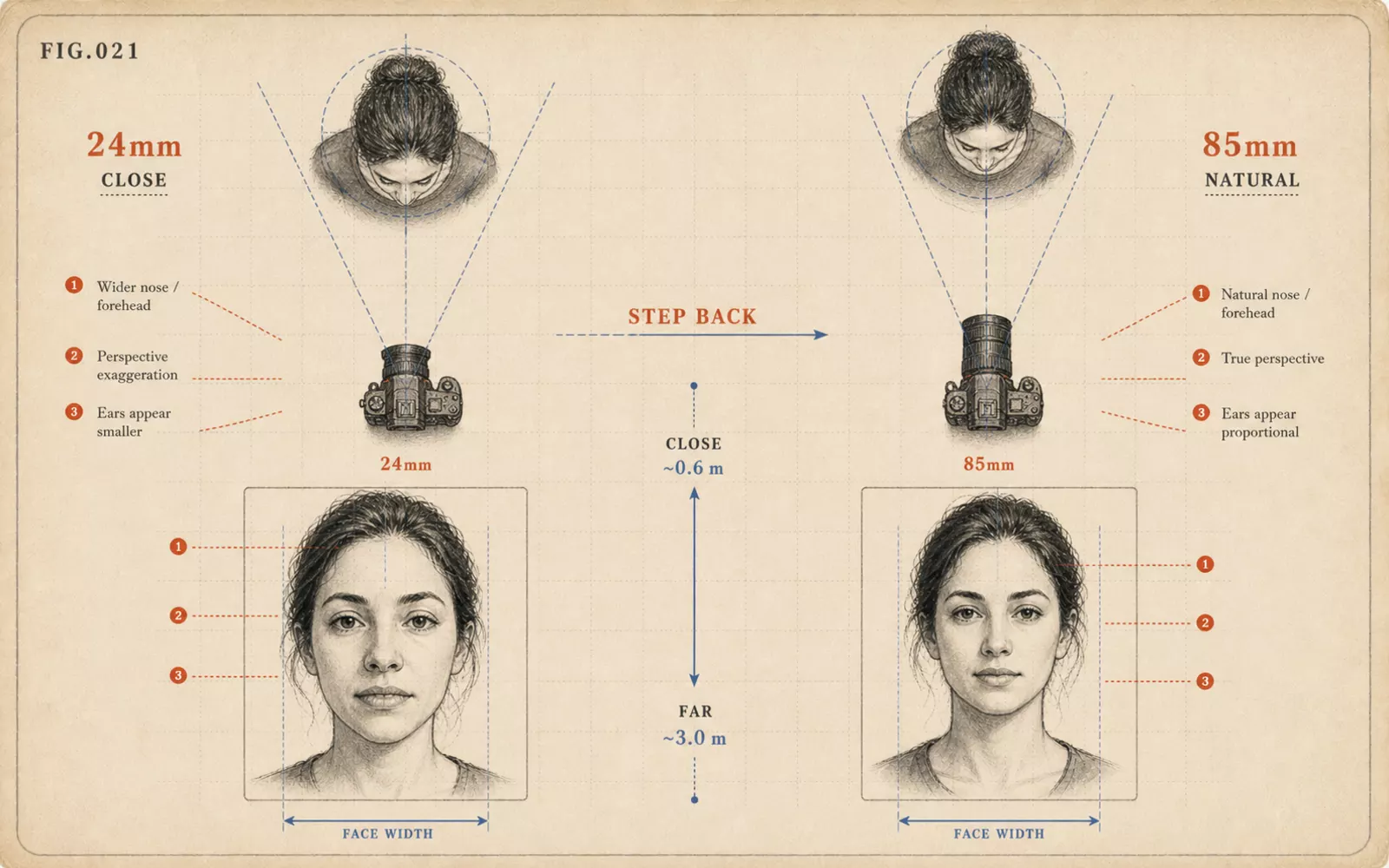 FIG.021The Courage to Ask the Photographer to Step BackWhen the camera is too close, the face is captured large and distorted. The case for 85–135mm with distance over 24mm up close.
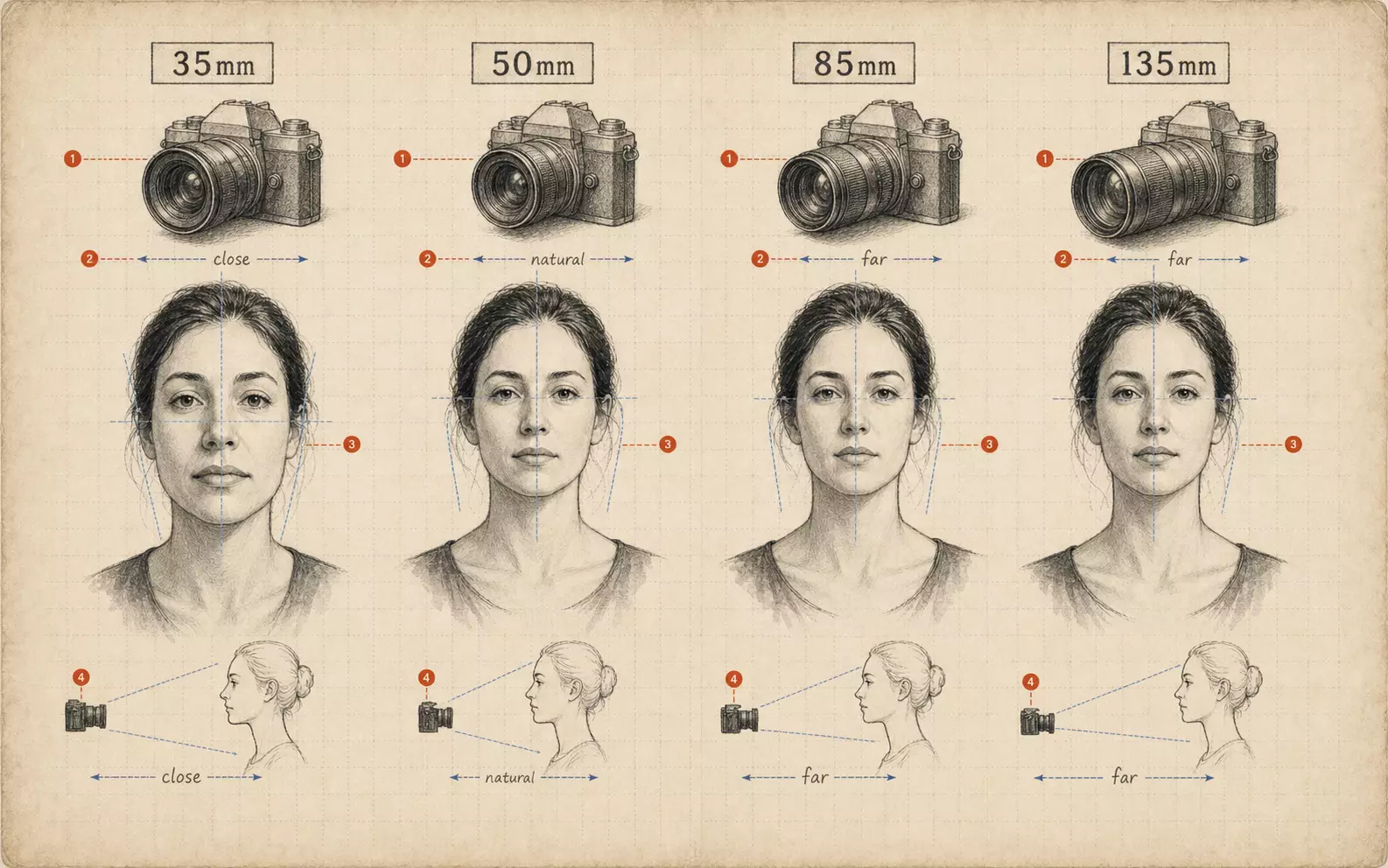 FIG.081The Lens Your Photographer Uses Determines 80% of the ResultA wide-angle lens up close and a medium telephoto from a distance produce different facial proportions and background rendering.
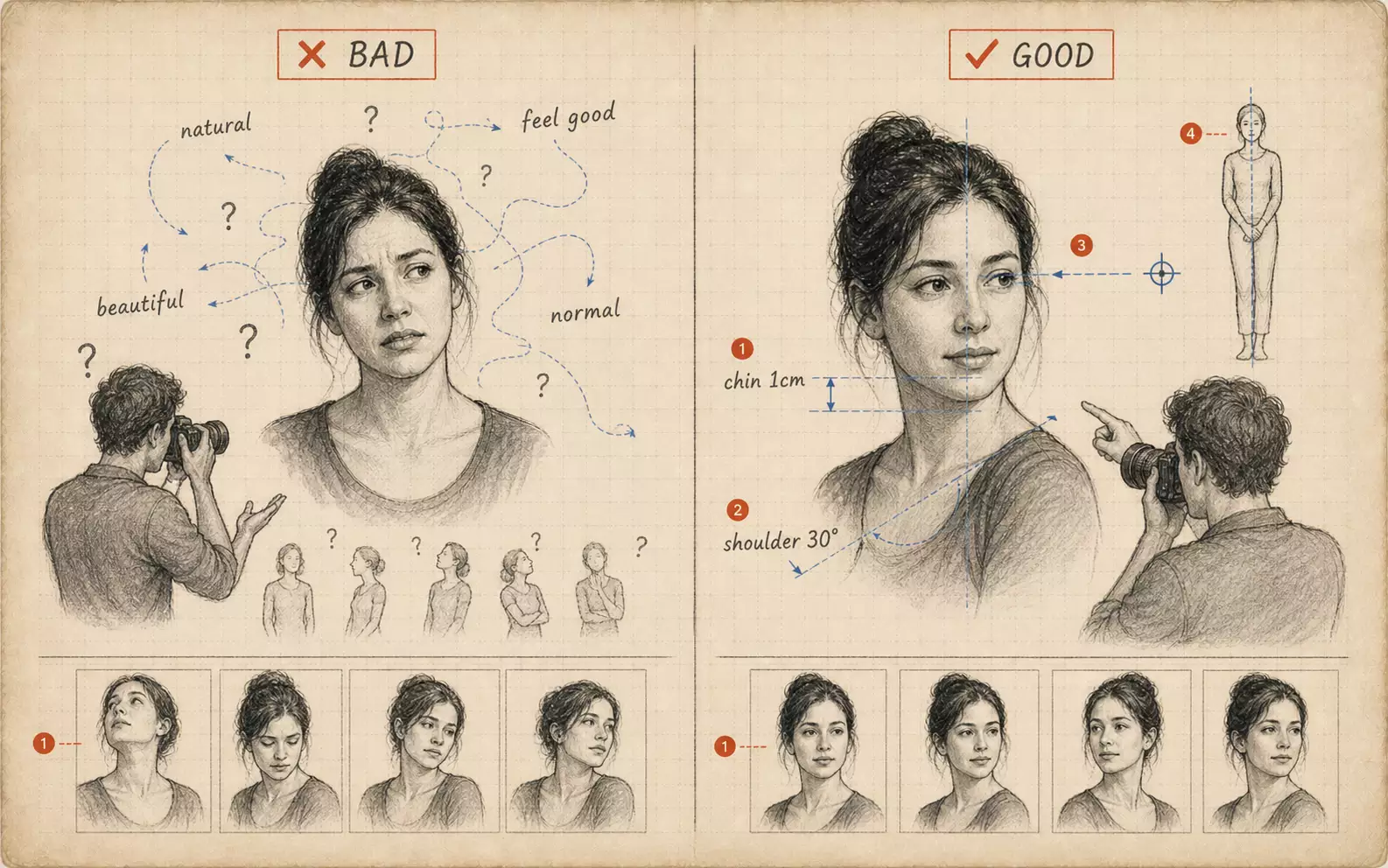 FIG.083Vague Direction Leaves You With Nowhere to Move"Just look natural" tells you nothing about how to move your body. Good direction names the part and the amount.