This Article Contains
Why Catchlights Transform the Look of the Eyes
A catchlight is the small white reflection of light that appears in the pupils. It is a detail that is easy to overlook, yet it is one of the elements that most significantly changes the overall impression of a photo.
When this light is present in the eyes, the expression looks lively and the viewer feels a natural sense of warmth. When it is absent, the eyes look sunken and the expression can seem flat or distant. Whether or not that light is there affects the impression of the eye area more than the size or shape of the eyes or the thickness of the eyeliner.
The catchlight does not need to be large. A single small point in each pupil is enough. Too strong a reflection, or catchlights from multiple light sources, can actually look unnatural, so a natural size is the goal.
Why Turning Only Your Face Is Often Not Enough
To get a catchlight, the pupils need to face the light source. That means turning your face toward the light — but if you try to turn only your face, you end up twisting your neck, which puts tension in your shoulders and neck.
If your chest and body are still angled away from the light while only your face turns, the result is a face that twists unnaturally in isolation. The light may technically enter your eyes, but the postural awkwardness remains in the photo.
Aligning your chest with your face and angling both toward the light source reduces how much your neck needs to move, and you can receive the light in a natural posture. Catchlights are most reliably achieved when your entire body is oriented toward the light source.
FIG. 024A diagram showing the face and chest orientation needed to get catchlights in the eyes.
Getting Catchlights with Windows, Walls, and Reflectors
When using a window, avoid facing it head-on. Instead, angle your face and chest gently toward the window. On days when direct sunlight is strong, soften it with a sheer curtain before you turn toward it. If the light is so bright that you squint, your expression will be stiff even if the catchlight gets in.
A white wall nearby can also function as a light source, since light bounces back from it. Even if you are far from the window, standing facing a white wall can cast a soft, even light on your face. If the cheek on the shadow side is falling too dark, simply placing a sheet of white paper or a folded A3 page in front of you can supplement the light.
Even if there is a strobe on set, you don't need to specify technical details as the subject. Simply saying "could you check whether the light is catching in my eyes?" is enough. That one line prompts the photographer to adjust the position and angle of the lights.
The Misconception That Opening Your Eyes Wide Fixes It
When eyes look dark and sunken, some people try to open their eyes wider. But opening your eyes more does not help if the light is not reaching them — catchlights will not appear. And as mentioned in FIG.010, forcing your eyes open wide can create a mismatch between the upper and lower halves of your expression.
Another common mistake is twisting only your face toward the light source. Light may enter your eyes, but your shoulders and neck look stiff, and the overall impression of the photo becomes tense.
The impression of the eye area changes through light and body orientation before it changes through makeup or contact lenses. Keeping this order in mind simplifies your preparation before a shoot.
The small white point in the pupil is the marker that makes the expression look alive in a photo.
What to Check During the Shoot and When Selecting Photos
During the shoot, zoom into the pupils slightly on the camera's rear display or screen. Check whether both pupils have a small point of light. If the light is not there, change the direction of your face and chest and the position of the window or reflector before trying to change your expression. Trying to solve it through expression alone comes second — checking light and body orientation comes first.
When selecting candidate photos, check whether the eyes look dark and sunken even when the image is reduced to icon size. In contexts where photos are displayed small — SNS icons, list views — the light in the pupils still registers as an impression. A photo where the eyes have a small point of light, even if the expression is comparable, tends to hold up better across different uses over time.
- A catchlight is the small white reflection of light in the pupils — it supports the sense of vitality in the eyes. Check for it before evaluating eye size or makeup.
- Angling your chest as well as your face toward the light makes catchlights easier to achieve without compromising your posture.
- When selecting photos, check that both pupils still show a point of light even when the image is reduced to icon size.
Related Diagrams
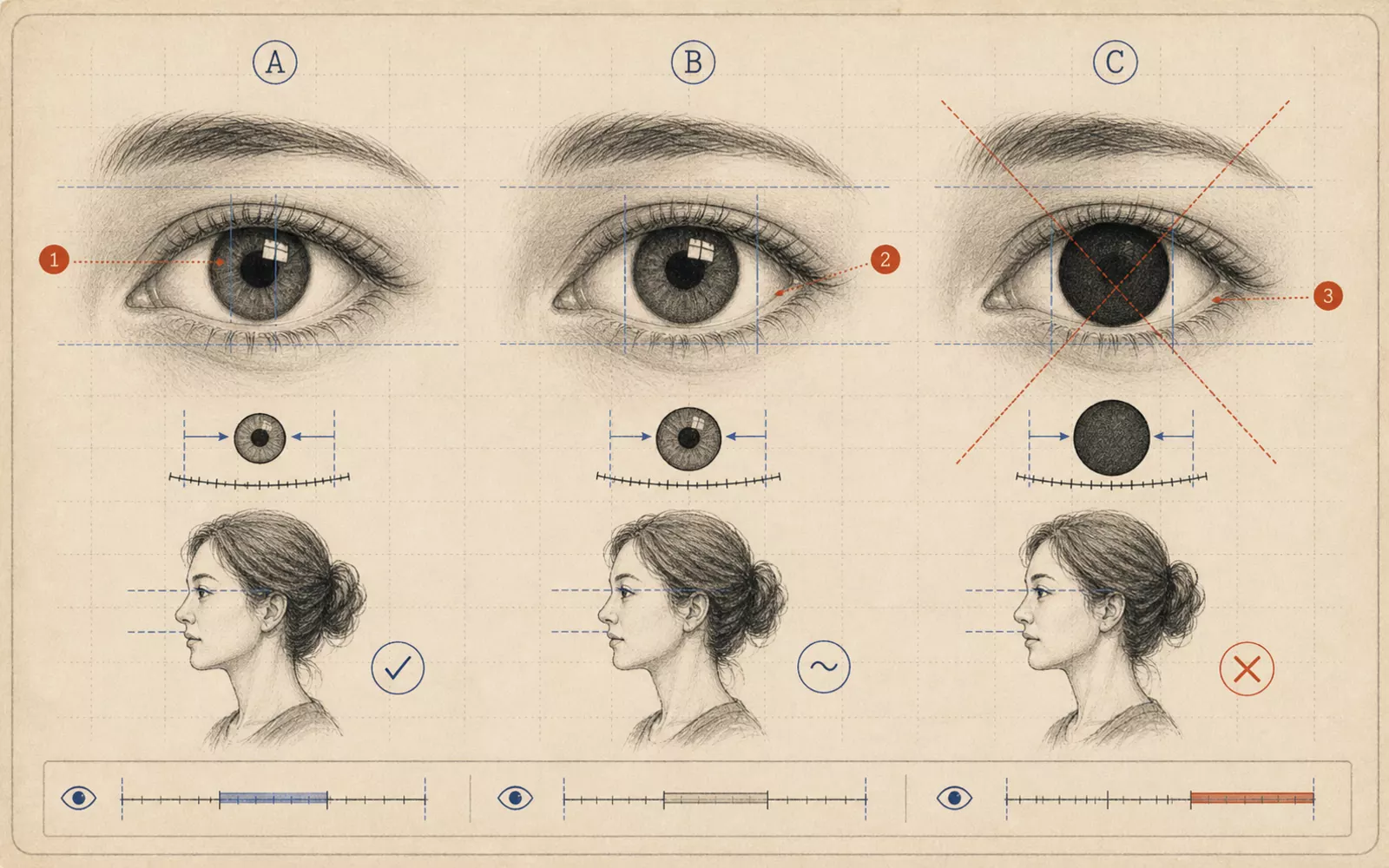 FIG.005Choosing Colored Contacts: Don't Make the Iris Too LargeFocus on the catchlight in the pupil and the white space of the sclera rather than iris size. A guide to the standard for eyes that still look like you.
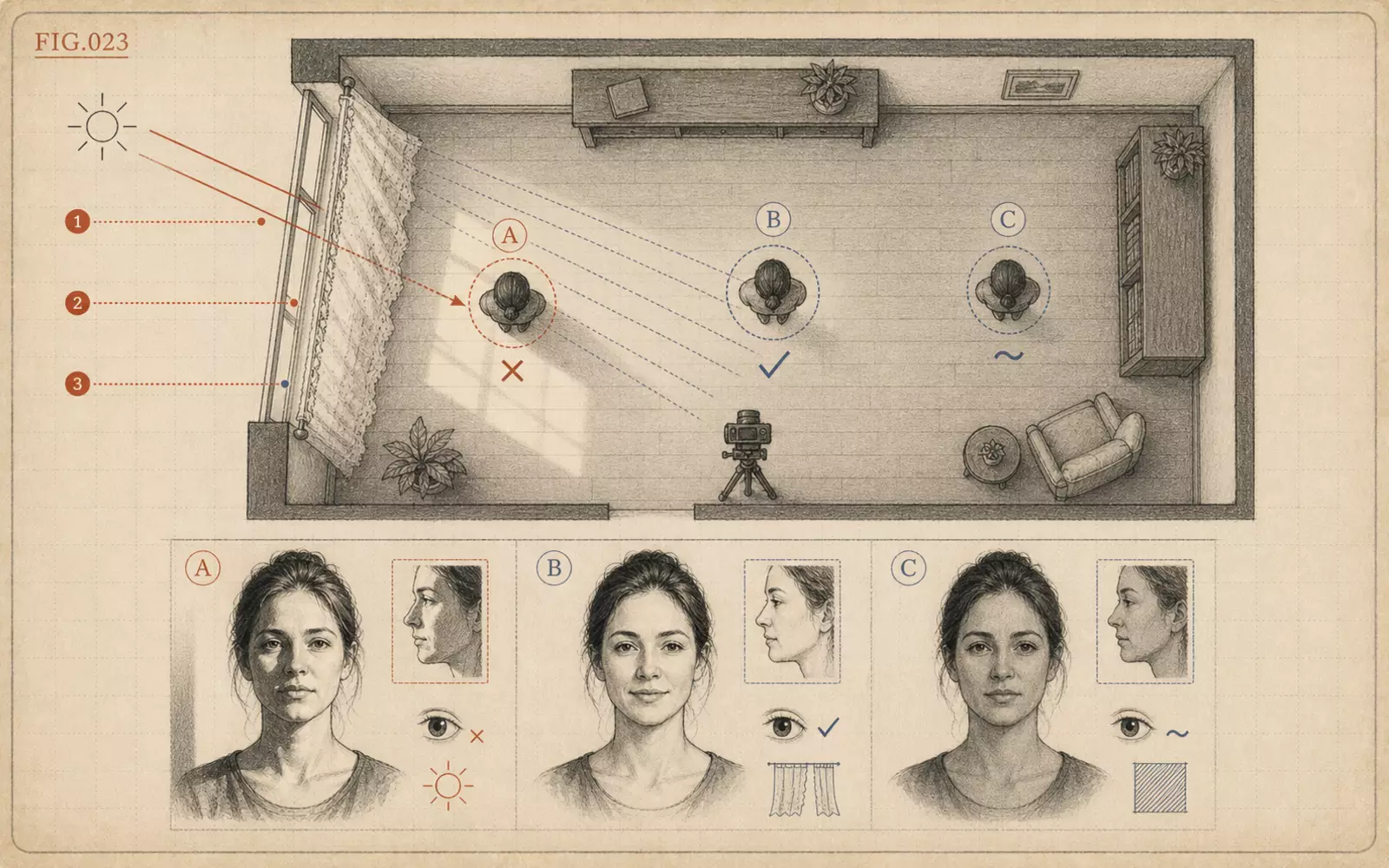 FIG.023Where to Stand by a Window in Direct SunlightBy a window, softening direct sunlight matters more than finding brightness. Use a sheer curtain or fabric to turn the window into a large light source.
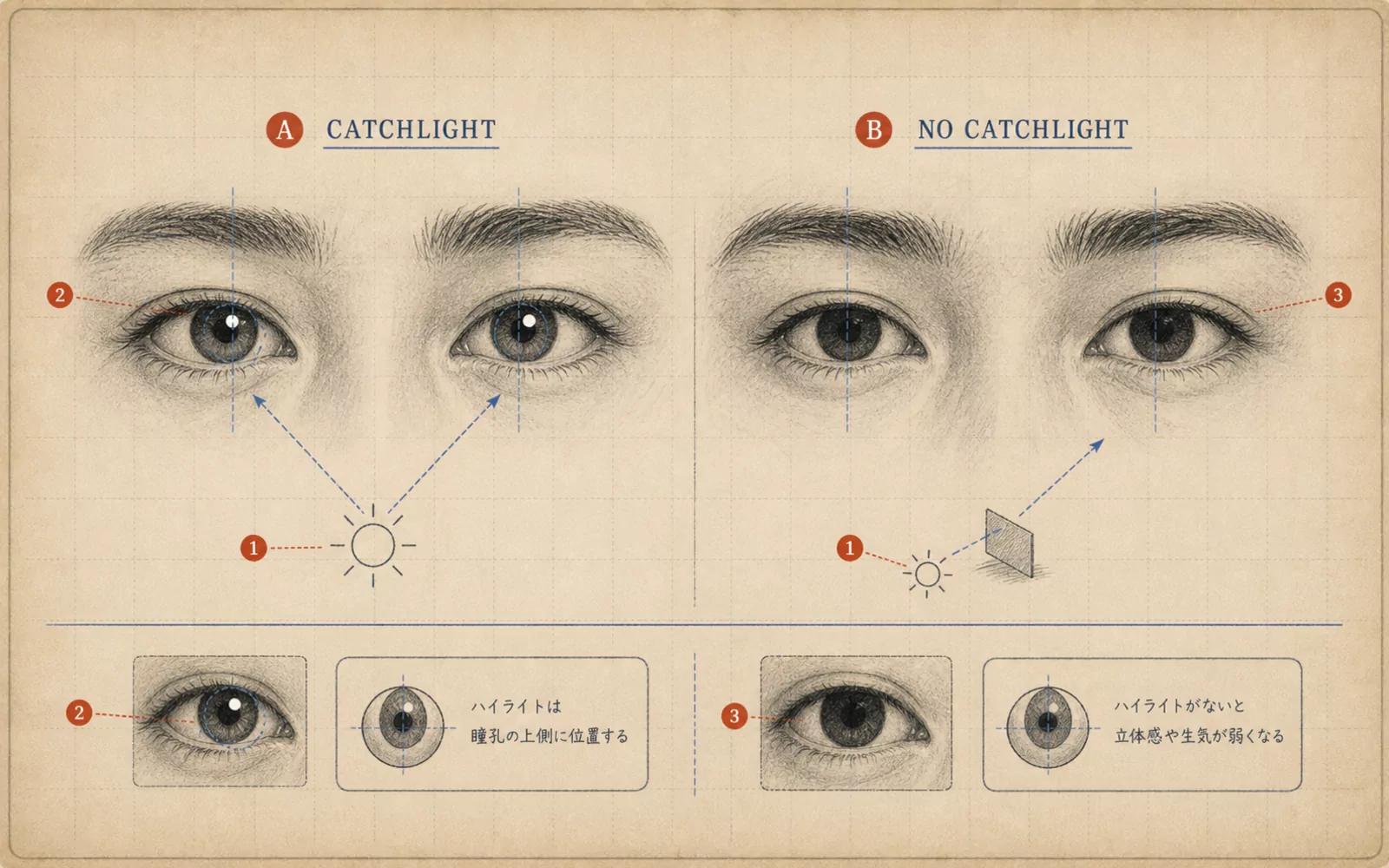 FIG.061Checking Whether the Light Has Entered Your EyesThe final step in photo selection is looking at the light in the pupils. Photos with a small white point in each eye have a sense of vitality.