This Article Contains
Why Spare Hands Make a Photo Look Unsettled
Hands that have nothing to do make the whole photograph feel restless. The hands are one of the most visible parts of the body — the eye naturally travels to them. When they appear in a shot without any clear purpose, viewers pick up on the discomfort even if they can't name it.
Without somewhere for the hands to go, people fall into a handful of familiar escapes: crossed arms, clasped hands held in front of the body, fingers gripping clothing, hands shoved into pockets. Any of these can show the hands "fleeing" in the finished photo.
The solution is not to find a better escape — it is to give the hands a role. Having something to lightly touch or hold gives the hands somewhere to land, and the rest of the pose settles around them.
Things to Think About Before Reaching for Crossed Arms
Crossed arms are the most common fallback for the hands and, depending on the profession, can read as capable and self-assured. But folding the arms closes off the front of the body, and some viewers read that as unapproachable, distant, or guarded.
If the goal of the profile photo is to convey approachability or being easy to consult — freelancers, entrepreneurs, counsellors — holding something with open hands tends to produce a softer impression than crossed arms. The difference shows up most clearly in these people-facing roles.
Even when holding nothing, simply deciding in advance on something to lightly rest against — the back of a chair, the edge of a desk, the corner of a document — is enough to settle the fingers. Gripping is not necessary. Even just "touching" something is sufficient to give the hands a role.
FIG. 030A diagram showing how to give hands a purpose using a prop when you're not sure where to put them.
How to Choose a Work-Related Prop
When using a prop, choosing something that lets the viewer imagine what you do adds information to the photo. A planner or notebook for a consultant, a tablet for a designer, a bundle of handouts for a presenter, a laptop for an engineer or writer — the most effective choices are things that already sit naturally in your everyday work environment.
One criterion only: does it connect to your work? Choosing by that standard makes the prop feel natural to hold during the shoot and communicates clearly to whoever looks at the photo.
Hold it with your fingers resting lightly rather than gripping. Gripping causes tension to travel through the fingers, wrists, and into the shoulders. The goal is the feeling of holding it so lightly you're barely aware of the weight.
What Happens When You Hold Too Many Props
Keep it to one prop. Holding a pen, a notebook, and a laptop at the same time makes the photo feel like it's trying to explain itself. The viewer's eye gets pulled toward the objects, and attention drifts away from the face and expression.
Carrying multiple props also produces a particular kind of uncertainty in the hands — a "where does each thing go?" tension that shows up in the stance. Props exist to relieve hand tension, not to be the main subject of the photo. Limiting to one maximises that relieving effect.
Anything that falls outside the purpose of the photo or doesn't connect to your work is better left out. The question to ask is not "I need something in my hands" but "does this one item make my work a little more visible?"
When the hands have a purpose, the uncertainty disappears from the whole stance.
How to Hold the Prop on the Day, and What to Check When Choosing Photos
Decide on the one prop you'll bring before the shoot. When in doubt, choose something you already use every day. Something familiar is easier to hold naturally than something new.
During the shoot, rest the fingers lightly rather than gripping. If you notice your shoulders rising, put the prop down, take a breath, and pick it up again. The target state is holding it so naturally that you stop noticing it — that's what reads as natural in the photo.
After delivery, check whether the prop is drawing more attention than the person holding it. Prioritise photos where the eye lands on the face more than the hands, and where the hands look settled. Photos where the hands dominate the frame or the fingers look tense are better left out of the final selection.
- When hands feel spare, hold one work-related prop rather than crossing your arms, and give the hands a purpose.
- Crossed arms can suit some professions, but when "approachability" is what you want to convey, open hands holding something tend to read as warmer.
- When choosing photos, check whether the prop overshadows the person and whether the fingers look relaxed.
Related Figures
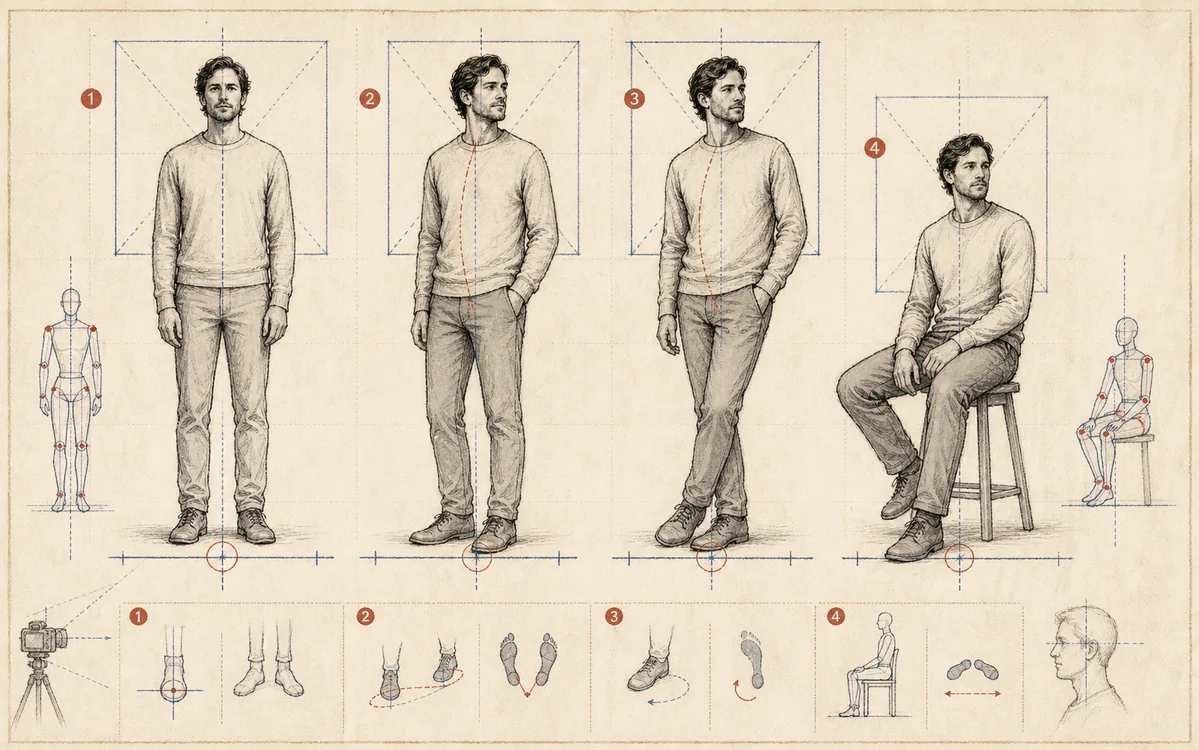 FIG.027When You're Not Sure How to Stand, Build Your Pose from the Feet UpThere is an order to how you stand. Work through feet, hips, shoulders, chin, eye line, and expression and you won't get lost.
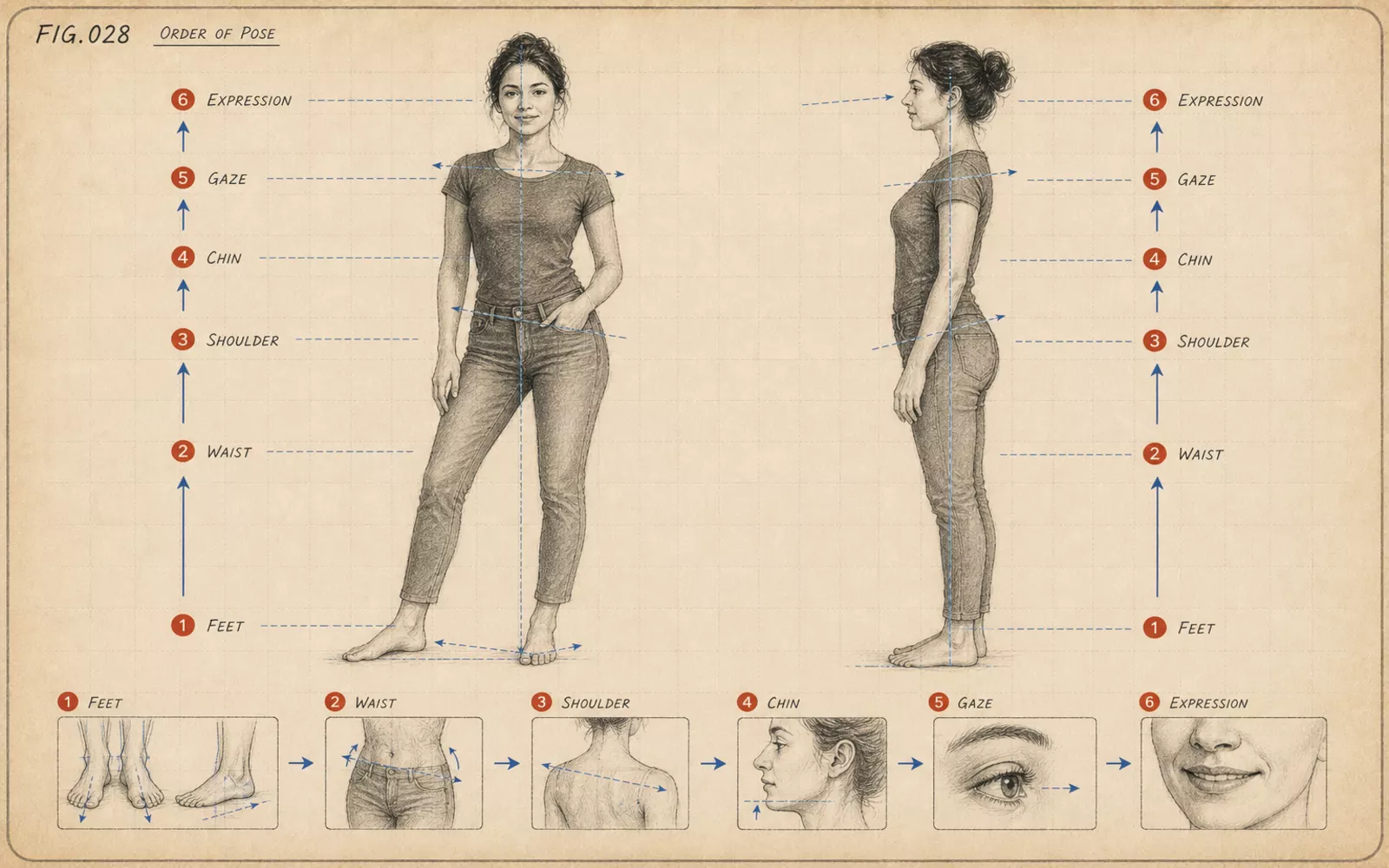 FIG.028The Order to Build Your Pose: Feet → Hips → Shoulders → Chin → Eye Line → ExpressionBuild the pose starting from the feet, then hips, shoulders, chin, eye line, and expression last. Saving the expression prevents facial fatigue.
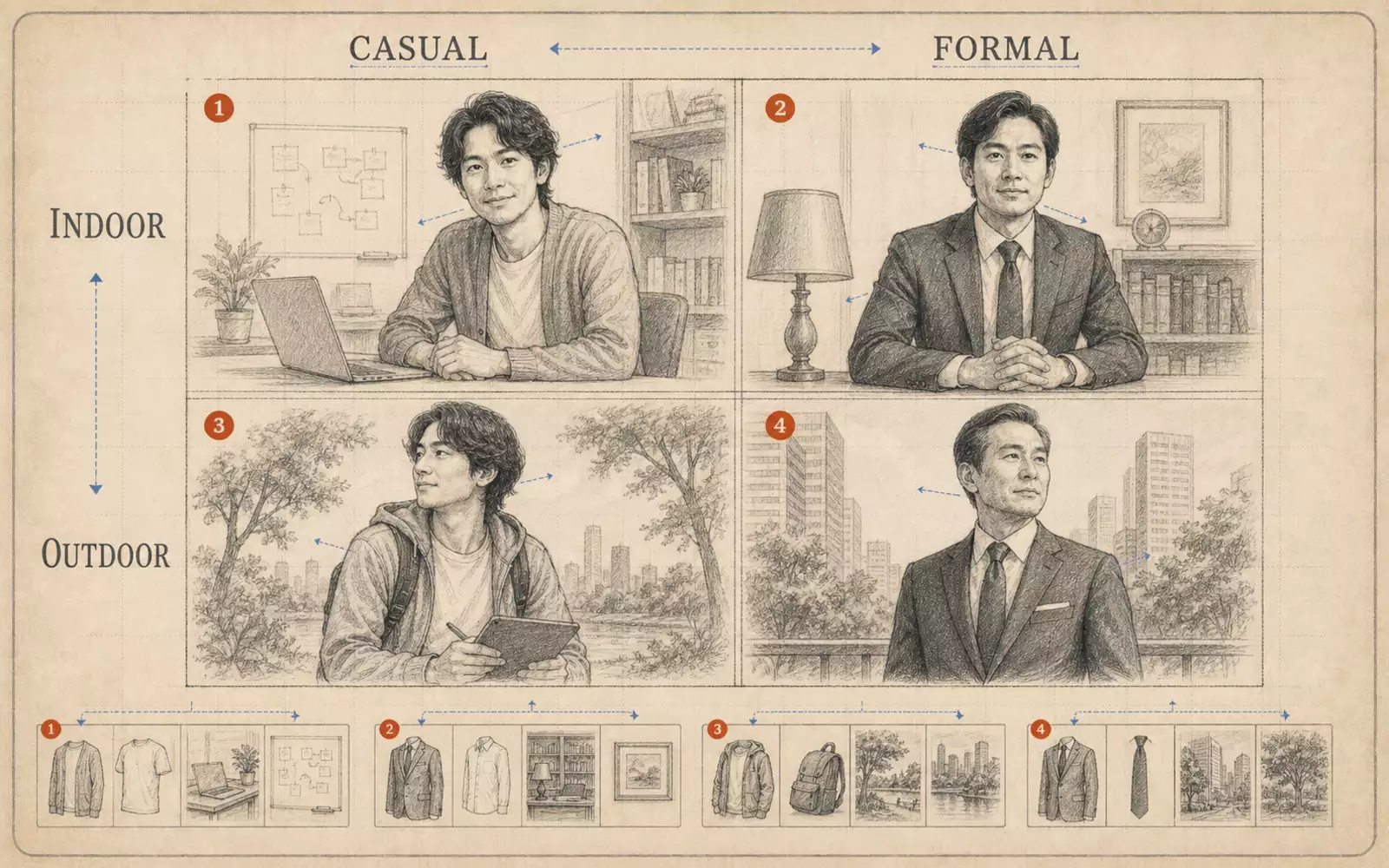 FIG.044Clothing and Background for Entrepreneur BrandingFor entrepreneurs and freelancers, photos should make visible what you do through clothing, background, and props.