This Article Contains
Communicating What You Do Through Your Photo
An employee at a large company can rely on the company name to explain their professional role. But for entrepreneurs and freelancers, a name and company name alone often fail to communicate what they actually do. The profile photo takes on part of that explanatory burden.
A clean headshot alone is not enough — if the viewer can't tell "what could I hire this person for?", the photo is a weak entry point for work. When clothing, background, and props come together, the judgment "I think I could bring this kind of thing to this person" becomes possible.
Shaping how you present yourself is not about decoration. It's about making you easier to evaluate. The goal of an entrepreneur photo is a state where a first-time viewer can quickly read "what kind of work this person does."
When Your Title Doesn't Land, Background and Props Fill the Gap
Titles like "consultant," "coach," or "planner" can fail to convey specific work content. In those moments, background and props function as supplementary explanation.
A laptop, for instance, evokes planning, production, or engineering. A notebook suggests consultation, strategy, and proposals. Books or specialized texts signal depth in a particular knowledge domain. These items communicate your professional capabilities visually — before words can.
Incorporating your brand colors into your clothing or background can also create visual consistency with your website and business cards. But more props don't mean a better photo. What the viewer most needs to understand first is not the tools — it's "what can I consult this person about?"
FIG. 044A diagram organizing the thinking behind aligning clothing, background, and props with your work content in entrepreneur and freelancer profile photos.
Choosing Clothing, Background, and Props by Profession
Here are some examples by profession type.
Consultants and coaches — A white or navy shirt paired with a notebook and pen makes it easy to imagine a consulting session. A posture with hands placed on the desk creates the impression of "ready to listen." A simple office background or a plain white wall works well.
Designers and creatives — Including a laptop, tablet, or a subtle portion of your work makes your professional role visible. A well-put-together, slightly distinctive outfit, or a touch of individual color, can also work well. However, making your work or a screen the main subject causes the impression of the person to fade.
Instructors and authors — Using a bookshelf or documents as a background looks natural. Holding your own book or reference materials is also an effective way to convey expertise. Be careful of backgrounds that become information-heavy — they pull the viewer's eye away from the face. A portion of an organized shelf, or a background with only a minimal number of books, is easiest to work with.
The Pitfalls of "Stylish Locations" and "Overloaded Props"
There are two common problems in entrepreneur photos.
The first is choosing a background based entirely on a stylish café or atmospheric location. The atmosphere may be good, but if the connection to your work is thin, "what this person does" doesn't come through. Prioritize connection to your work over aesthetic appeal.
The second is cramming in too many props. When a laptop, coffee cup, book, flower, business card, and signage all appear in one photo, the viewer's eye scatters. The impression of "a person with a lot of stuff" remains, while the judgment of "a person who can do this" becomes harder to form. Limit yourself to one prop.
Trying to project "entrepreneurial strength" through crossed arms alone can also undermine approachability. Keep photos with hands visible at work or an open posture as candidates — they give you options to match different use cases.
Background and props are used not to display your style, but to make your work entry point easy to understand.
One Sentence Before the Shoot, and a Final Check When Selecting
Before the shoot, write your work down in one sentence. Summarizing "who you help, with what, and how" into one sentence makes your clothing and background choices concrete. For example, "I propose marketing strategy to small business owners" — that calls for clothing that's not too casual, and a prop that evokes a consulting scene.
Next, choose just one prop that represents your work. Prioritize items that make your profession imaginable without any explanation. If you're torn between two, choose the one that more closely evokes "a scene of discussion."
When selecting photos, don't only look at the impression of your face — also check whether someone seeing it for the first time might misunderstand what you do. Place the photo in your website or business card and see whether the words and the image point in the same direction. Imagining "what would someone who sees this photo come to me for?" and doing a final check on that basis is how you find the photo that keeps working long-term.
- For entrepreneurs and freelancers, a profile photo should make it easy to judge what kind of work you do through clothing, background, and props. Connection to your work matters more than personal style.
- Limit yourself to one prop, and don't let it overshadow the person. Choose something that evokes "a scene of professional dialogue."
- Writing your work down in one sentence before the shoot makes your clothing and background choices concrete.
Related Diagrams
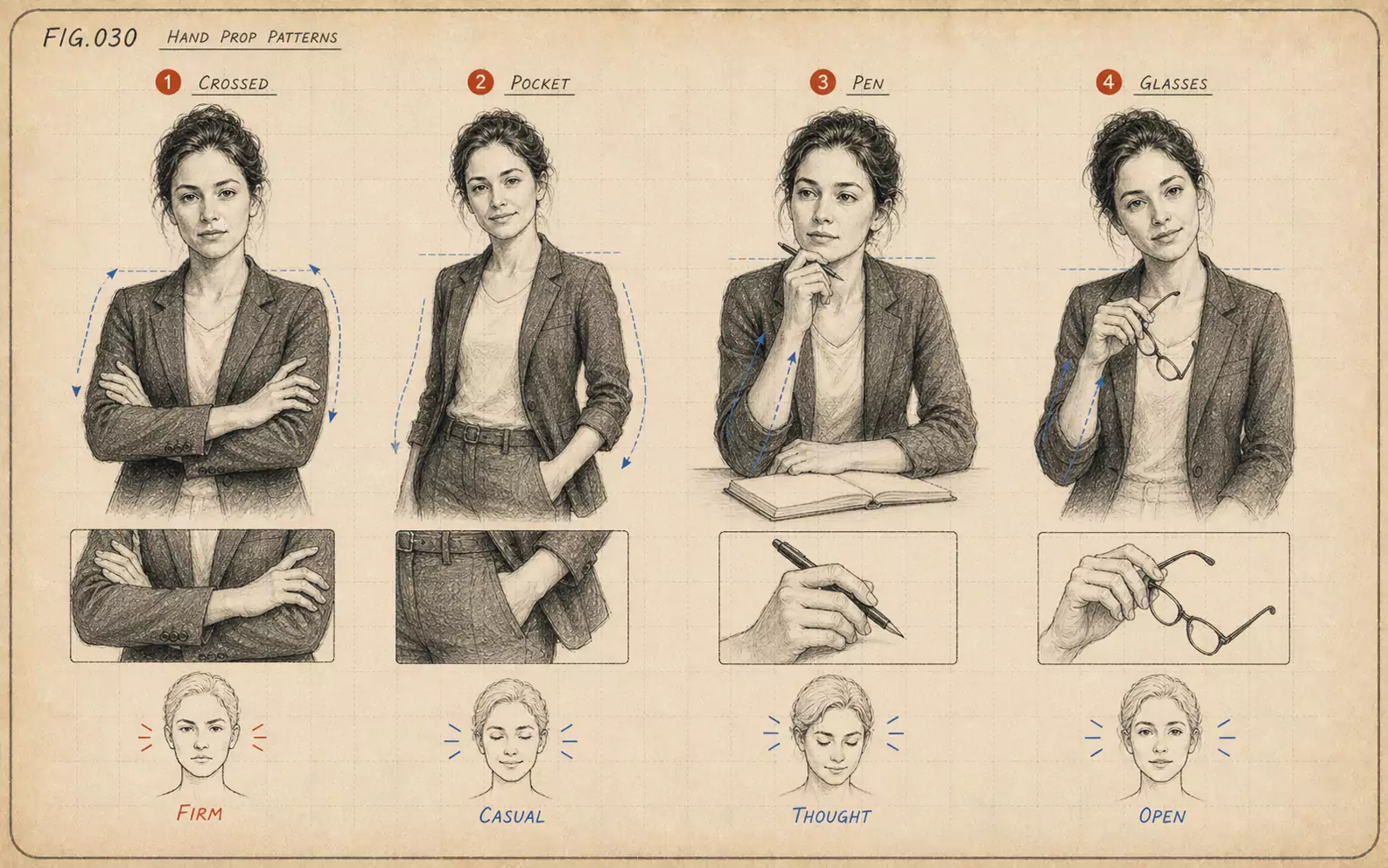 FIG.030Props for People Who Don't Know What to Do with Their HandsIf your hands feel awkward, use a prop that symbolizes your work rather than crossing your arms. A pen, notebook, or laptop gives your hands a role.
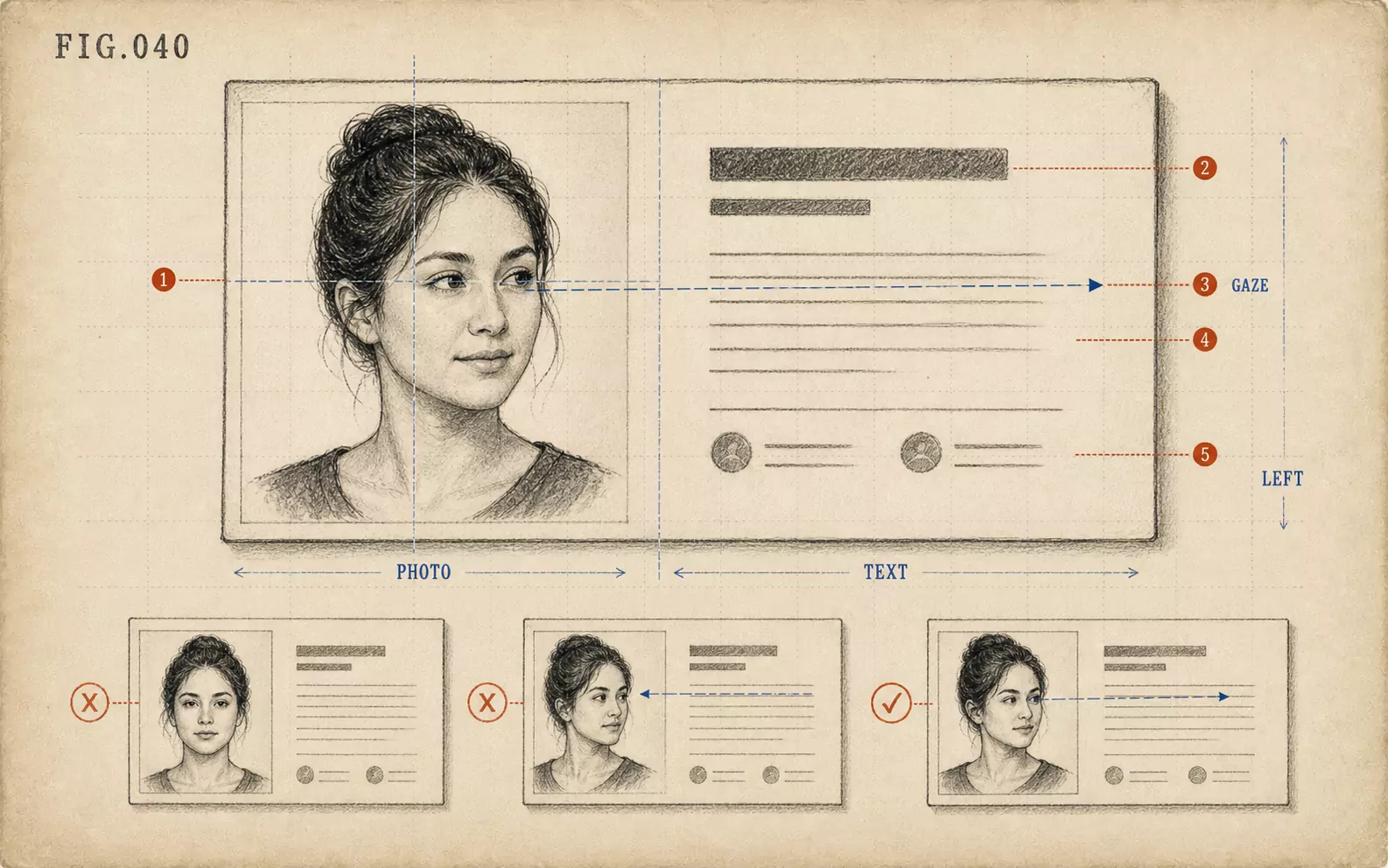 FIG.040On LinkedIn and Business Cards, Your Face Goes on the "Left"Profile photos are often placed on the left side of websites and business cards, making inward-facing photos easier to work with.
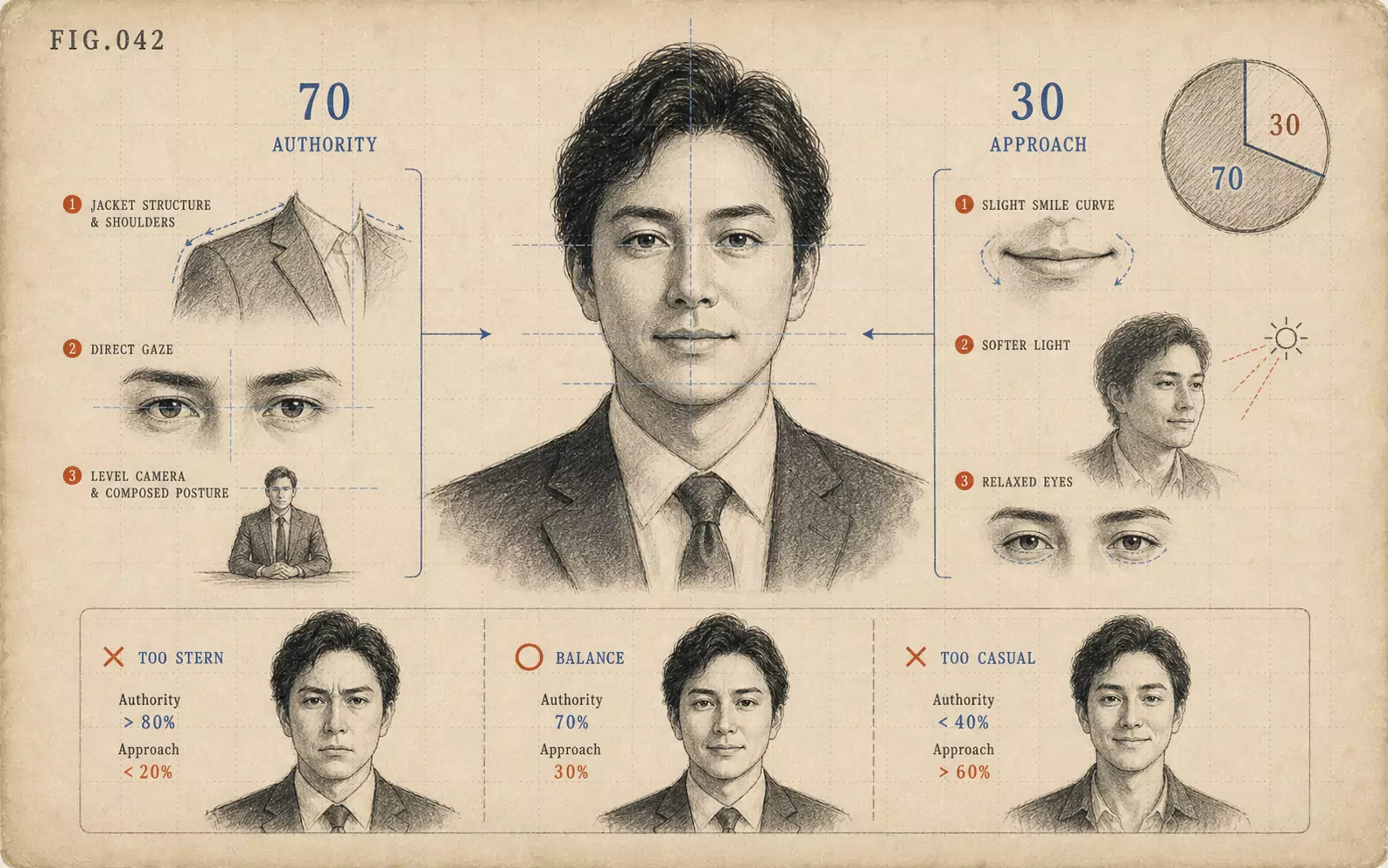 FIG.042Executive Photos: 70% Authority, 30% ApproachabilityIn executive photos, clothing builds authority while expression adds approachability. The target ratio is 70% authority to 30% approachability.