This Article Contains
The Two Axes an Executive Photo Must Communicate
An executive's profile photo is both a personal introduction and an entry point to the company and its work. Viewers decide quickly whether they want to hear from this person, whether they could trust them with something, and whether they would be willing to meet.
That judgment requires two axes. The first is "credibility and authority" — the sense that this person has a track record and is stable. The second is "warmth and approachability" — the sense that it's okay to reach out, that you could bring a concern to this person.
When either axis is too dominant, the impression goes off balance. Too much credibility and the person becomes unapproachable; too much warmth and the weight of being someone you'd trust with responsibility feels thin.
Being "Strong" Alone Makes You Hard to Consult
A common problem in executive photos is focusing too much on projecting "strength." When crossed arms, a hard gaze, and a stiff expression all combine, strength comes through — but the barrier to consultation rises.
Job candidates are asking themselves "could I talk to this leader?" Clients are asking "is it safe to bring my concerns here?" Investors are asking "can I trust this person's judgment?" Even for the same executive, the right balance shifts depending on who's looking.
The 70% authority, 30% approachability ratio doesn't mean reducing your smile. It's the ratio that results from building the axis of trust through clothing and posture, then releasing just a little tension in the mouth and eyes to leave room for conversation.
FIG. 042A diagram organizing the balance between authority and approachability in executive profile photos.
Using Clothing, Background, and Expression to Set the Ratio
Authority is built primarily through clothing and posture. Suits or shirts in dark navy or white create a reliable, stable foundation. Posture should be straight — from the hips to the shoulders forming a single vertical axis.
Approachability is added through expression. You don't need a big smile. Lifting the corners of the mouth just 2mm, releasing a little tension around the eyes — those small shifts move the impression toward "this person is okay to approach."
Reducing the information in the background increases the sense of credibility. Simple walls, bookshelves, or a portion of a workspace with no distracting clutter are easy to use. If you include your company's logo or interior design, keep the background restrained so that the person remains the clear subject.
What Happens When You Lean Too Far Toward Strength or Warmth
A photo that only projects strength can lead with a "difficult to approach" impression on recruitment pages or client-facing profiles. When crossed arms and a hard gaze are combined, the photo that's meant to be an entry point becomes a wall.
Conversely, a photo that leans entirely toward warmth can fail to convey a sense of professional weight and responsibility. Overly casual clothing or an excessively wide smile can look out of place in investor materials or introductions to business partners.
It's also a missed opportunity to focus only on clothing while leaving posture and expression entirely to chance. Authority and approachability come through only when clothing, posture, gaze, and the set of the mouth work together. Adjusting only one element won't determine the full impression.
An executive photo adds approachability while preserving the axis of "someone worth trusting."
Shooting and Selecting Photos for Each Target Audience
Before the shoot, narrow down to one target audience. Job candidates, clients, and investors each require a different ratio from the same executive. For a recruitment page, retaining approachability comes first. For investor-facing use, shift the weight toward "trust and a sense of track record."
During the shoot, capture three levels of expression: formal, neutral, and relaxed. Without changing your clothing, just varying the tension in the corners of your mouth and eyes produces noticeably different impressions. Shoot both with and without crossed arms to give yourself more options.
When selecting photos, first confirm "does this person look trustworthy?" — then check "does this person look approachable?" Viewing in that order makes it easier to judge whether the 70% authority, 30% approachability balance is right. Doing a final check with the photo placed in its actual context is the most reliable approach.
- In executive photos, clothing and posture build the axis of trust, while the mouth and eyes add approachability. The target ratio is 70% authority to 30% approachability.
- The right balance shifts depending on who you're showing it to — job candidates, clients, or investors.
- During the shoot, capture three levels of expression intensity, then select based on where the photo will be used.
Related Diagrams
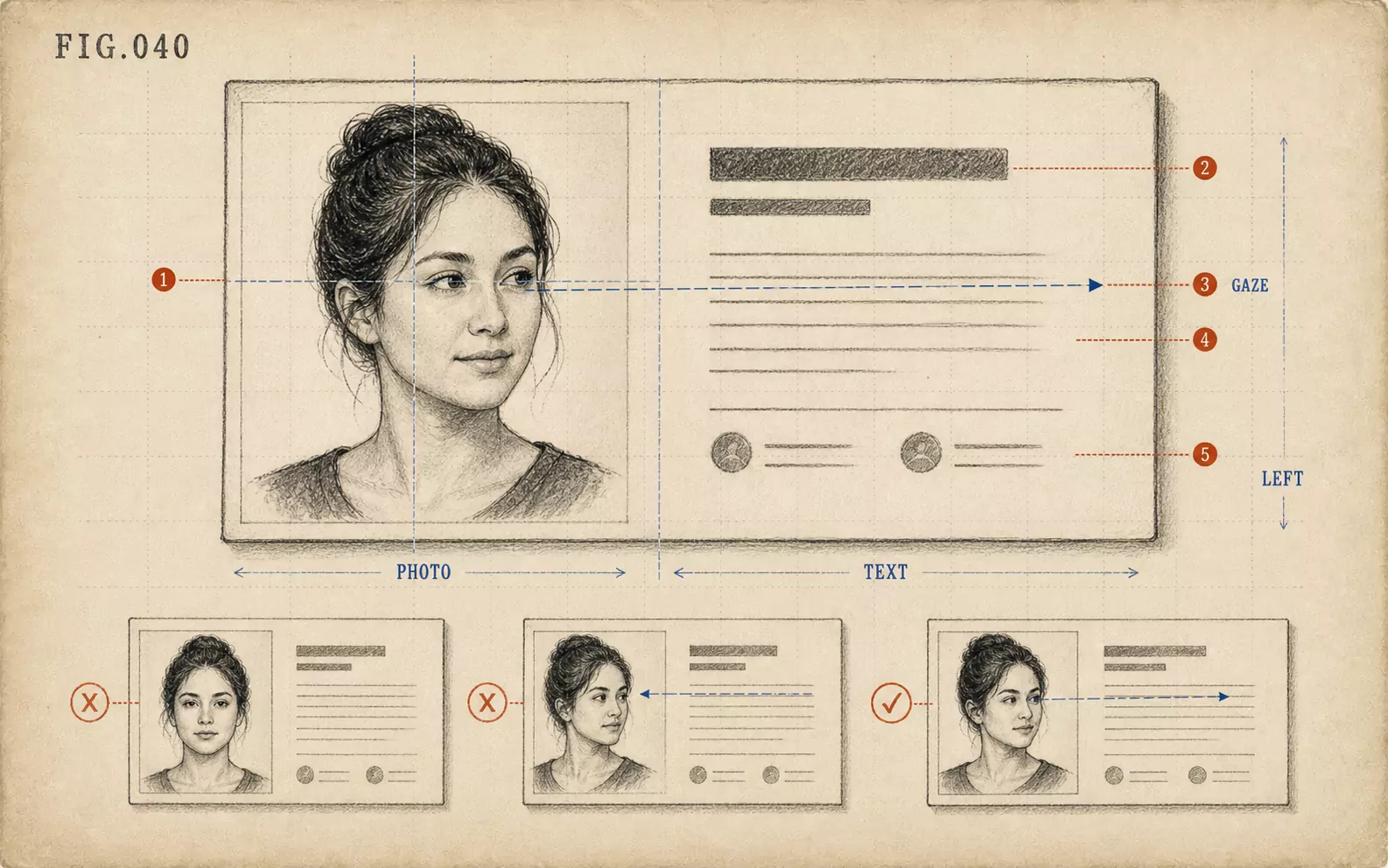 FIG.040On LinkedIn and Business Cards, Your Face Goes on the "Left"Profile photos are often placed on the left side of websites and business cards, making inward-facing photos easier to work with.
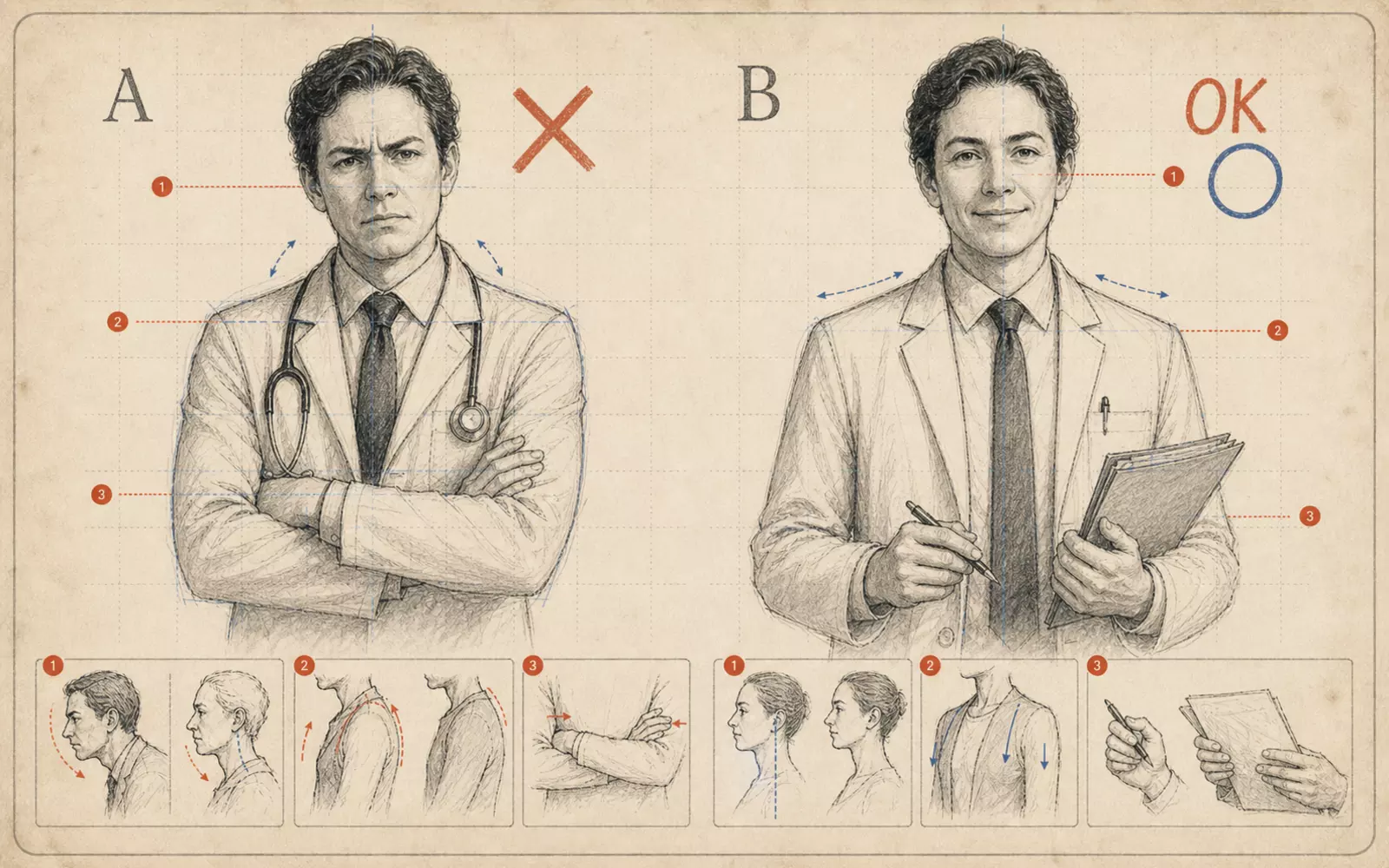 FIG.043Medical and Legal Professionals: Crossed Arms Look IntimidatingFor medical professionals and those in licensed professions, crossed arms can undermine the sense of safety. Open hands and thoughtful prop choices build approachability.
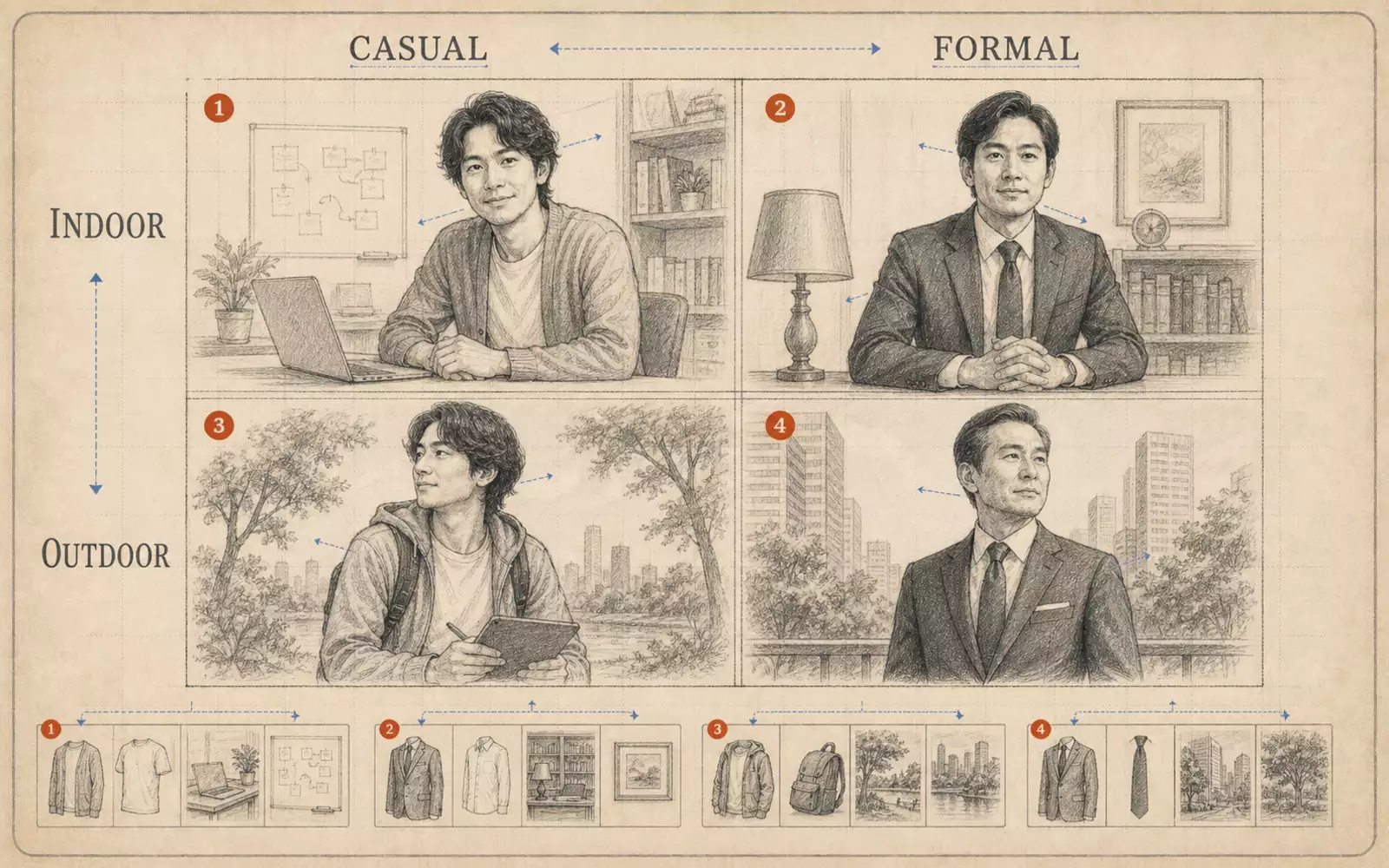 FIG.044Clothing and Background for Entrepreneur Personal BrandingFor entrepreneurs and freelancers, clothing, background, and props make it clear what kind of work you do.