This Article Contains
Building "Easy to Consult" Through Your Photo
For medical professionals, lawyers, accountants, social insurance labor consultants, and other professions that provide specialized knowledge, a profile photo serves two roles. It must communicate "this person is an expert" while also functioning as a welcoming entry point — the sense of safety that makes someone think "I'd like to consult this person."
Expertise comes through naturally from a white coat, a suit, and the credentials visible in the background. There is therefore little need to make the hands and expression stiff in an effort to further emphasize expertise. Creating a sense of safety through expression and hand position, on the other hand, is what actually connects to real business.
If you imagine the psychology of the viewer, what a patient or client first wants to feel is the confirmation that "it's okay to speak to this person." Lowering that threshold through your photo creates the entry point for inquiries.
How Crossed Arms Erode the Sense of Safety
Crossed arms create a wall in front of the body. The person may intend to appear "calm and reliable," but to viewers it can communicate "on guard" or "closed off."
In daily life, it can feel a little harder to approach someone you've just met if they have their arms crossed. The same thing happens in a photograph. Arms closed across the body is a posture that makes it difficult to see room for listening.
For professions like medicine and law — where the barrier to reaching out for help is already naturally high — a sense of openness in the photo becomes even more important.
FIG. 043A diagram comparing the impression created by crossed arms versus open hands in photos for medical professionals and those in licensed professions.
How to Open Your Hands and Use Props
There are several postures that can replace crossed arms.
Placing hands on a desk creates the impression of "ready to listen." This looks natural for lawyers, accountants, consultants, and others whose work involves discussion and explanation.
Holding a pen or chart unobtrusively evokes "a professional scene." A doctor during a consultation or explanation, a lawyer taking notes — props that help viewers imagine "a scene of talking with this person" add a sense of safety to the photo.
Keep props small and understated. Showing treatment instruments or specialized equipment directly in front of the camera can trigger anxiety before communicating technical skill. Use items that evoke "a scene of explanation or dialogue," and place them in a way that doesn't draw more attention than the person themselves.
What Happens When You Over-Emphasize Expertise
Trying to build a sense of expertise solely through strong poses — crossed arms, chin raised, hard gaze — raises the barrier to consultation. Viewers are left thinking "impressive, but hard to approach."
Putting too much emphasis on work tools has the same effect. Dental drills or surgical instruments can demonstrate technical expertise, but for patients they may trigger anxiety before anything else. Keep tools limited to "things that appear in conversational settings."
Simply adding a smile doesn't always solve the problem. If the hands and shoulders remain closed while only the mouth smiles, the overall impression stays stiff. Changing the hands and posture first is the right place to start.
In photos for consultation-based professions, show room to listen rather than closing off with your hands.
Shoot Ideas and Photo Selection by Profession
Before the shoot, think separately about where to communicate "expertise" and where to communicate "safety." The basic division: expertise comes from clothing, setting, and background; safety is added through hands and expression.
During the shoot, capture four variations: arms crossed, hands open, hands on desk, and holding a pen. Lining them up afterward makes the difference in approachability visually obvious.
When selecting photos, look for "which photo makes it easiest for a patient or client to approach first?" A photo that puts people at ease at the entry point — rather than the strongest-looking shot — is what actually leads to inquiries and bookings. As a final step, place the photo in the actual medium (hospital website, office page, business card) and select it by imagining how the viewer's eye will move.
- For medical professionals and licensed professions, approachability and ease of consultation are just as important as projecting expertise.
- Crossed arms tend to read as closed off. Open hands or hands placed on a desk create a more welcoming entry-point impression.
- Use props that evoke "dialogue and explanation" subtly, keeping the person's face as the clear subject.
Related Diagrams
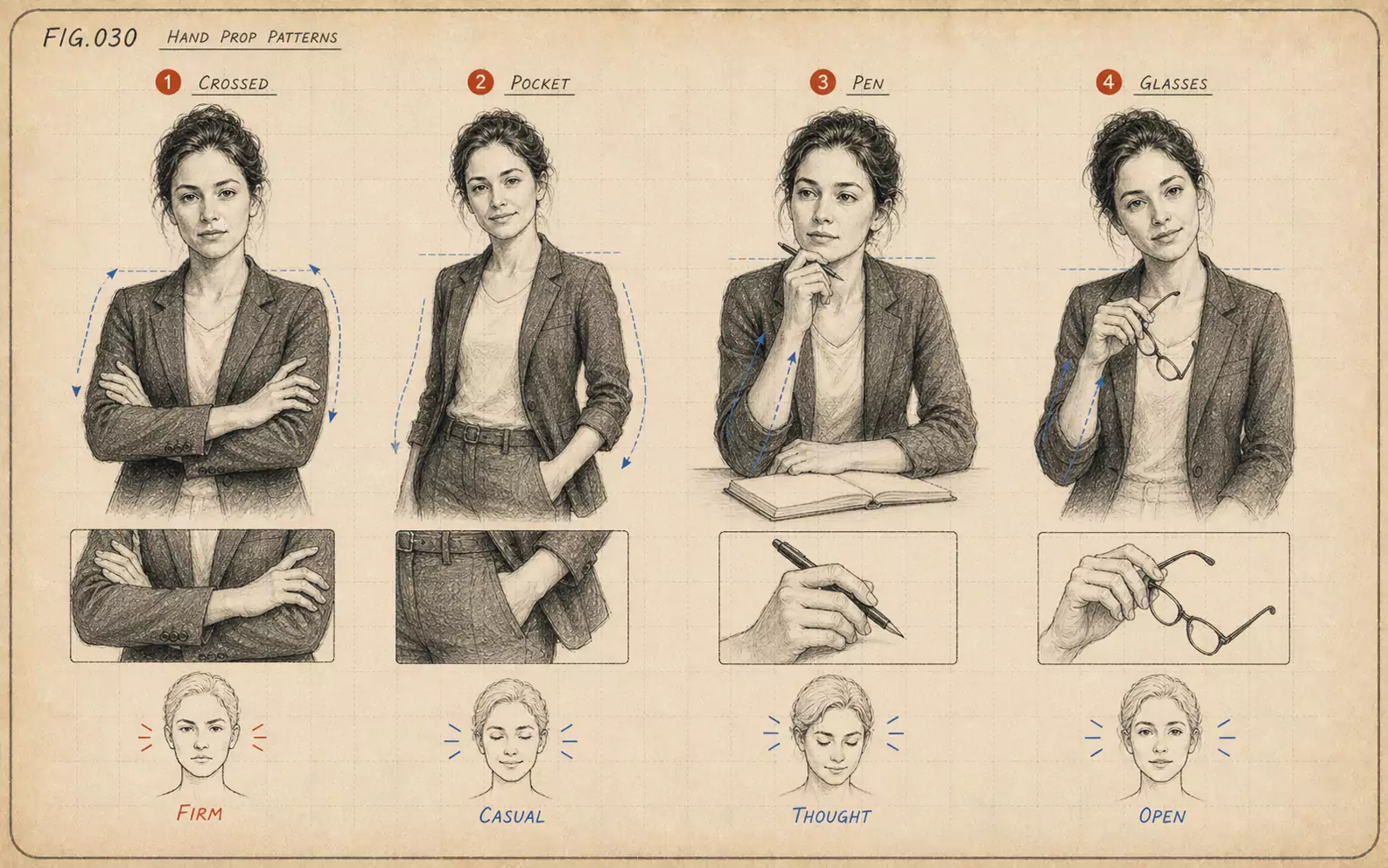 FIG.030Props for People Who Don't Know What to Do with Their HandsIf your hands feel awkward, use a prop that symbolizes your work rather than crossing your arms. A pen, notebook, or laptop gives your hands a role.
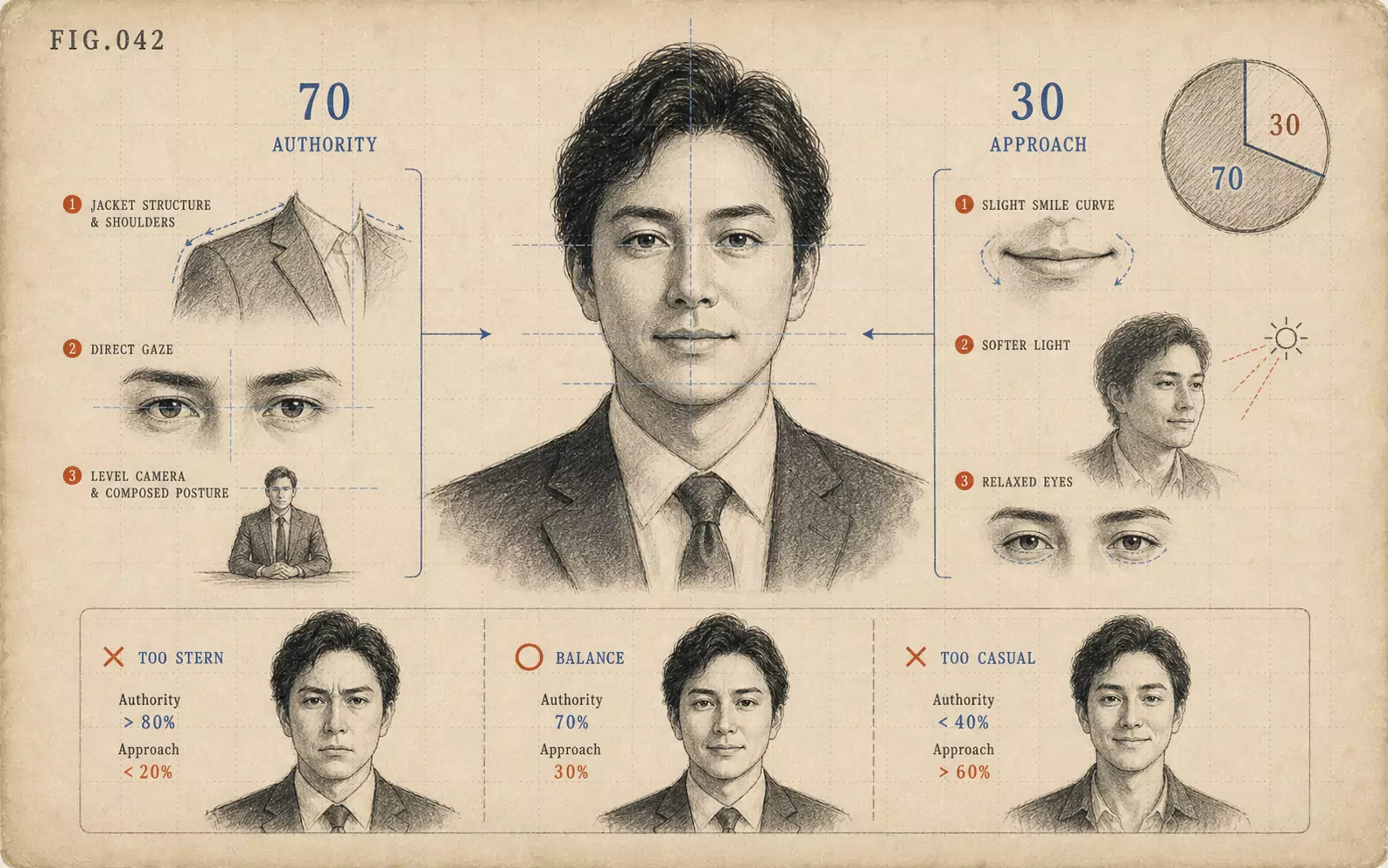 FIG.042Executive Photos: 70% Authority, 30% ApproachabilityIn executive photos, clothing builds authority while expression adds approachability. The target ratio is 70% authority to 30% approachability.
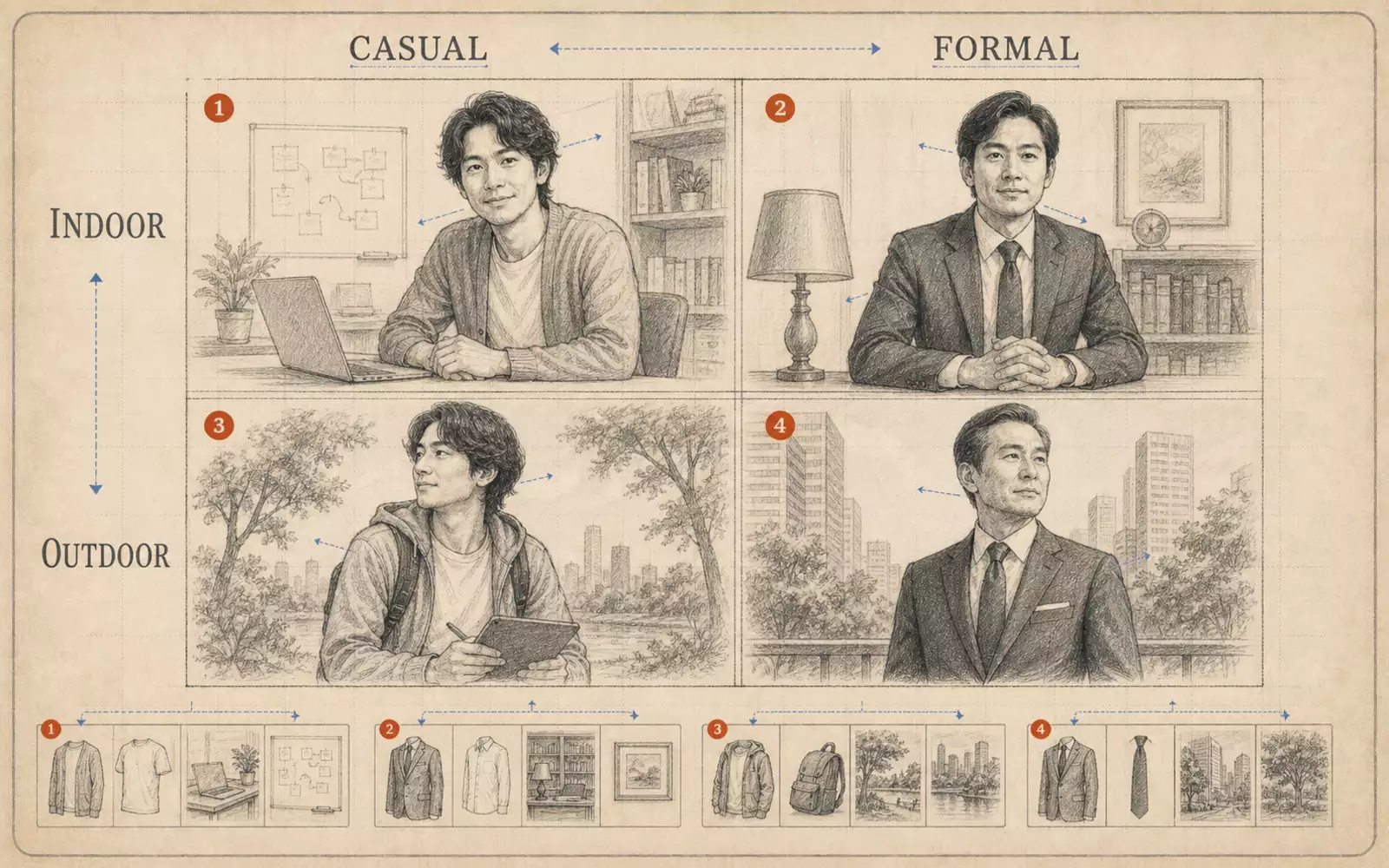 FIG.044Clothing and Background for Entrepreneur Personal BrandingFor entrepreneurs and freelancers, clothing, background, and props make it clear what kind of work you do.