This Article Contains
What to Do Before Trying to Make a Round Face Look Smaller
When you focus on making a round face look smaller, the approach tends to move toward hiding and covering the outline. But what covering produces is "a photo with a weak impression" — not "a good profile photo."
The first thing to do is create readability of the face outline. Because a round face has a smooth line from cheek to chin, flat front-on light makes the outline boundaries hard to read. Correcting this condition through light and angle is the first approach.
The goal is for the face to look neither artificial nor absent. To achieve that, a subtle shadow that supports the three-dimensional quality of the outline is necessary.
Why Front-On, Uniform Light Makes the Face Look Flat
When uniform light hits from the front, the shadows that would normally form at the roundness of the cheeks and under the chin become weak. Without shadow, the outline boundaries become hard to read, and the face looks flat.
A flat-looking face has less sense of depth and ends up appearing "faint" on screen. While it may feel approachable, there can be a problem with being hard to remember — people may find it difficult to recognize who the face belongs to. Especially in work photos, the clarity of the outline needed for viewers to recognize "who this is" is essential.
ID-photo-style front-on, uniform light is suitable for accurately recording facial features, but it can be unsuitable for creating an impression in a profile context. The direction of light should be chosen to match the purpose of where the photo will be used.
FIG. 120A diagram summarizing how to make a round face type's outline more readable using light and angle.
Creating Outline Definition with Diagonal Angle and Subtle Shadow
Turning the face slightly to the side (about 5–15 degrees) makes the line from one cheek to the chin more visible. At the same time, a subtle shadow forms on the opposite side of the face, creating a sense of depth in the outline.
The shadow depth only needs to be enough to faintly reveal the line from cheek to chin. Making it too heavy creates an unnatural impression. Window light coming in at roughly a 45-degree angle tends to produce natural shadow. You can try this simply by turning your face slightly sideways during the shoot.
Also check the distance from the camera. Getting too close with a wide-angle lens brings the cheeks and nose forward and emphasizes them (see FIG.081). Comparing with shots taken from a slight distance using a medium telephoto makes the difference in impression easy to see.
What Happens When You Over-Conceal
When you cover too much of the face area with hair or hands trying to hide the outline, cleanliness and professional trustworthiness can appear weakened. Especially for executives, legal professionals, and medical workers — occupations where trustworthiness matters — having the face clearly visible is often more important.
Angling too far to the side is also a problem. When the face gets close to a profile view, it creates a state where "the face doesn't come through from the front" as a profile photo. Keep the diagonal angle modest — just enough for a subtle shadow to fall on the outline is what looks natural.
Also avoid letting concern about face shape cause your expression to tense up. Once the outline conditions are set, focus on expression.
Rather than hiding a round face, create depth with a diagonal angle and subtle shadow.
Pre-Shoot and On-Set Checklist
Before the shoot, decide where the photo will be used and what impression you want to convey. The strength of shadow differs between purposes that prioritize approachability (social media, medical, service industries) and those that prioritize a polished look (executives, legal professionals). For approachability, keep shadow lighter; for a polished look, slightly stronger shadow works better.
During the shoot, check the face angle, chin position, and light direction one at a time. Rather than correcting everything at once, start with "turning the face slightly to the side." Telling the photographer "could you take some shots from a slightly diagonal angle?" lets you keep comparison shots.
When selecting photos, don't look only at the face outline — check whether both the outline and expression are coming through simultaneously. Keep photos where there is a subtle shadow on the outline and the expression is also readable. Finally, check whether the photo suits the intended purpose.
- For a round face, creating readability of the outline through light and angle comes before trying to "make it look smaller."
- Turning the face slightly to one side to create a subtle shadow on one side makes the cheek-to-chin line more visible and adds depth.
- Covering too much with hair or hands makes cleanliness and expression hard to convey. A modest angle and subtle shadow are the basics.
References
Related Diagrams
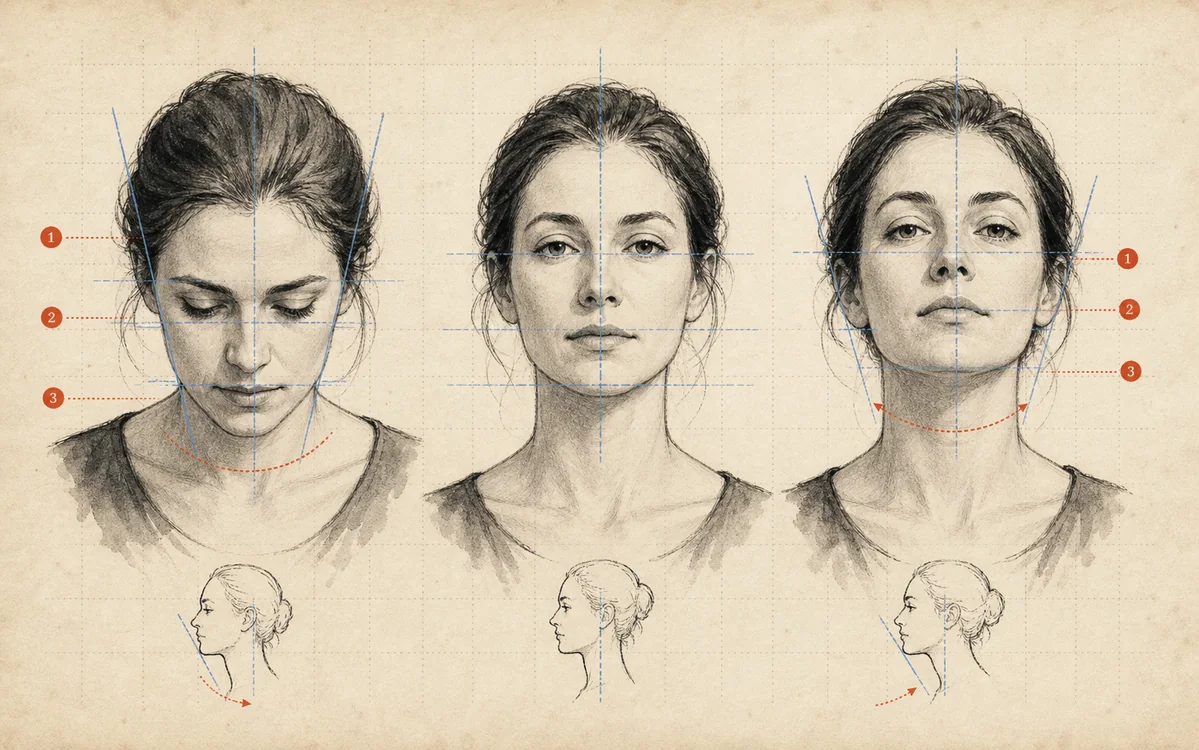 FIG.003Pull the Chin 1cm and the Jawline Looks Cleaner in PhotosWithout lowering the whole neck, keeping the back of the head up while drawing just the chin tip back makes the jawline and neck area easier to define.
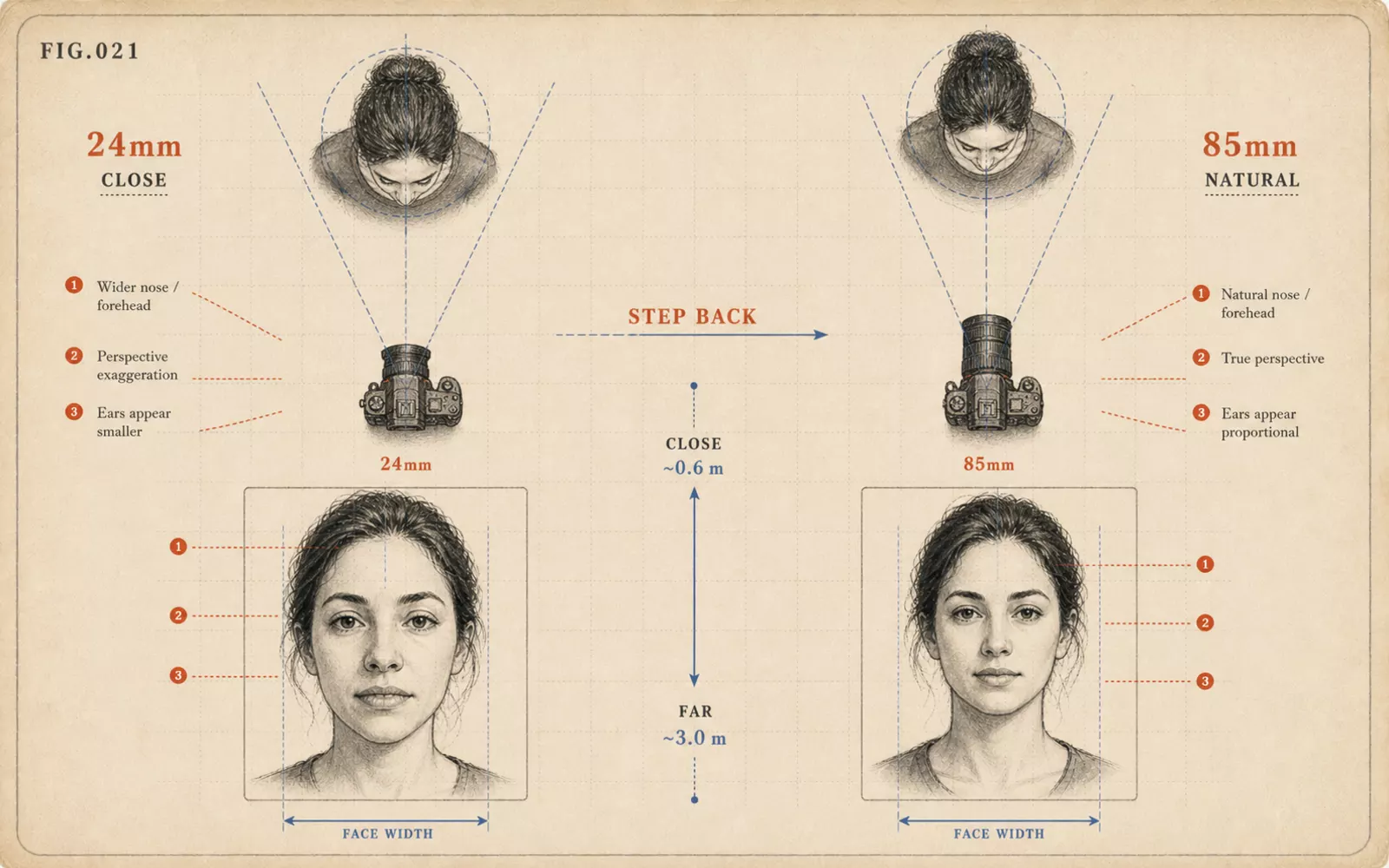 FIG.021The Courage to Ask the Photographer to "Take One Step Back"When the camera is too close, the face appears large and distorted. This explains the thinking behind stepping back to 85–135mm rather than shooting up close at 24mm.
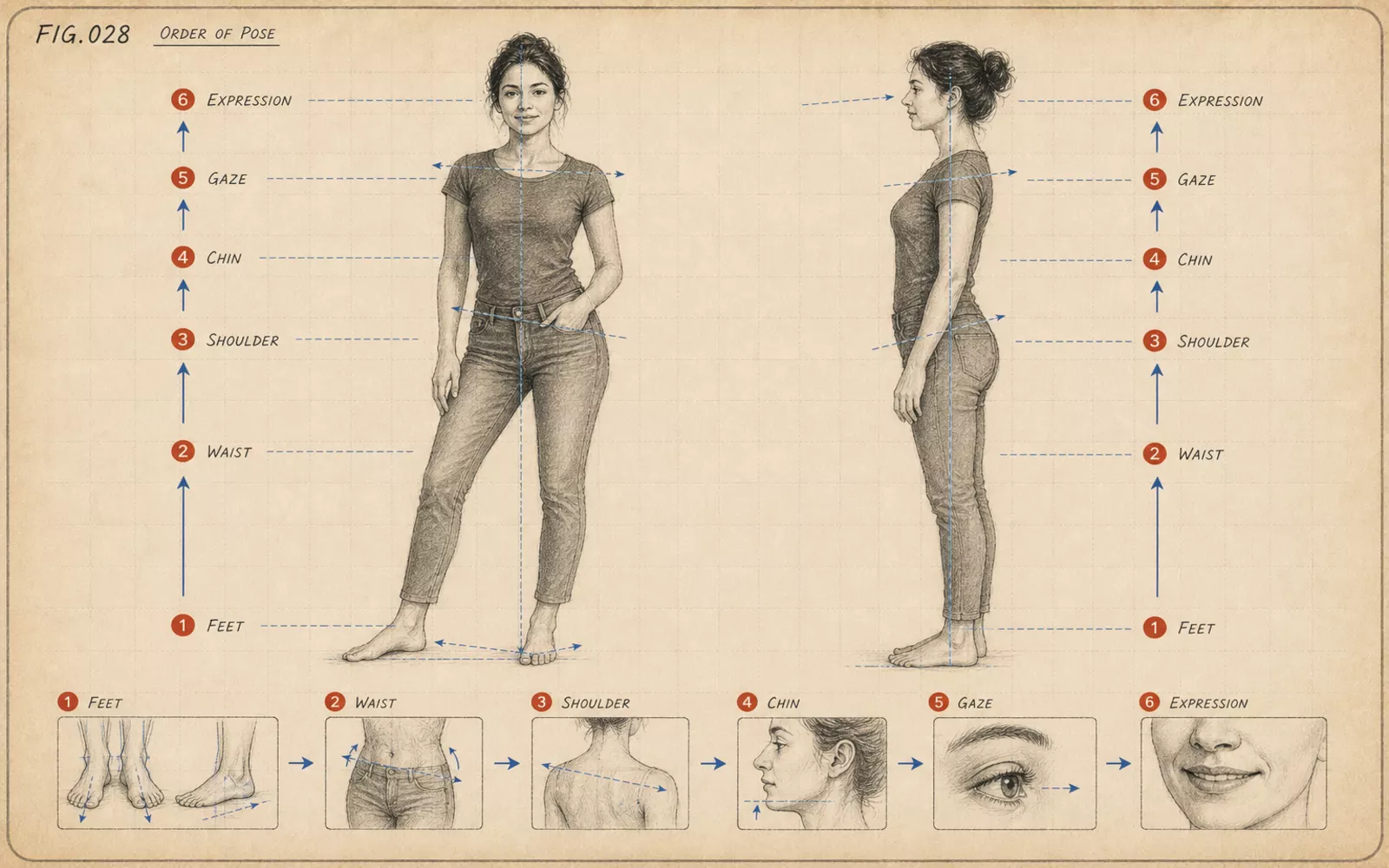 FIG.028The Order to Compose a Pose: Feet → Hips → Shoulders → Chin → Gaze → ExpressionBuild your pose in order: feet, hips, shoulders, chin, gaze, then expression. Leaving expression last prevents facial fatigue.