This Article Contains
Trust is built on "authenticity" and "consistency"
The trustworthiness of a profile photo is not judged by facial beauty alone. Framing it around "authenticity" and "consistency" makes it easier to see what actually creates trust.
Authenticity means the person in the photo "matches who you are today" — that sense of age, hairstyle, body type, and expression habits are not far from the real you right now. Consistency means there is no contradiction in the impression across the information viewers receive at the same time: the photo, your title, your writing, and your public content.
When both of these are in place, viewers are more likely to feel "this person seems trustworthy." Polish is an element that sits on top of these foundations — it is not the foundation itself.
Photos are not viewed in isolation — they are seen alongside other information
There are almost no situations where a profile photo is viewed by itself. On a website it appears with your title, career history, and service descriptions; on a business card with your company name and contact details; on social media with your post content; in a book with the body text — it is always placed beside surrounding information.
So when the photo alone looks out of place, viewers experience a quiet, wordless sense of dissonance. The sense of age is off, the feel doesn't match the writing, the impression differs from the person the title suggests — when these stack up, what comes before trust is "hm, something's off."
Conversely, when the photo and surrounding information align quietly, viewers don't "skim past" the photo — they "receive it naturally." The unglamorous condition of information that doesn't contradict itself forms the foundation of trust.
FIG. 142An educational diagram for thinking about the trust that profile photos carry, through the lens of authenticity and consistency.
The form of trust viewers want changes by use case
"A trustworthy photo" is not a single thing. The form of trust viewers want changes by use case. For consulting work, it's approachability; for speaking, composure; for hiring, closeness to who you are right now; for legal professions, a calm sense of expertise — these are all forms of trust, but the content differs.
Aiming for "a trustworthy photo, full stop" without defining a use case tends to produce an image that is mediocre in every context. Deciding in advance "for whom, where, and how I want to be perceived" focuses the direction of trust (see FIG.002).
Even for the same person, it is natural to choose different photos for a speaking engagement versus consulting work. Trying to use one photo for every context actually creates a state where it doesn't quite fit any of them.
What happens when you keep using an old photo
A common mistake is continuing to use the one photo that turned out especially well in the past. "The photo I like best of myself" may have grown weaker in terms of authenticity. A photo that has drifted from who you are now creates awkwardness when meeting in person.
Another mistake is choosing on visual appeal alone. A photo whose feel doesn't match your title or writing doesn't support trust — it leaves viewers with a "mismatch."
The benchmark for updating is when your hairstyle, body type, or overall impression has drifted from who you are now. The timing varies by profession, but the general guideline is every 2–3 years for executives, 1–2 years for IT, and 6 months to a year for hair stylists (see FIG.001).
A trustworthy photo supports authenticity and consistency more than beauty.
How to align your photo with the surrounding information
Start by placing your photo beside your profile text, title, and pinned social media posts and looking at them together. Check whether any one element alone looks out of place. If something feels off, determine whether the issue lies in the photo, the text, or both.
Next, think about what someone meeting you for the first time might feel uncertain about. Approachability, expertise, a sense of cleanliness — narrow it down to one confirmation point that fits your use case. Once the point is clear, the right photo and what to fix become visible.
Finally, compare with the impression of meeting you in person. Choose a photo that is close to who you are now and reduces the viewer's uncertainty. Everything doesn't need to be perfectly aligned — the less the information contradicts itself, the more it becomes the foundation of trust.
- Trust in a profile photo is understood through authenticity and consistency. Polish is not the foundation — it sits on top of it.
- Photos are viewed alongside your title, writing, and the impression of meeting you in person. The less the information contradicts itself, the more it forms the foundation of trust.
- The form of trust viewers want changes by use case. Rather than trying to serve every purpose with one photo, narrow down to one use case and choose from there.
References
Related Diagrams
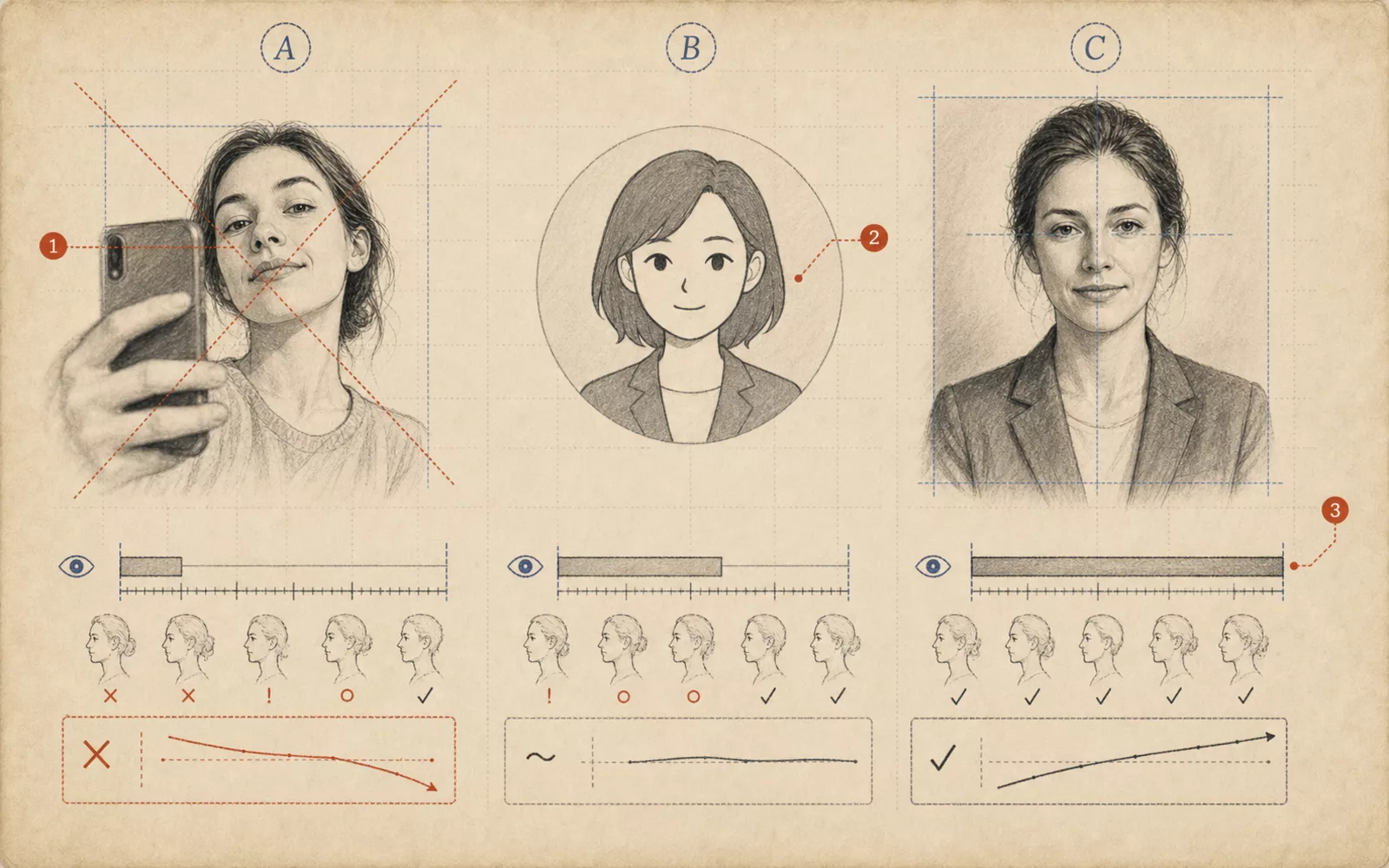 FIG.004Selfie, Illustration, or Professional Photo: How Trust ChangesSelfies, illustrations, and professional photos convey different levels of presence and credibility to viewers. This article organizes how to choose based on your use case.
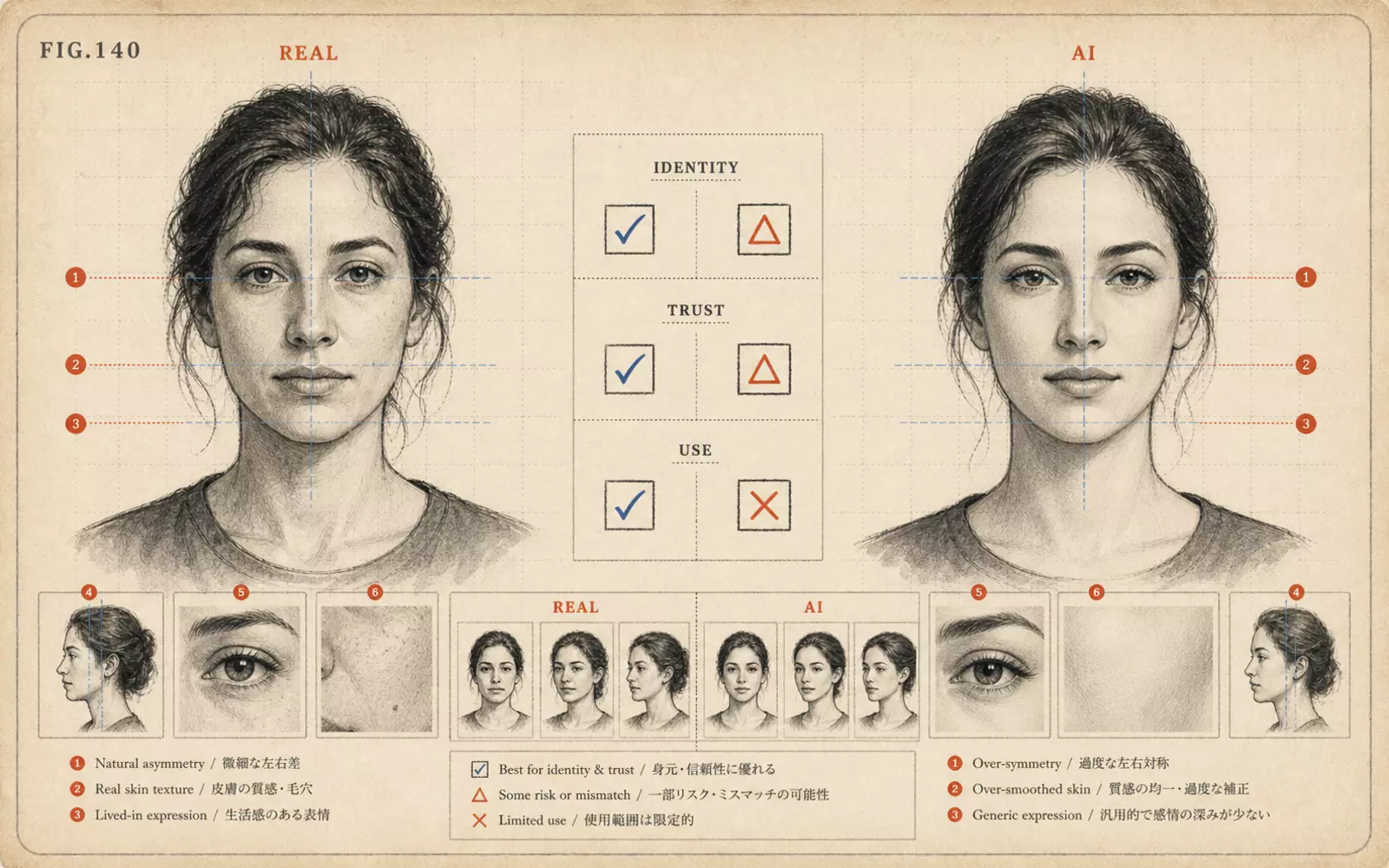 FIG.140AI Headshots vs. Real Photos: What Is the Same and What Is DifferentOrganizes the differences between AI headshots and real photographs from the perspectives of authenticity, use case, and trust.
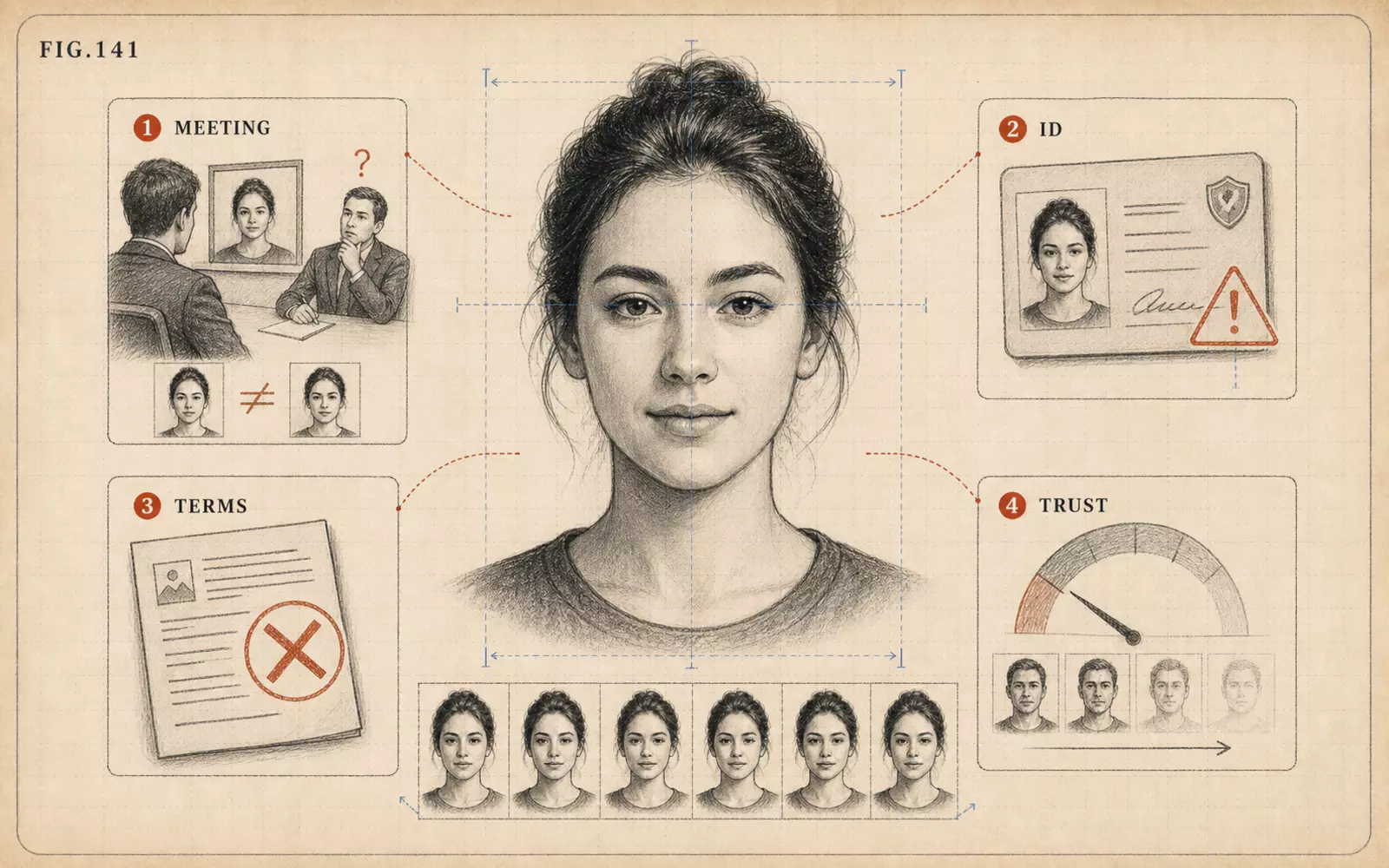 FIG.141The Risks of Using AI-Generated Profile PhotosMaps out the situations where convenient AI-generated photos can lead to awkwardness in person or weak identity verification.