This Article Contains
Do Not Build It in One Day — Remember It Over 30
"Shoot is tomorrow, so I need to perfect my expression today" — that feeling is understandable, but expression is not something built in a day. The more you try to force movement on shoot day, the more unnecessary tension builds in the face.
What is needed is moving a little every day and "remembering" how expression works. Facial muscles become sluggish without use. Conversely, just a few minutes of daily movement makes expression flow more smoothly during a shoot.
The 30-day program is not a muscle-building regimen — it is a habit of "recovering movement." Not trying to complete it all in one go is the key to keeping it going.
Expression "Uncertainty" Causes Tension on Shoot Day
The less you have been conscious of your expression in daily life, the harder it becomes — when told to "smile" during a shoot — to know which part to move. "Trying hard without knowing" concentrates force in the mouth and eyes.
The 30-day program works precisely because it reduces that "uncertainty." Knowing separately what it feels like to move the cheeks, relax the eye corners, and find the right position for the mouth corners makes it easier to switch during a shoot.
Having practiced means the direction "a little more smile" on set translates to just "be conscious of the cheeks." The goal of the 30-day program is not to move from zero, but to create a state where you can draw out movements you already know.
FIG. 153An educational diagram for remembering how expression moves over the course of 30 days.
Change Where You Practice Each Week
Week 1 focuses intensively on the cheeks. Repeatedly lift the cheeks with the mouth closed, then relax (see FIG.150). Get a feel for the slight puff that appears under the eyes. 3 minutes a day, for 7 days.
Week 2 covers the eyes. Practice the 5-movement sequence — close, open slightly, look into the distance, exhale, return — to release tension at the eye corners (see FIG.151). Shift from the intention to "open eyes wide" to the intention to "relax the eye corners."
Week 3 moves to the mouth. Rather than pulling the mouth corners sideways, find the position where the top front teeth become visible by about 3 mm. When the cheeks are raised and the front teeth just peek through, it produces a natural professional smile (see FIG.011).
Week 4 is combinations. Move cheeks, eyes, and mouth together and take a selfie with your phone simulating a shoot. This is the practice of using the three areas — which you have been able to move separately — all at the same time.
Do Not Aim for a Perfect Smile from Day One
A common mistake is aiming for a perfect smile from the very first day. The more you rush for results in expression practice, the more tension builds. "It is not moving the way I imagined" is completely normal. The premise is that you are returning to it gradually over 30 days.
Another mistake is trying a different method every day. Changing the practice content too often — "there might be a better way" — increases uncertainty before the body has a chance to learn. The area to practice changes week by week as planned, so stick with the same thing within that range.
The secret to continuing is "keeping it short." Practicing every day for 3 minutes is more effective than doing 10 minutes. If you try to do it for a long time, days where you cannot continue will start to appear.
The 30-day program is small daily practice so you are not scrambling on shoot day.
Weekly Practice and Review Steps
After each daily practice, take one selfie with your phone. Not to judge yourself on good or bad, but to check "where did I move today?" Watching movement in the mirror during practice is also fine, but having a photo lets you see it objectively.
At the end of each week, line up the 7 days' photos and compare. For week 1, focus on cheek movement; week 2, on how settled the eyes look; week 3, on the mouth and how much of the front teeth shows; week 4, on the overall balance — compare with a focus on that week's practice content.
When the 30 days are over, rather than looking for the day with the biggest change, find the expressions where tension has decreased. If there are more relaxed, unstrained expressions — rather than a perfect smile — the program has succeeded. On shoot day, all you need to do is "remember" the feeling from these 30 days as you head to the location.
- The 30-day program is practice for remembering how expression moves. Rather than building it in one day, continue a little at a time every day.
- Week 1: cheeks, week 2: eyes, week 3: mouth, week 4: combinations — change where you practice each week.
- Rather than aiming for a perfect smile, keeping it short, precise, and consistent reduces tension on shoot day.
References
Related Diagrams
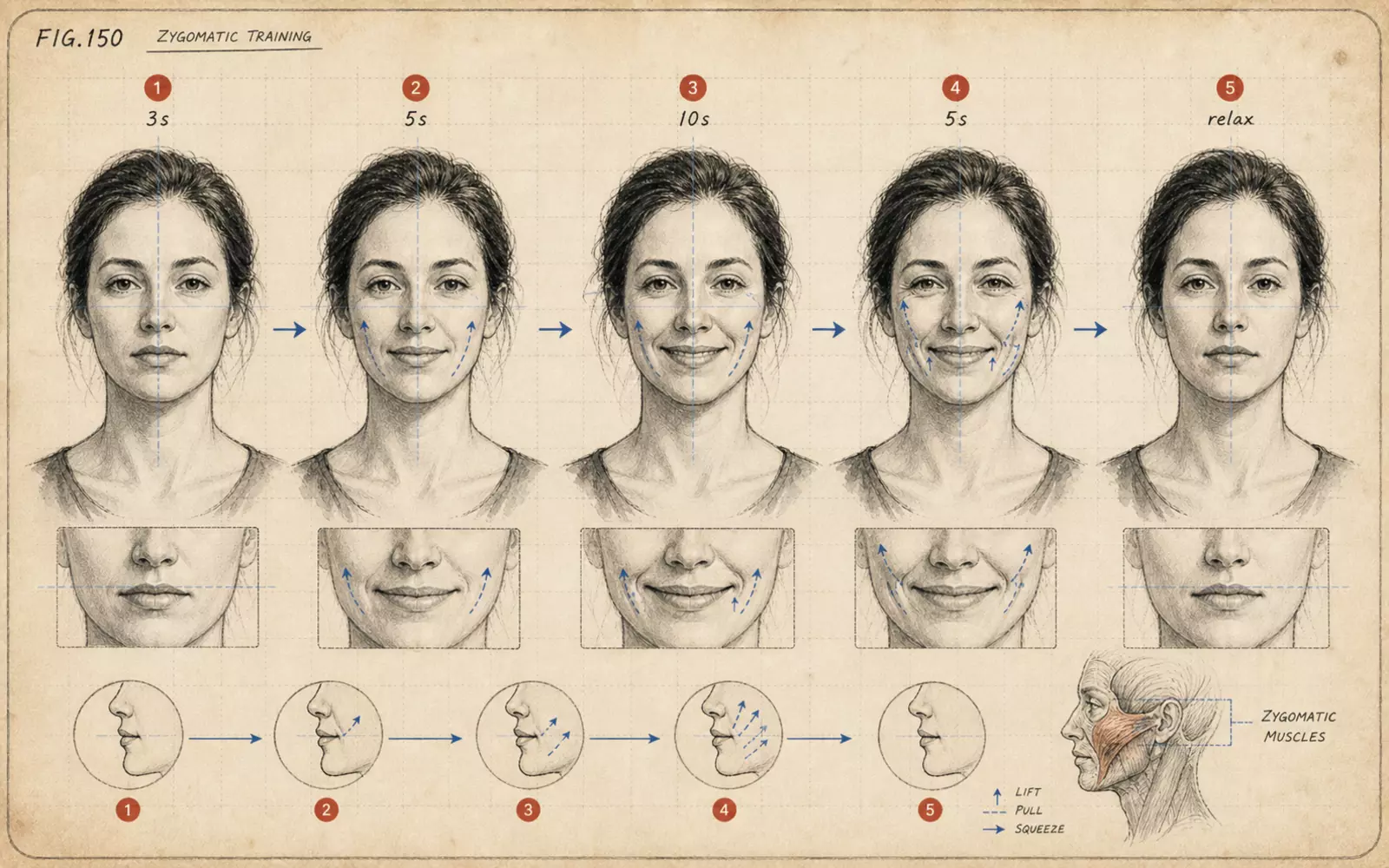 FIG.150Zygomatic Muscle Lifting Training: A 3-Minute Daily RoutinePractice for developing the sense of moving your cheeks upward before building a smile with the mouth.
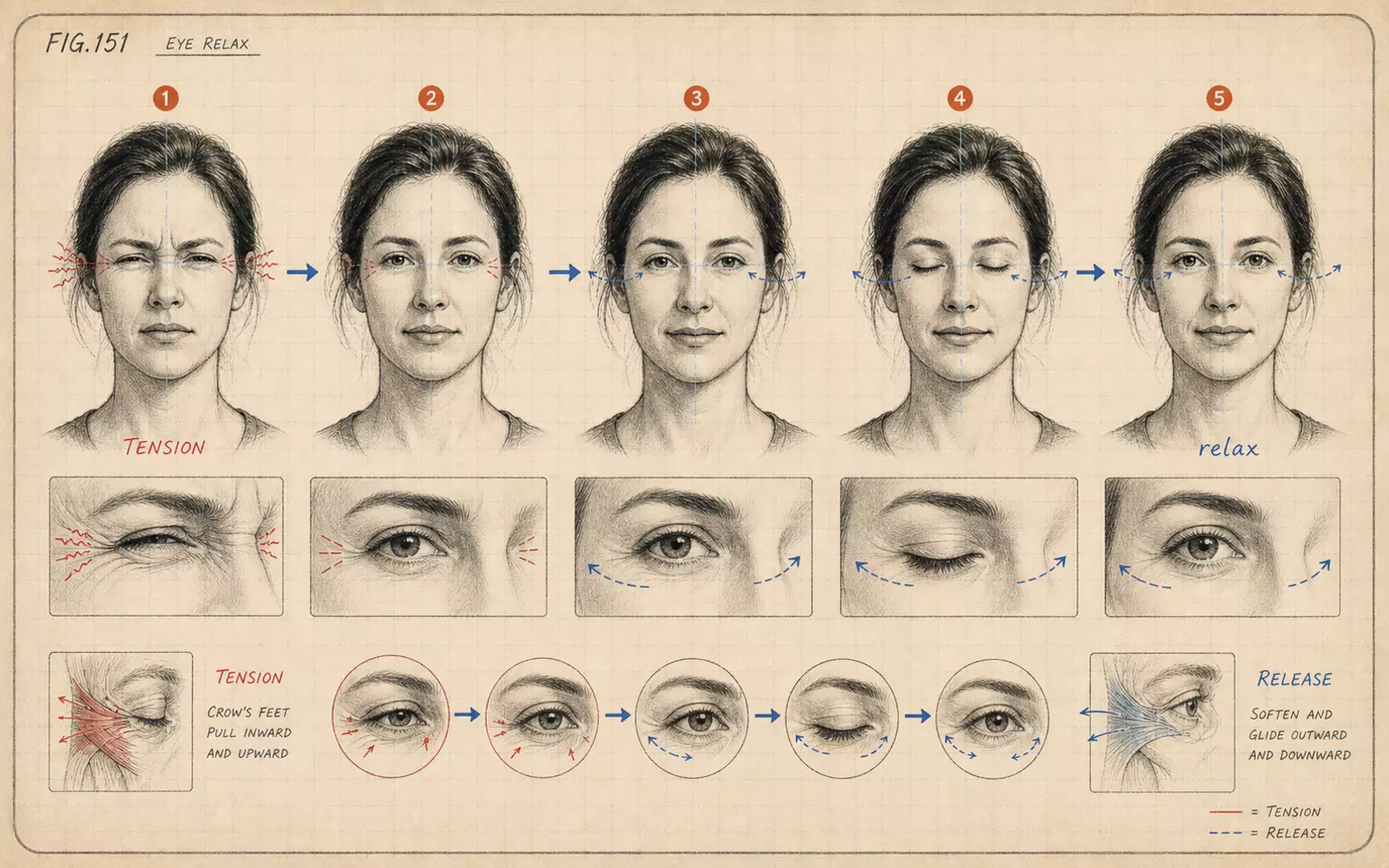 FIG.151Eye-Corner Relaxation Training: 5 Movements to Release TensionInstead of opening your eyes wide, practice releasing the tension at the eye corners to align your expression.
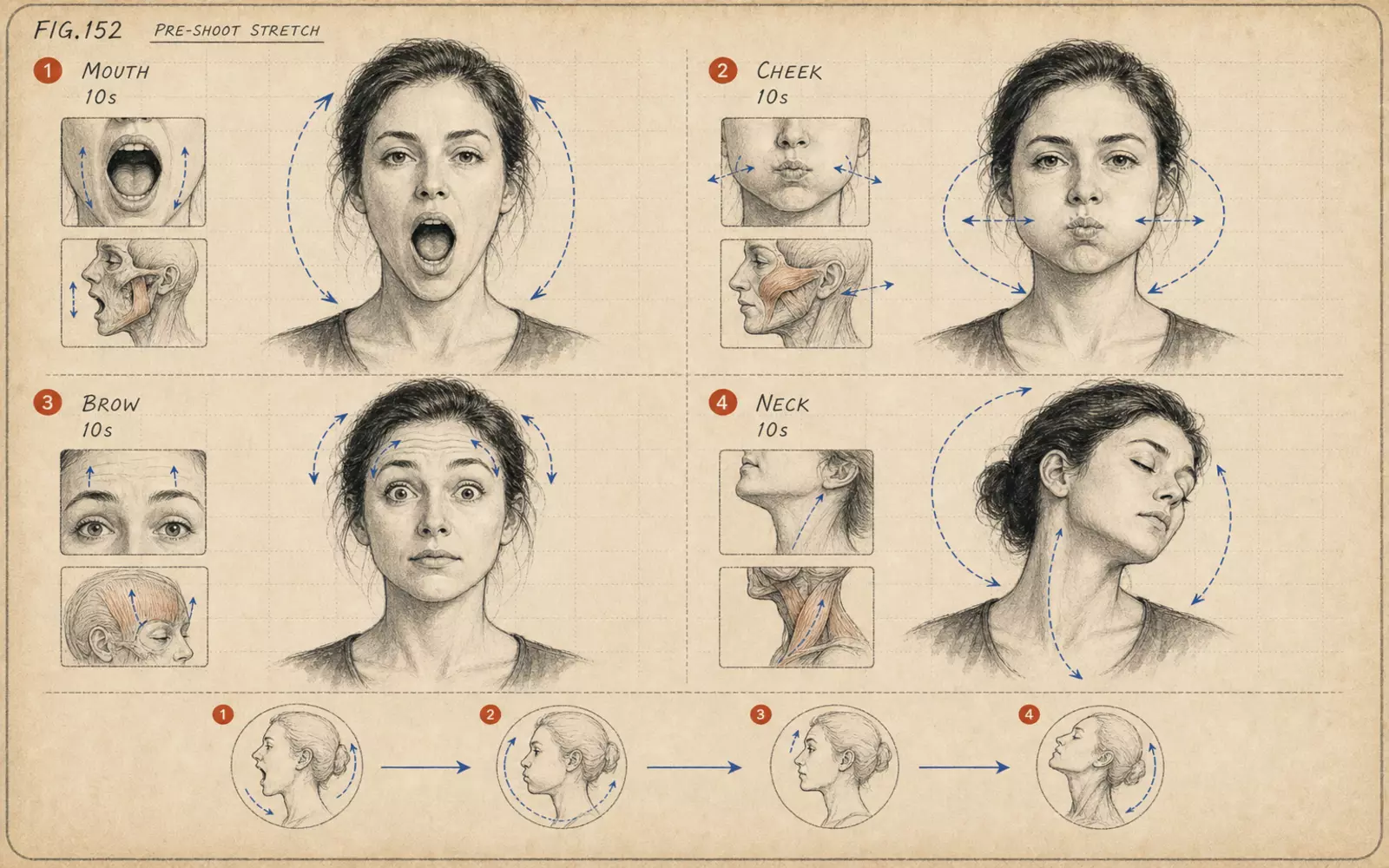 FIG.152Pre-Shoot Facial Stretches You Can Do Right BeforeA short, quiet preparation routine for getting your expression moving right before the shoot.