This Article Contains
Eyes Need to Be "Relaxed," Not "Opened Wide"
"Open your eyes wider" — "Make your eyes pop" — these are common directions during a shoot. Following the instruction and lifting the eyelid concentrates tension at the eye corners, resulting in a startled expression. The eyes may feel bigger, but the natural quality is lost.
What is actually needed is not to open the eyes wider, but to relax the eye corners. Eyes with tension released look calm and composed, and align more easily with the expression of the mouth. Think of it less as "opening" and more as "settling" the eyes.
Practice for relaxing the eye corners is not about making your eyes smaller. It is practice for returning from a force-held wide-open state to a natural way of looking.
Why Tension Builds at the Eye Corners in Front of a Camera
When a camera is pointed at you, you unconsciously try to open your eyelids. The desire to "show yourself properly" leads to a movement that tries to make your eyes look bigger. This lifts the upper eyelid and concentrates tension at the eye corners.
When the eye corners are tense, the mouth may be smiling while the eyes alone look stiff. This temperature gap between the mouth and the eyes leaves an awkward feeling in the photo. Forcing your eyes open is the very mechanism that creates an unnatural expression.
When tension makes your breathing shallow, this stiffness intensifies further. Trying to fix just the eyes while breathing stays shallow means they snap back immediately. That is why relaxing the eye corners requires settling not just the eyes but the breath and shoulders together.
FIG. 151An educational diagram for releasing tension at the eye corners and settling a stiff-looking eye expression.
5 Movements to Restore Your Eyes
Five movements to settle your eyes: ① close your eyes. ② open them slightly. ③ look into the distance. ④ exhale. ⑤ return to the lens. Each is a small movement that takes only a few seconds.
Especially important is step ③ — "look into the distance once." Staring continuously at a nearby camera tends to concentrate force around the eyes. Shifting your gaze to something far away for a moment relaxes the muscles around the eyes. Look out a window, at a distant spot on the wall, or to the back of the room — wherever gives you a far point in your current location.
Step ④, "exhale," is easy to forget but very effective. Trying to fix your eyes while holding your breath will not release the tension. A long exhale naturally lowers the shoulders, and tension in the eyes releases with it.
Why Trying to Fix Only the Eyes Fails
Trying to fix just the eyes rarely works well. If the habit of lifting the eyelid upward — triggered by being told "make your eyes bigger" — has taken hold, you revert to the same state almost immediately. Releasing tension at the eye corners requires releasing stiffness throughout the whole body.
If your breath is held or your shoulders are raised, the eye corners will not relax easily either. When adjusting your eyes during a shoot, start first with exhaling and dropping the shoulders. That comes first; the eyes are the follow-up adjustment.
The more your attention is concentrated on "just fix the eyes," the more force gathers around the eyes. Conversely, focusing on the shoulders and breath lets tension in the eyes release naturally.
Rather than opening the eyes wider, relax and settle the eye corners.
Steps to Check During Practice and Shoots
During practice, close your eyes and exhale once. Then open the eyelids slightly and look at a distant wall or window. Keep your shoulders gently lowered and exhale once more. Finally, return your gaze to the lens. Start slowly; once comfortable, you can do it in about 30 seconds.
During a shoot, if you sense your eyes are stiffening, run through these 5 movements briefly. Ask the photographer "can we take a short break?" and return at your own pace. Practicing this regularly in daily life makes the in-session switch faster.
When selecting photos, zoom in on the eye area alone. Keep the shots where the eye corners are not over-tensed and the expression aligns with the mouth. Photos where the eyes are tension-free allow viewers to "look naturally" without effort.
- Eyes need to be relaxed rather than opened wide. The direction "make your eyes bigger" tends to concentrate tension in the eyelids.
- The 5 movements — close, open slightly, look into the distance, exhale, return to the lens — restore the eyes.
- Rather than trying to fix only the eyes, settling the shoulders and breath together makes it easier to release eye-corner tension.
References
Related Diagrams
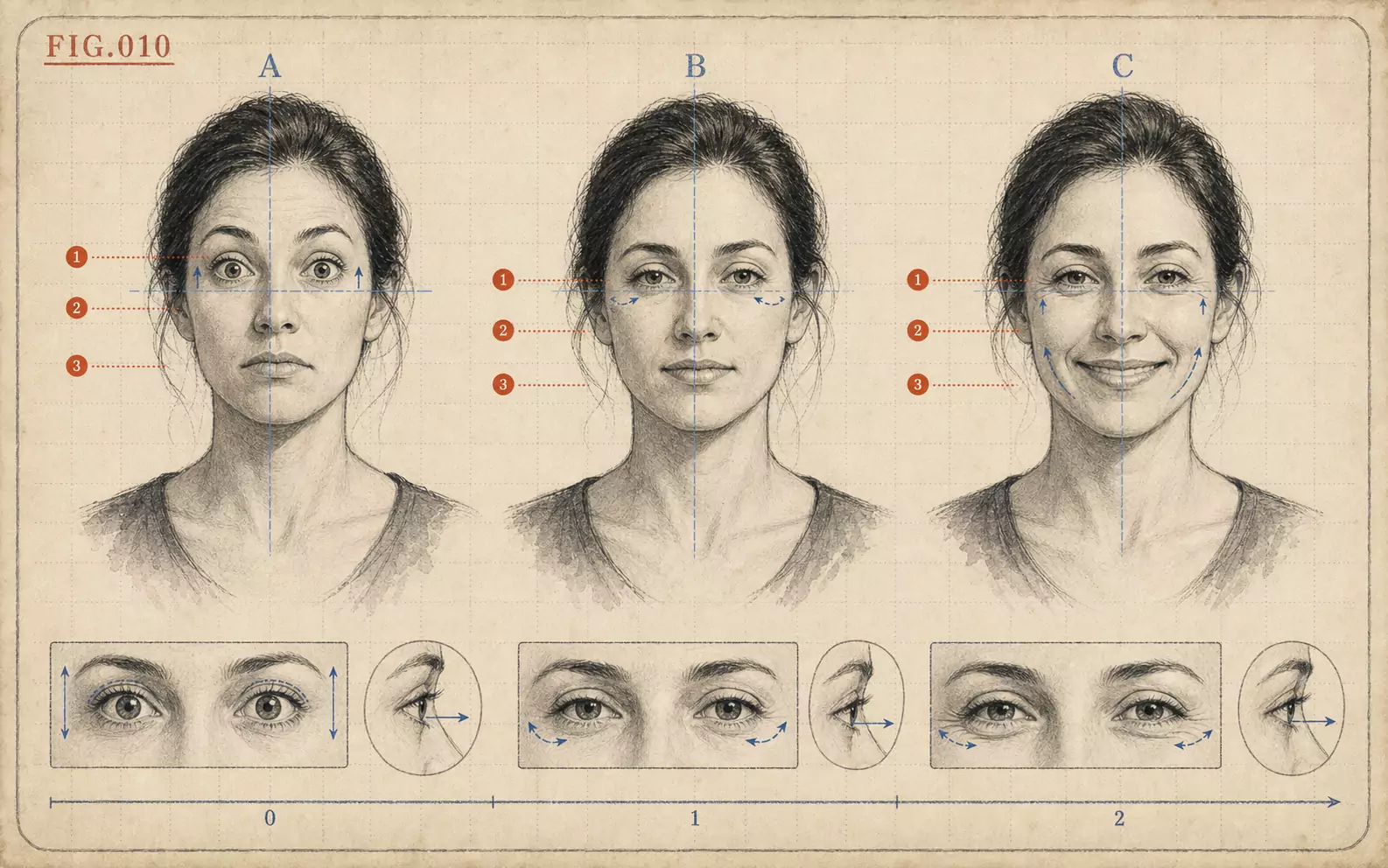 FIG.010What "Bigger Eyes" Really Means — It Is Not the Distance Between EyelidsThe wider you open your eyes, the more the smile at the mouth and the wide-open eyes can fall out of sync.
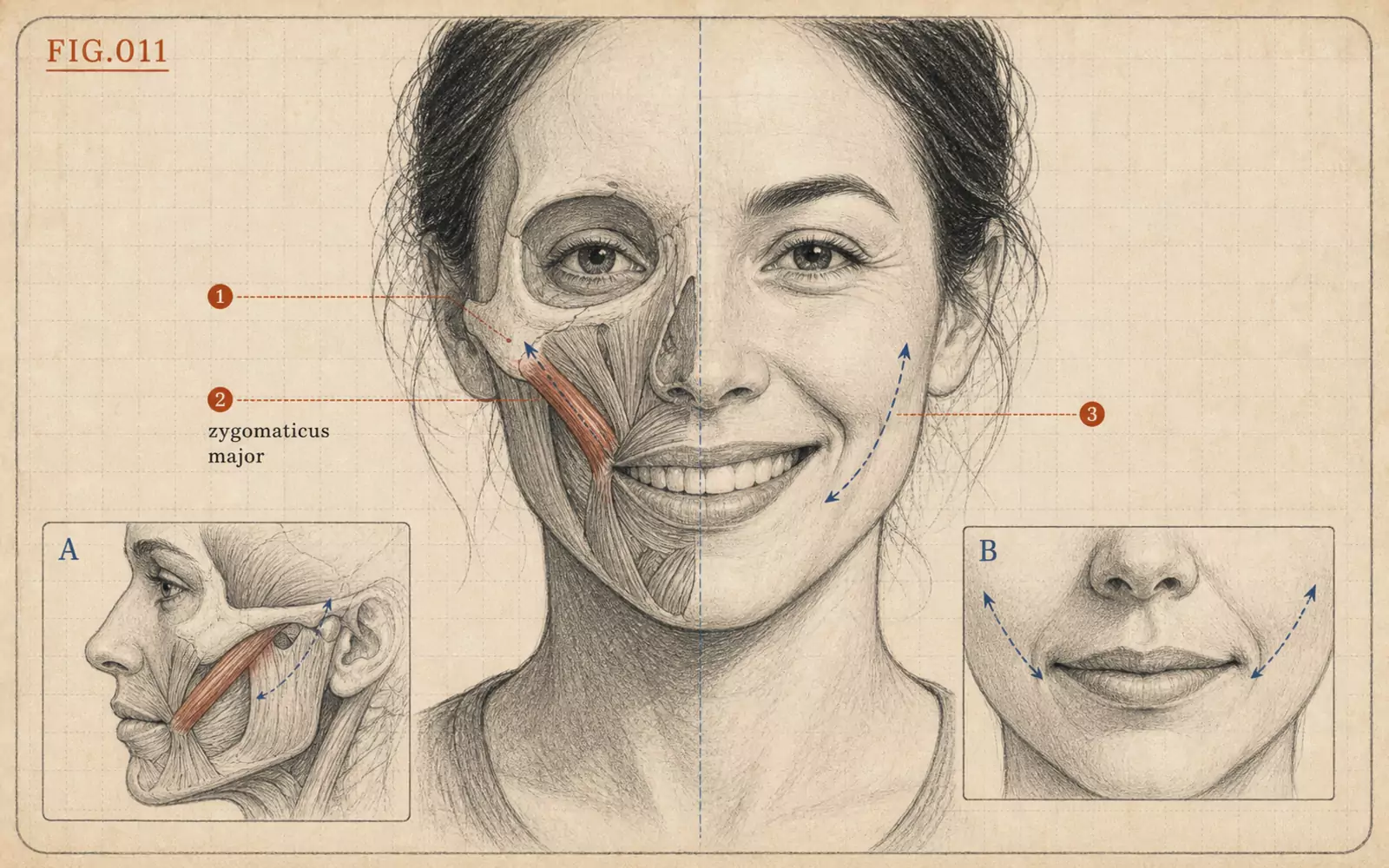 FIG.011A Smile Comes from the Zygomatic Muscle, Not the MouthA smile is made by lifting the cheeks below the eyes, not by pulling the mouth corners sideways. The top front teeth showing 3 mm is the benchmark for professional photos.
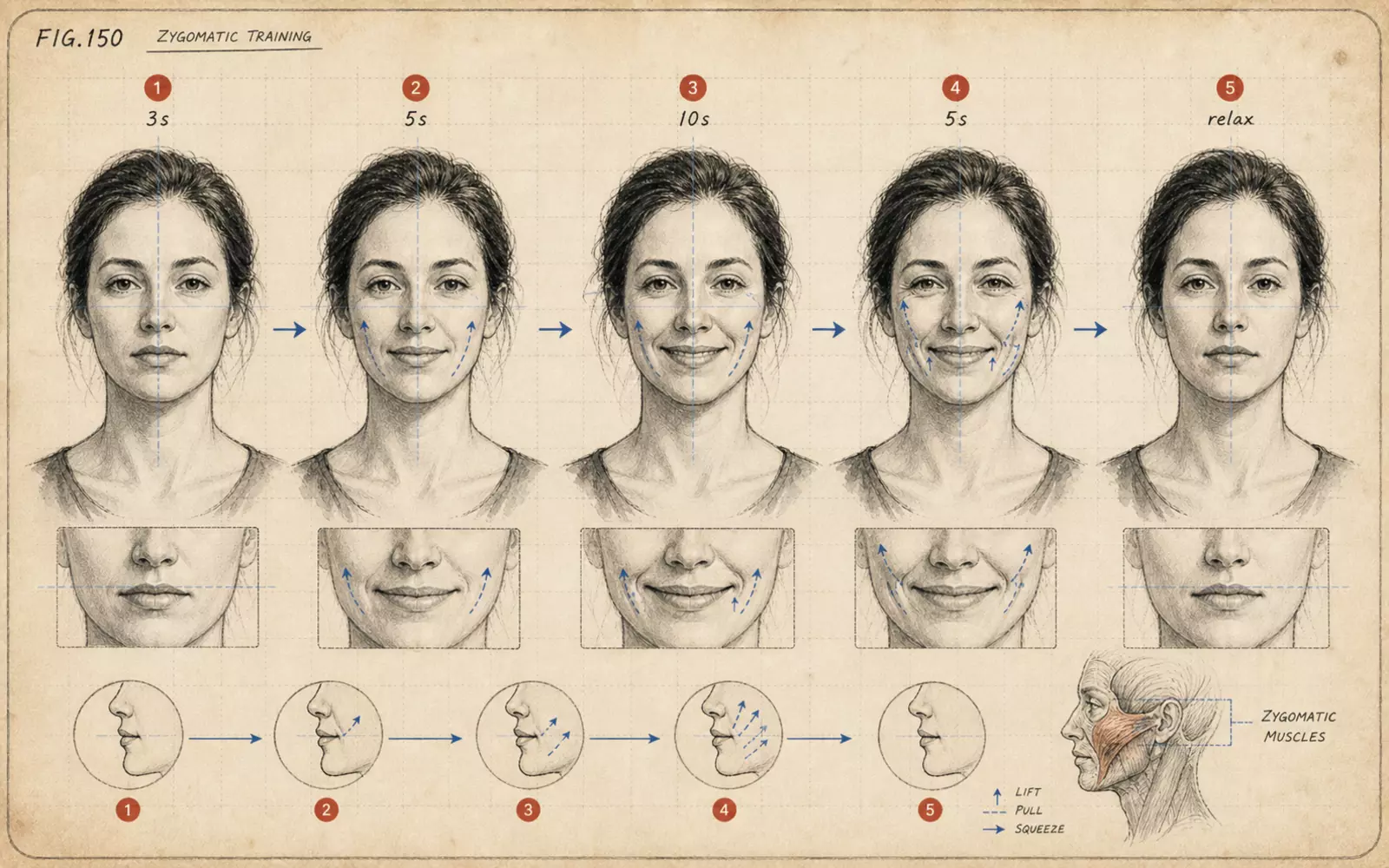 FIG.150Zygomatic Muscle Lifting Training: A 3-Minute Daily RoutinePractice for developing the sense of moving your cheeks upward before building a smile with the mouth.