This Article Contains
Camera Shyness Is Not a "Personal Weakness"
"I am not good with photos" — "I freeze up in front of a camera" — many people feel this way. And in most cases, they place the cause on "my personality" or "the way I look." But that is not accurate.
Much of camera shyness arises from a state where the subject has no knowledge of "what is being looked at and what can be fixed." They also have no words to express discomfort during the shoot. So it simply becomes a time of silent endurance. This accumulated experience builds the self-image of "I am bad with photos."
The feeling of difficulty is real, but the cause lies not inside the individual — it lies in the structure of the shoot. Once you understand the structure, a path to a solution becomes visible.
The Problem of a Structure Where Only the Photographer Has Words
On a photo shoot, it is only the person behind the camera who holds specialist knowledge and vocabulary. "Tuck your chin in a little," "look over here," "give me a natural smile" — directions are issued one-sidedly from the photographer's side. The subject can only respond to them.
When there is no language to express discomfort, the subject cannot convey it to the photographer. Feeling "the camera might be too close" or "my eyes are tensing up," but having no way to put that unease into words, increases anxiety during the shoot.
As a result, the subject becomes conscious of "not being able to respond well," and a temperature gap opens between them and the photographer. That gap remains in the photo.
FIG. 162An educational diagram for working through camera shyness by addressing the lack of knowledge and vocabulary.
Giving Vocabulary to the Subject
A Field Guide to Being Photographed is built to give vocabulary to the subject, not just the photographer. Rather than increasing specialist terminology, the aim is to translate it into short sentences that can be said on location.
For example, instead of "something is off with my face," breaking it down: "the camera might be too close," "my eyes are tense," "the purpose and expression do not match." Once you can break it down, you can have a conversation during the shoot. "Could you shoot with an 85mm lens?" "Could you move a little further away?" "Could you give me a moment to relax my eyes?" — these are short sentences that can be said on set.
When vocabulary grows, a shoot shifts from a one-sided evaluation to a dialogue of creating the photo together. The subject expresses discomfort; the photographer receives it and adjusts the composition. This is the shape of a dialogue.
What Happens When It Is Dismissed as a Character Problem
When camera shyness is dismissed as a character problem, the path to a solution closes. The more someone thinks "I need to change my personality," the heavier the shoot feels. The body stiffens at the next shoot too, and the camera shyness deepens — the cycle continues.
People who have had bad photo experiences in the past are more likely to have the body trigger a defensive response even before the next shoot (see FIG.113). This is not personality — it is the body's memory. Blaming it on personality does not change the body's response.
Conversely, reframing it as "this is a structural problem," "a problem of conditions," "a problem of insufficient vocabulary" reveals places that can be fixed. There is no need to make the photographer the villain, no need to blame yourself — simply arranging the conditions and the words allows camera shyness to gradually untangle.
Camera shyness is worked through as a state of insufficient knowledge and vocabulary.
Steps for Breaking Down a Difficulty into Conditions
First, write down just one scene you find difficult. "Smiling," "eye direction," "full body," "choosing photos" — the shorter you keep it, the easier the next step of breaking it down becomes. Rather than trying to tackle every difficulty at once, narrow it to one.
Next, break that difficulty down into conditions. Look at which of the following it is related to: light, distance, posture, expression, purpose, or selection. "My smile is stiff" might be an expression problem — but it might also be related to tension from the day of the shoot (a day-of problem) or to matching expression with purpose (a preparation problem).
Finally, turn it into a short sentence you can say during the shoot. "Could you shoot from a little further away?" "Could you give me a moment to relax my eyes?" "Could we take that one again?" — being in a state where you can say these transforms camera anxiety into something manageable. Having the words is the entry point to working through camera shyness.
- Camera shyness is reframed not as a personal weakness but as something that arises from a lack of knowledge and dialogue.
- A Field Guide to Being Photographed is built to give vocabulary to the subject as well as the photographer. A shoot can take the shape of a dialogue.
- Breaking a difficulty down into conditions and turning it into a short sentence you can say on set makes it easier to communicate on location.
References
Related Diagrams
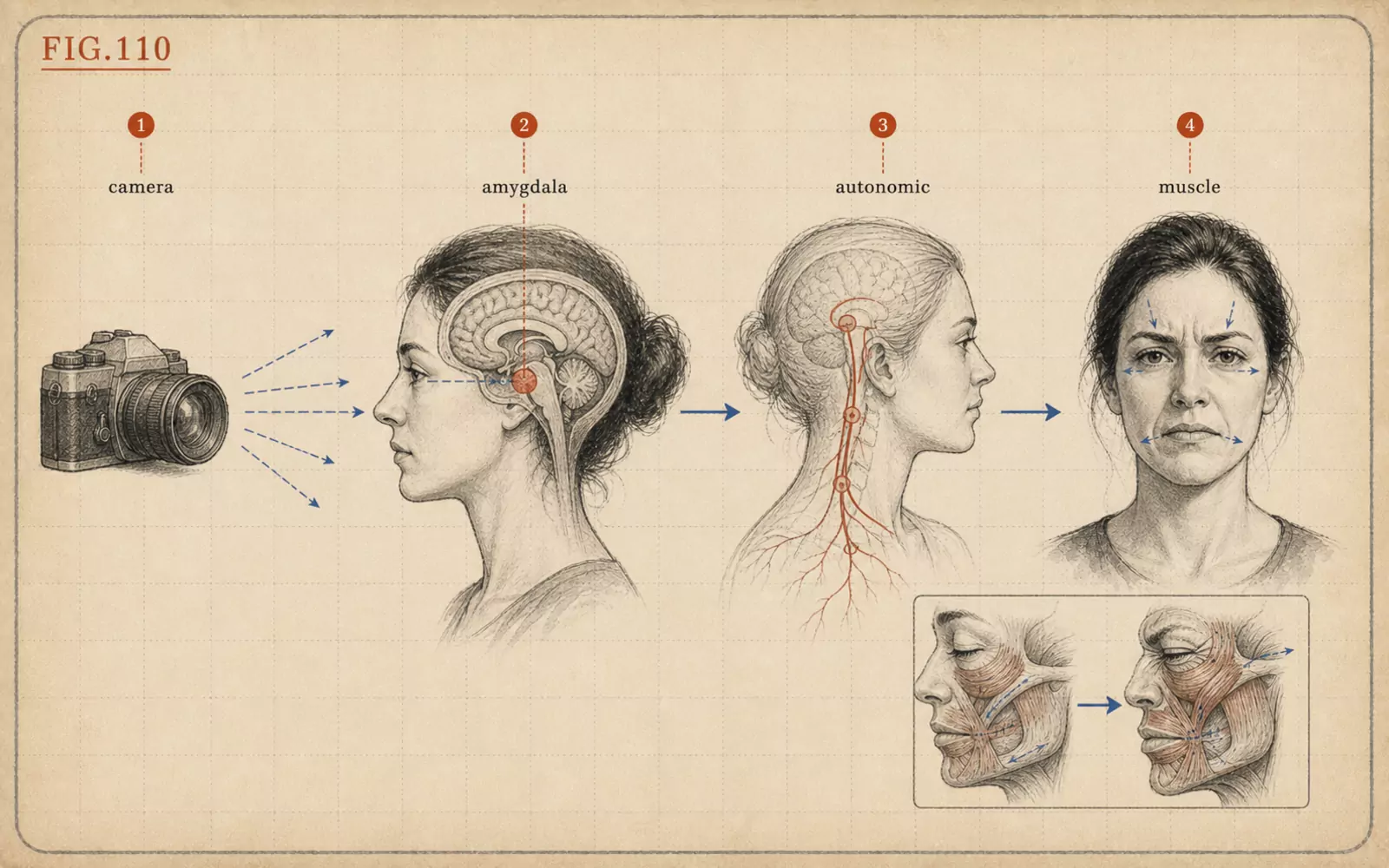 FIG.110The Truth About Camera Phobia: Why Your Body Freezes When a Camera Is Pointed at YouFreezing in front of a camera is not a failure — it is the body's defensive response. Separating breath, shoulders, and gaze makes it manageable.
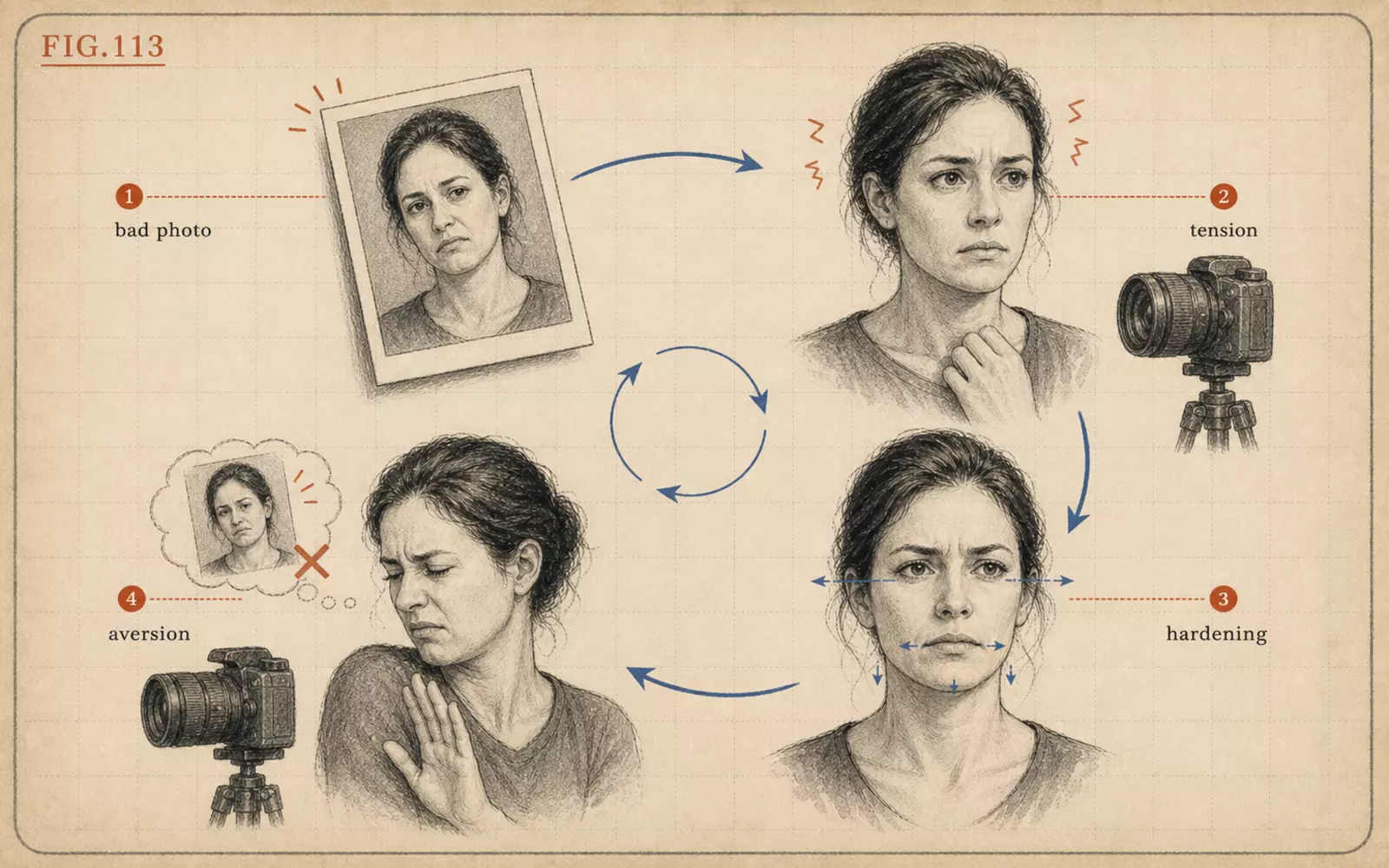 FIG.113The Psychology of Camera Shyness: How Past Failures Constrain the FutureCamera shyness is not a personality trait — it is reinforced by carrying the weight of one bad photo into the next shoot.
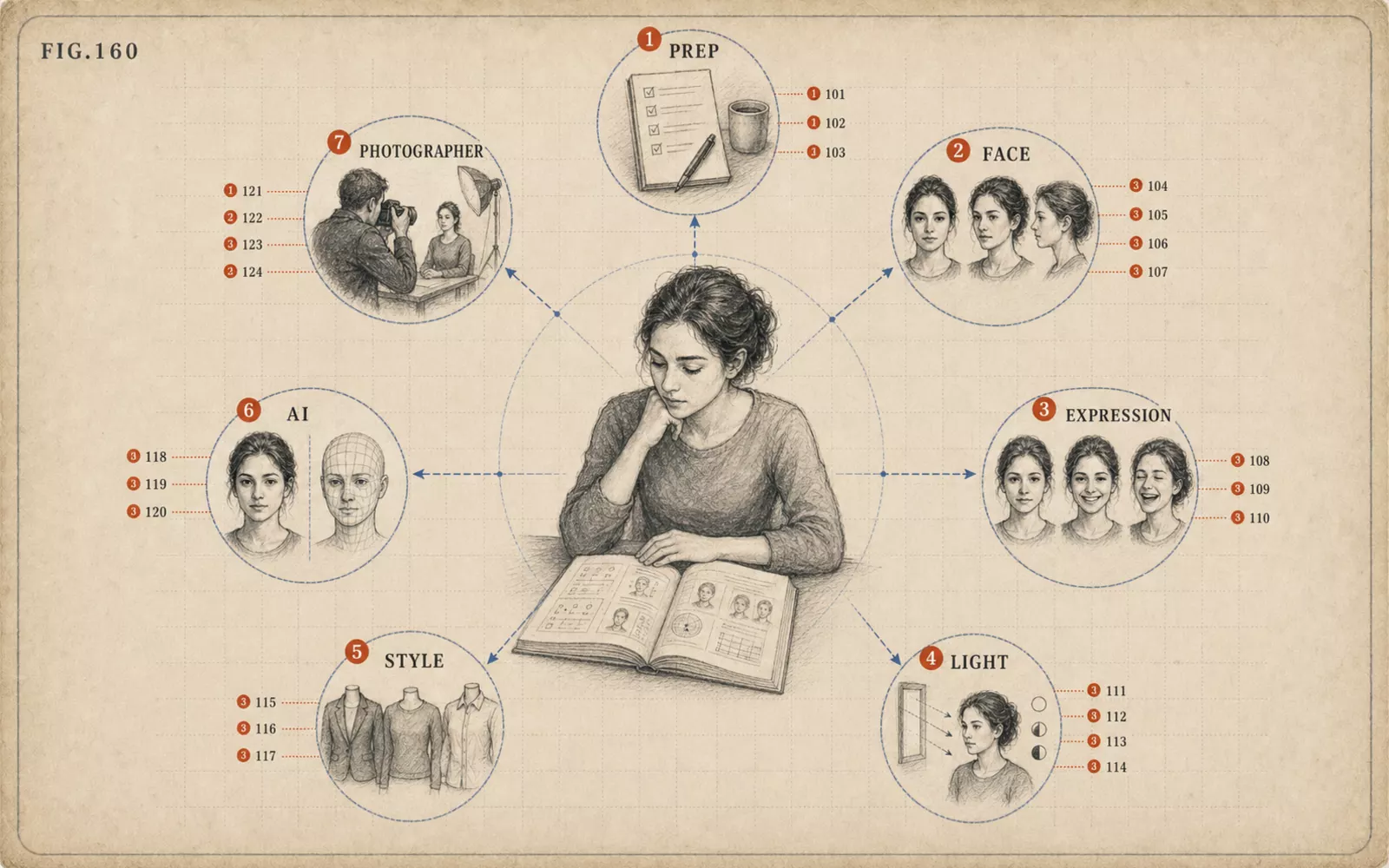 FIG.160The Complete Map of Being Photographed: How to Navigate This GuidePreparation, shoot day, expression, posture, purpose, and selection — all organized as a single map.