This Article Contains
- The Role Has Evolved Across the Business Card, SNS, and AI Eras
- "Delivering an Impression Before a Meeting" Remains the Same Across All Platforms
- The Balance of Trust, Approachability, and Authenticity Shifts by Platform
- What Happens When You Use the Same Photo Everywhere
- Organizing Your Photos by Platform
The Role Has Evolved Across the Business Card, SNS, and AI Eras
Profile photos have expanded in role alongside changes in their medium. In the business card era, they were materials for conveying "can I do business with this person?" alongside a title and company name. A composed photo paired with a title built the foundation of trust.
In the web era, photos began to live permanently on screen. Because the same photo was displayed for a long time, whether the photo was "current" and "close to the real person now" became important. In the SNS era, approachability and alignment with published content were also scrutinized.
And now, in the current AI era, as images that can be made to look polished multiply, authenticity is being increasingly scrutinized in return. Whether the photo is "genuinely connected to the real self" is becoming a condition that underpins photographic trust.
"Delivering an Impression Before a Meeting" Remains the Same Across All Platforms
No matter how the platform changes, what viewers want to receive from a photo does not change dramatically. "Does this person seem worth meeting?" and "Does the photo feel like the real person?" — these two questions are constants that have not changed from the business card era to today.
Therefore, even if you shoot different photos for different platforms, the destination you are aiming for is the same. The impression delivered before the meeting connecting to the impression given at the meeting is the foundation of trust across every platform.
Because this core does not change, the difference between platforms becomes a matter of "balance." There is no need to become a different person for every platform — just adjust slightly with the balance that fits each purpose.
FIG. 161An educational diagram for thinking about how the role of the profile photo has shifted from business cards through SNS to the AI era.
The Balance of Trust, Approachability, and Authenticity Shifts by Platform
For business cards, legal professional websites, and executive profiles, the weight given to trust increases. Photos that project composure, expertise, and cleanliness tend to fit. A slightly restrained expression with good posture is the baseline.
For SNS, service industries, and healthcare, the weight given to approachability increases. A softness that makes people feel "I want to visit" or "I can consult with this person" is needed. A natural smile and a slightly open, relaxed gaze tend to fit.
For AI-era platforms — profile directories, matching platforms, and services that involve identity verification — authenticity is strongly scrutinized. Photos that are not over-polished and retain details that connect to who you are now support trust.
Even for the same person, the photo chosen for a legal professional's business card, an Instagram icon, or a conference announcement will naturally differ. Use the three factors of platform, profession, and audience to judge the right balance.
What Happens When You Use the Same Photo Everywhere
A common mistake is using the same photo across all platforms. A photo that works on a business card may have a face too small for an SNS icon. A soft smile that works on SNS can look lightweight on a legal professional's business card.
Another mistake is adapting only to trending styles. A style trending on SNS does not necessarily suit your work or the people you meet. Thinking about the age group, industry, and relationship of the people you encounter in your professional life clarifies the scope within which to incorporate trends.
The difference between platforms is not about "becoming a different person" — it is about "adjusting the balance within the same self." Across every platform, being connected to the real you is the foundation.
The role of a profile photo — supporting "does this person seem worth meeting?" — holds across every platform change.
Organizing Your Photos by Platform
Start by listing out the platforms you use: business cards, the web, SNS, conferences, AI-generated materials — and for each, write down the one impression you want viewers to receive. Once organized, the differences in balance required by each platform become visible.
Next, sort your existing photos by purpose: suited for trust, suited for approachability, for explanatory use, for icon use. When divided this way, the gaps — the purposes you are missing — also become visible. Since no single photo covers all purposes, reorganize with the premise of assigning a different shot to each platform.
Finally, review old photos or images with weak authenticity. For each place you use them, choose a shot that connects to who you are now. The cue to update is when your current hairstyle, body shape, and general appearance have drifted from the photo (see FIG.001).
- Profile photos share the common role of "delivering an impression before a meeting" regardless of the platform.
- Business cards prioritize trust, SNS prioritizes approachability, and the AI era increasingly scrutinizes authenticity. Adjust the balance by platform.
- Rather than using the same photo across all platforms, organize them by purpose and sort what you have on hand.
References
Related Diagrams
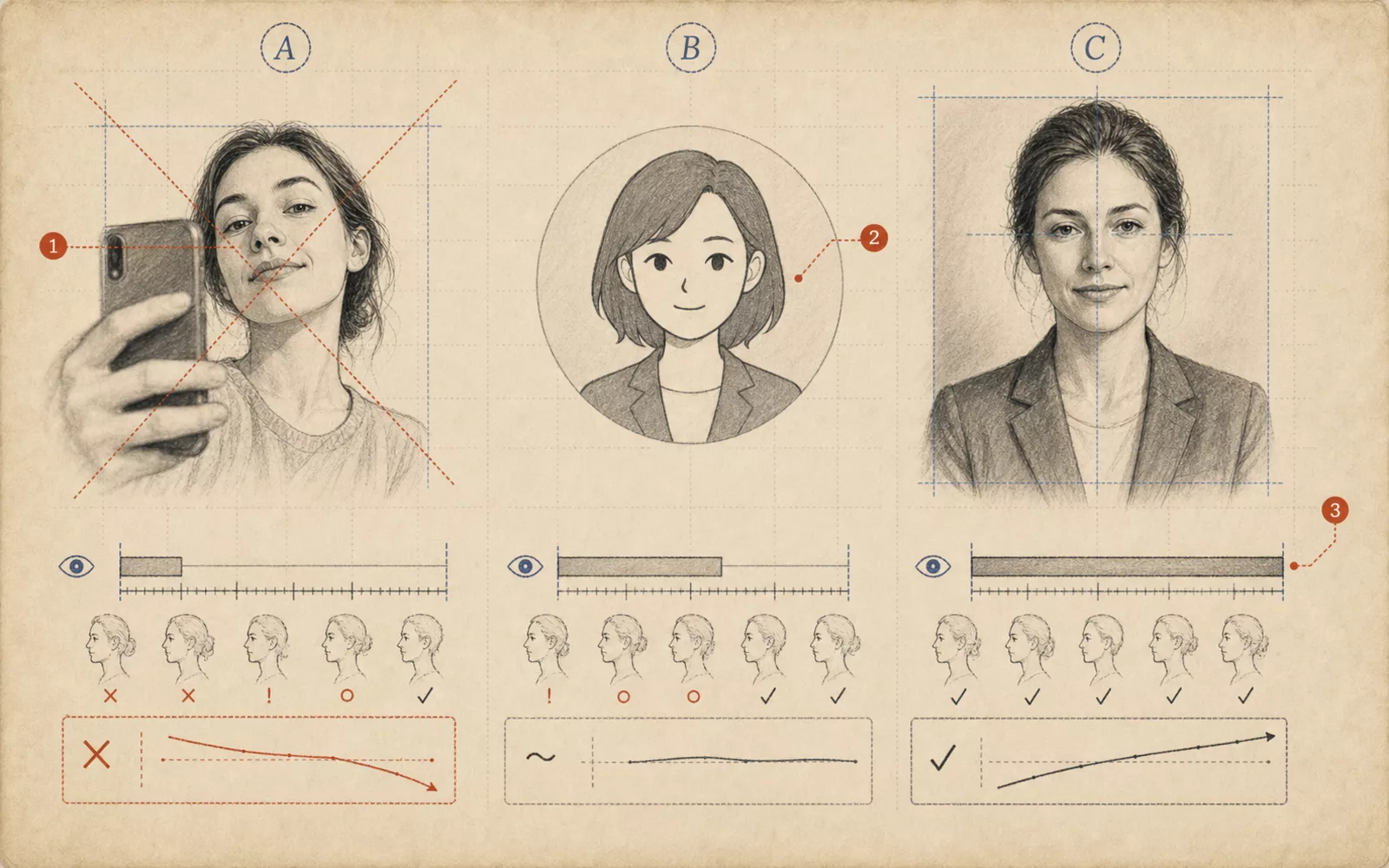 FIG.004Selfies, Illustrations, and Professional Shoots: How Does Trust Change?Selfies, illustrations, and professional shoots differ in the sense of presence and trust they convey. Organize your choices based on intended use.
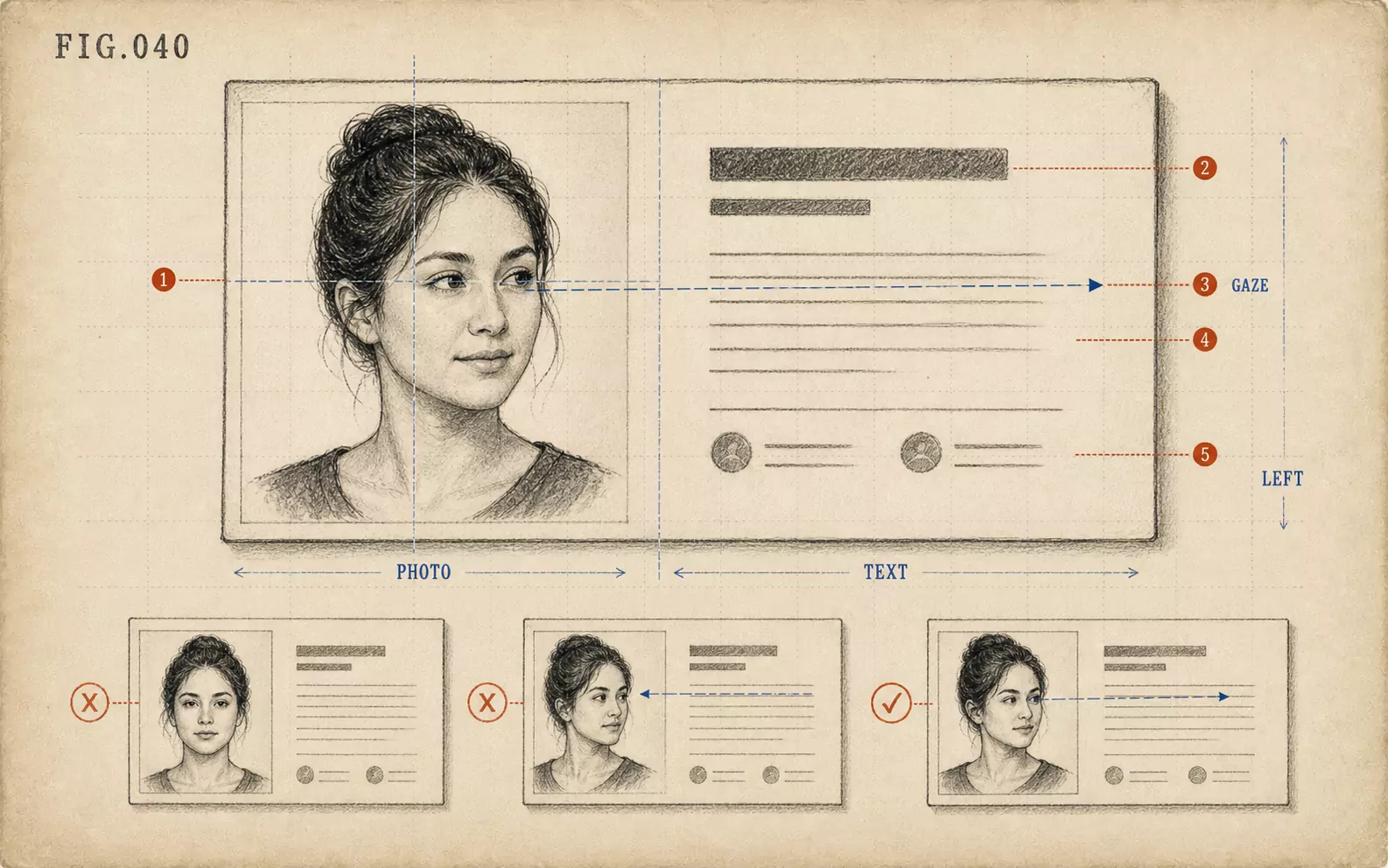 FIG.040On LinkedIn and Business Cards, the Face Goes on the "Left"On the web and on business cards, face photos tend to be placed on the left, making photos where the face is angled inward easier to use.
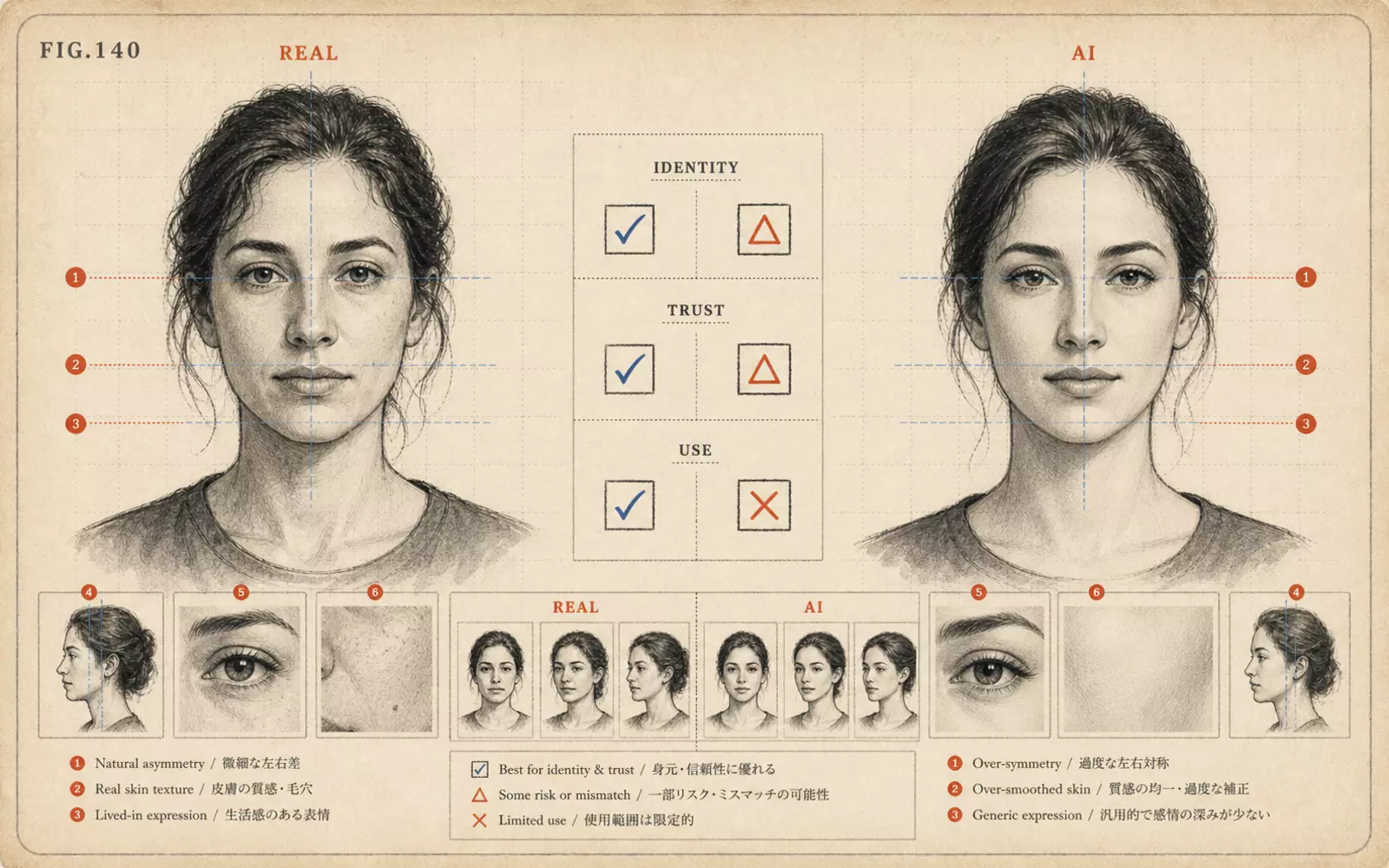 FIG.140AI Headshots vs. Real Photos: What Is the Same and What Is Different?The differences between AI headshots and real photographs are organized from the perspectives of authenticity, intended use, and trust.